A Brook in the Forest by Gustave Courbet
Gustave Courbet finished A Brook in the Forest in 1858, but its true weight comes from what happened thirteen years later. It hangs today in the Metropolitan Museum of Art, a quiet landscape that carries a fugitive's story.
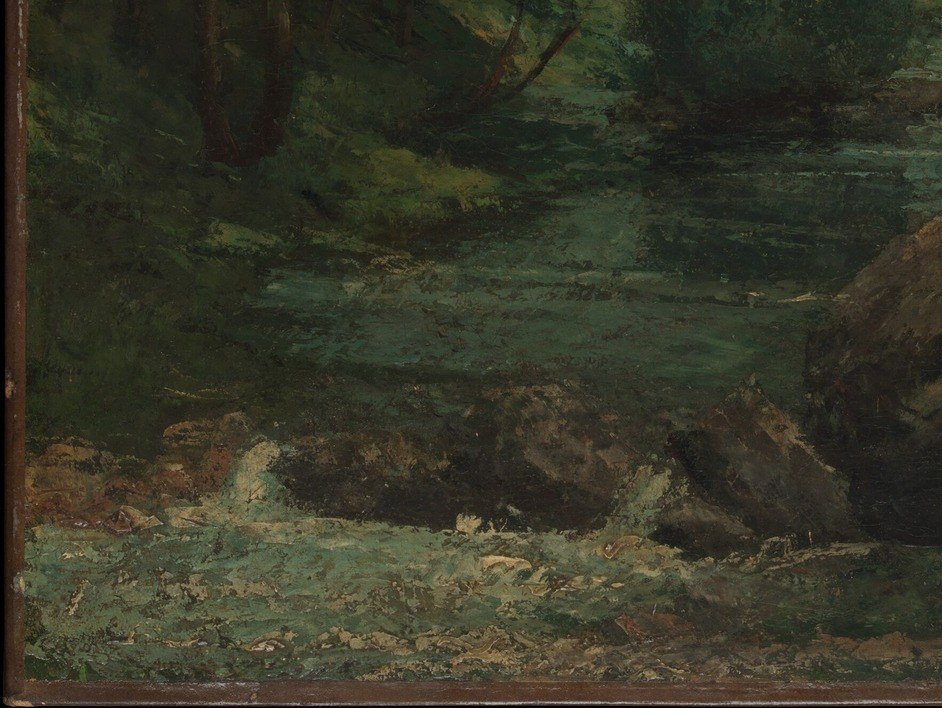
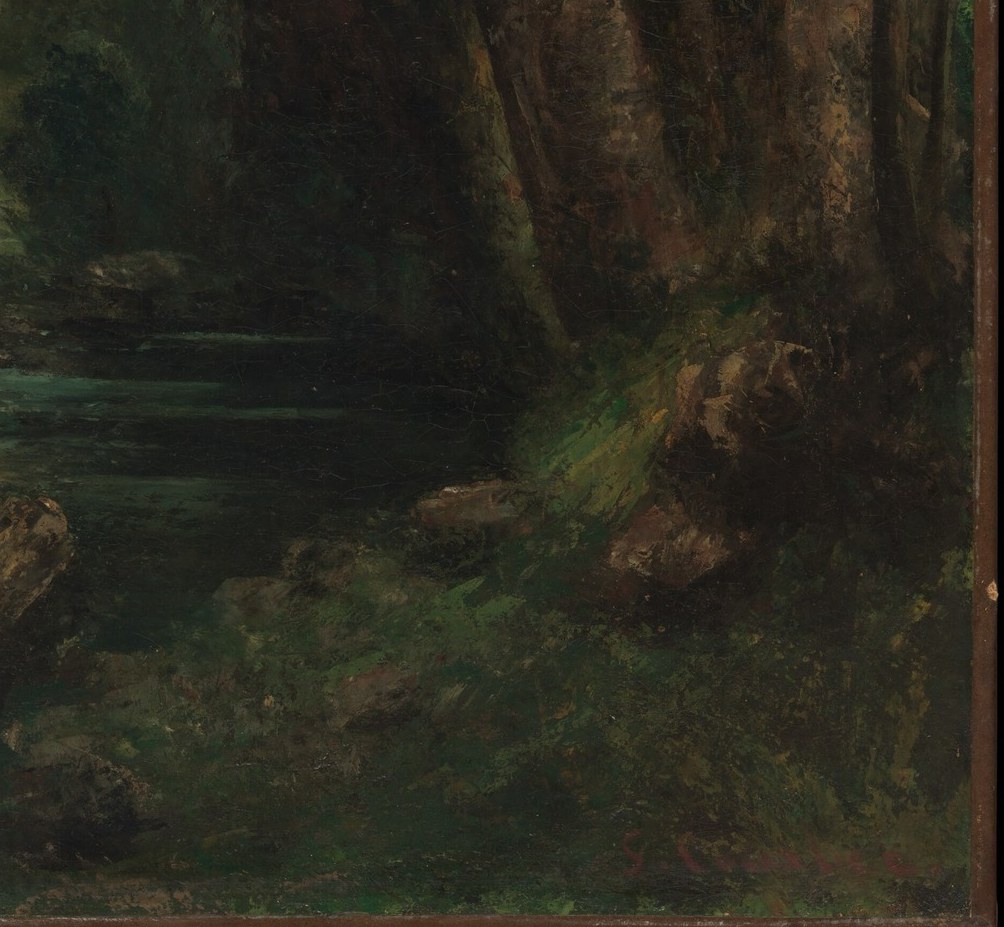
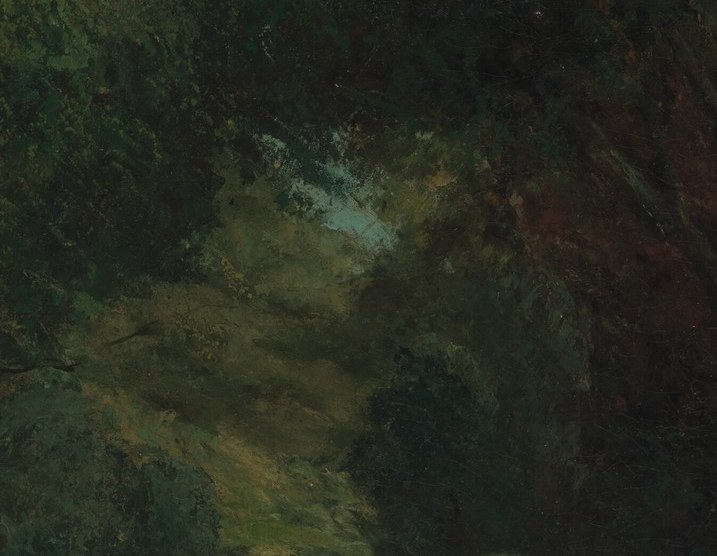
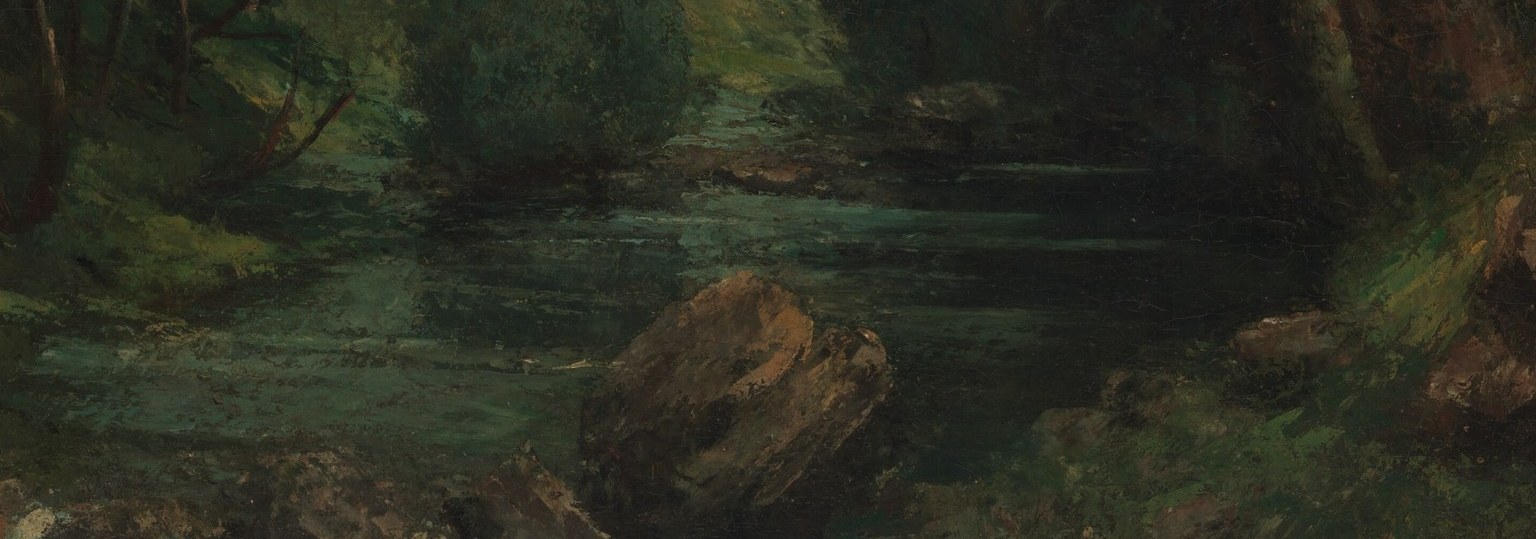
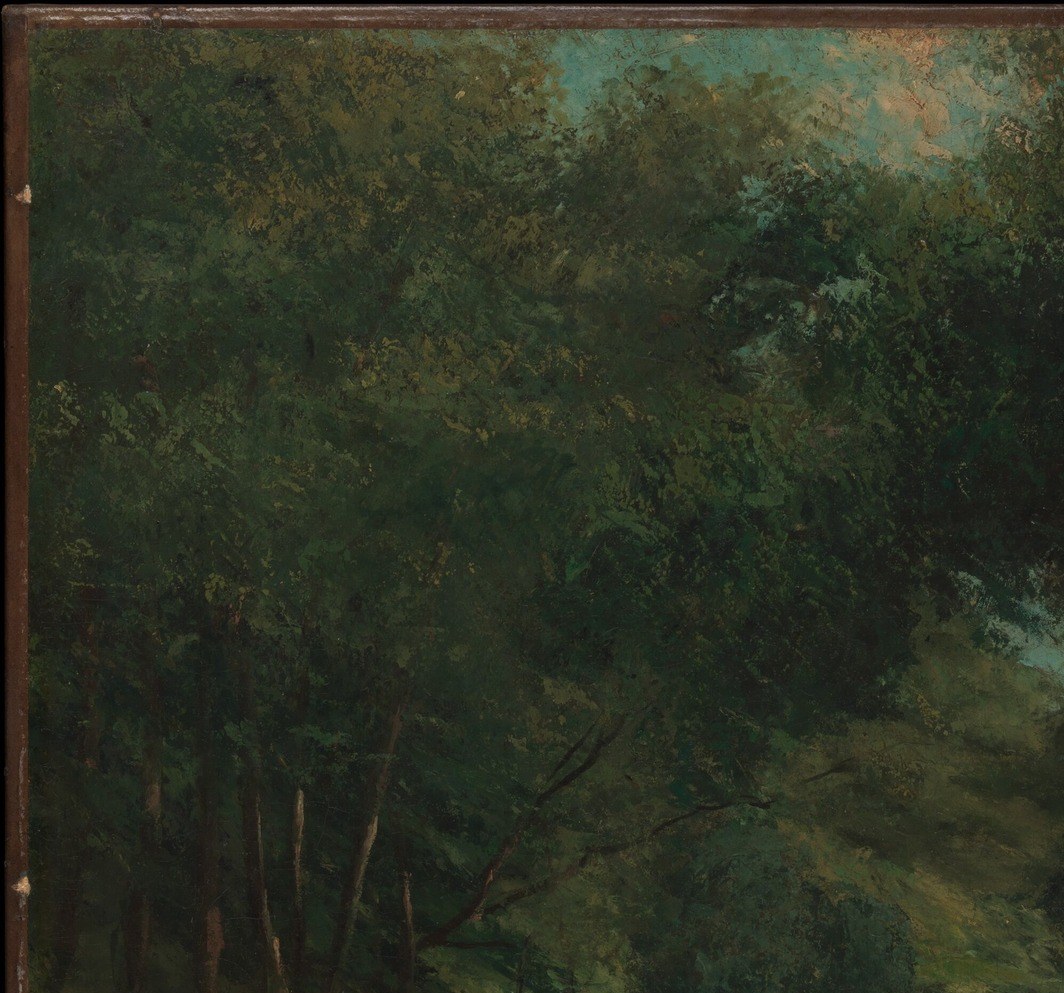
The painting itself is a rejection of the picturesque. Look at the mossy boulders in the left foreground: Courbet laid paint on with a palette knife, building the rock's surface into something you feel more than see. The single break of light in the upper canopy works like a cathedral vault, framing a darkness that extends indefinitely into the far background. He painted the whole scene, not just the view, right down to the shadowed pool in the lower right corner where rock and water merge into near-black.
Courbet was the loudest voice in 19th-century French Realism, a painter who insisted on observable truth over angels or allegories. That stubbornness extended to his politics. In 1871, during the Paris Commune, he was held responsible for the destruction of the Vendôme Column, a symbol of Napoleonic power. He served six months in prison and was later ordered to pay the cost of rebuilding it: a sum so vast he fled to Switzerland in 1873. He lived there in exile, painting forest scenes, until his death in 1877.
A Brook in the Forest was painted during his most confident years, but it reads differently knowing how the story ends. The forest becomes not just a subject but a destination: a place to disappear into when the world outside has turned against you.
Details
Transcript
A stream cuts through a forest so dense it almost refuses light. Gustave Courbet painted this in 1858, at the height of his fame. He called his work Realism: no angels, no mythology, only what he saw. Look at the rock. He built the surface with a palette knife, not a brush. In 1871, he was convicted for helping topple a monument during the Paris Commune. He fled to Switzerland, a fugitive, painting lonely forest scenes until his death.