Venus in Atrium by William de Leftwich Dodge
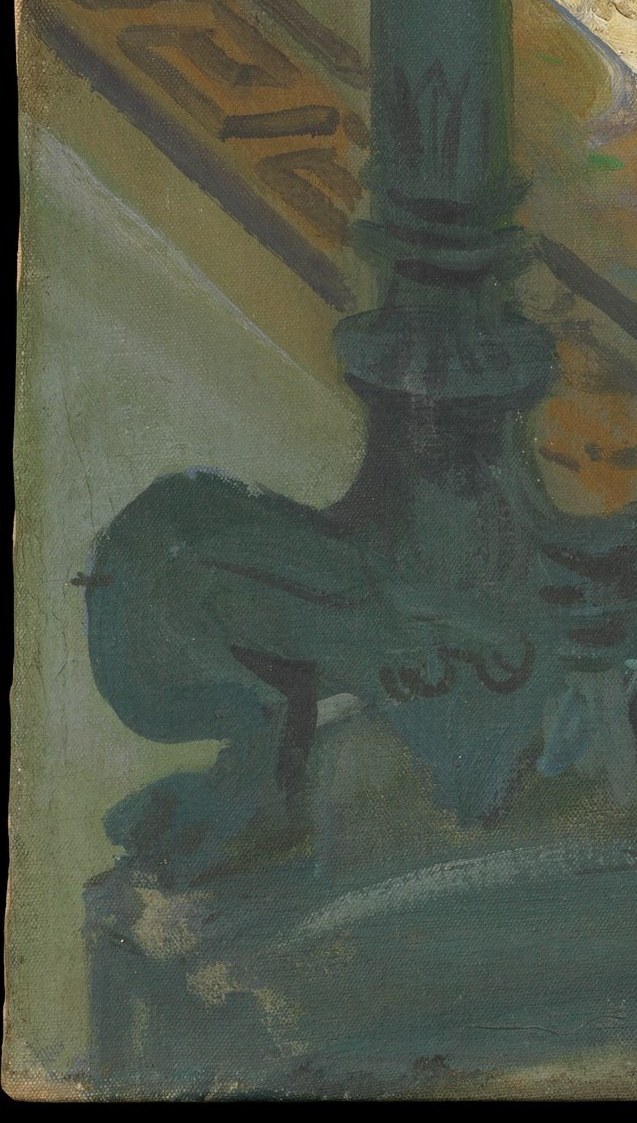
This is *Venus in Atrium*, painted by the American muralist William de Leftwich Dodge in 1909. Held by The Metropolitan Museum of Art, it is one of Dodge's rare easel paintings, he spent most of his career on large-scale public mural commissions. Here he turned a classical subject into a laboratory for light.
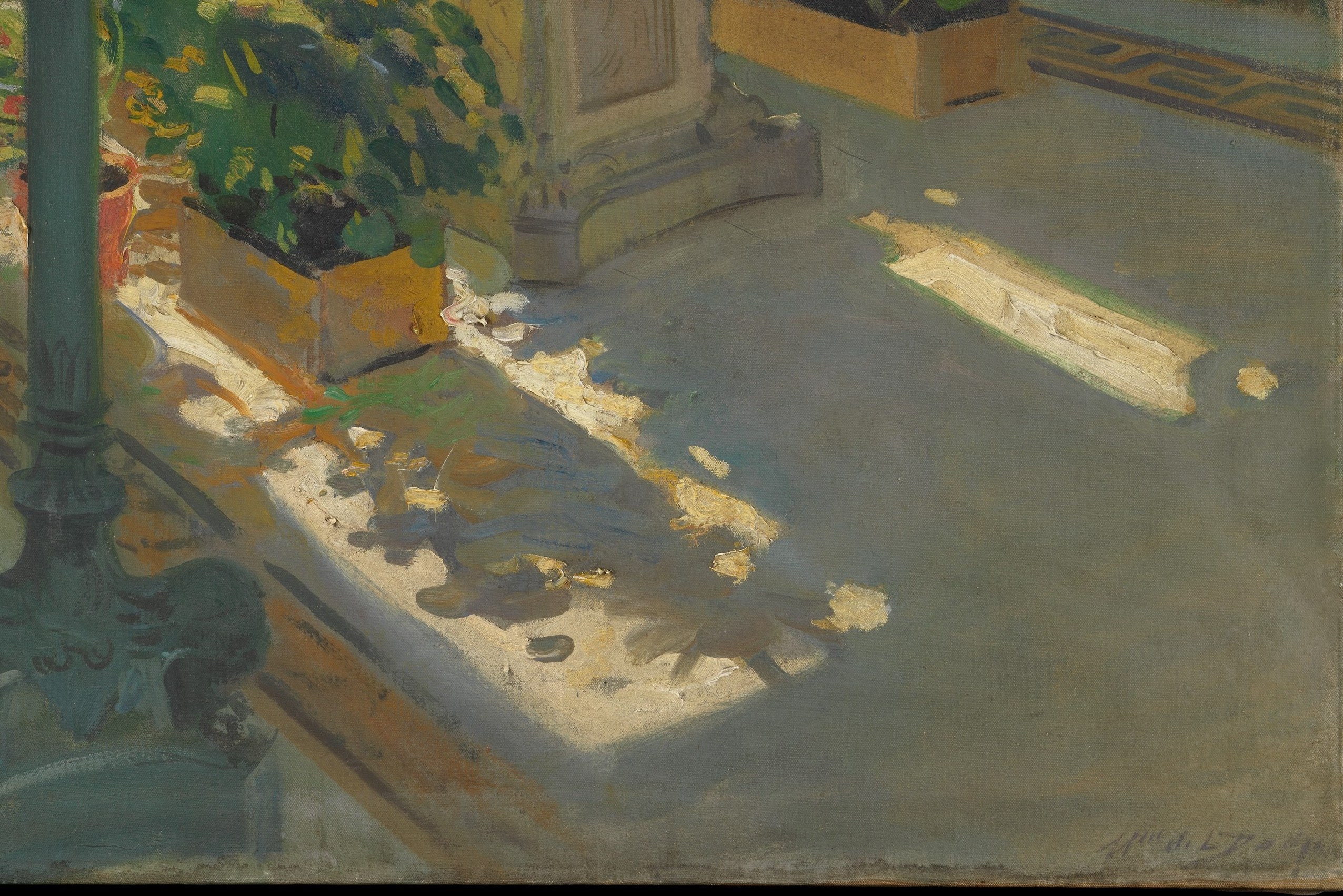
Watch the floor. What reads from a distance as dappled sunlight falling across geometric tiles is, up close, a series of unblended, thickly applied strokes of yellow and ocher paint. Dodge laid down separate marks and trusted the viewer's eye to fuse them into a single luminous phenomenon, a textbook Impressionist technique.
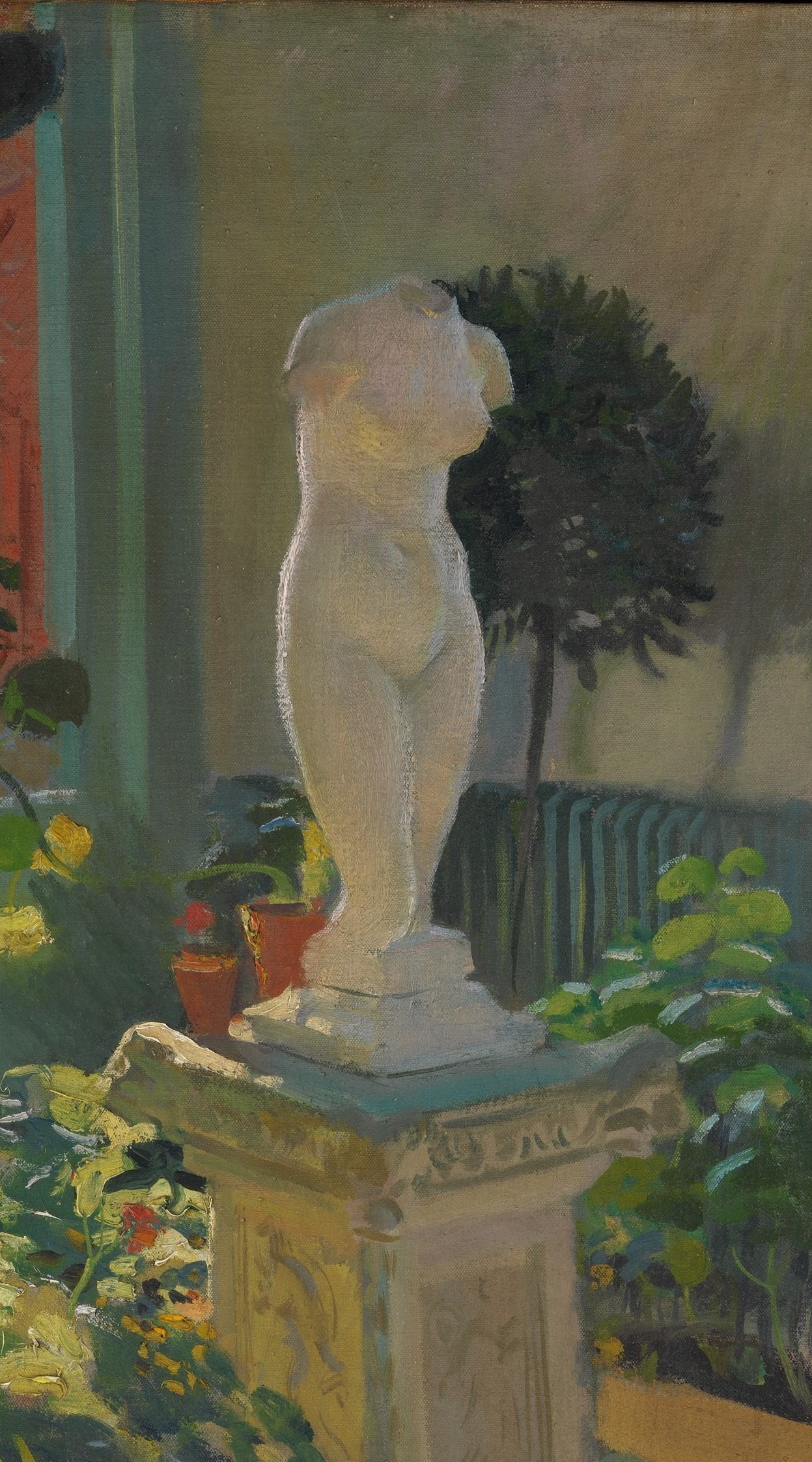
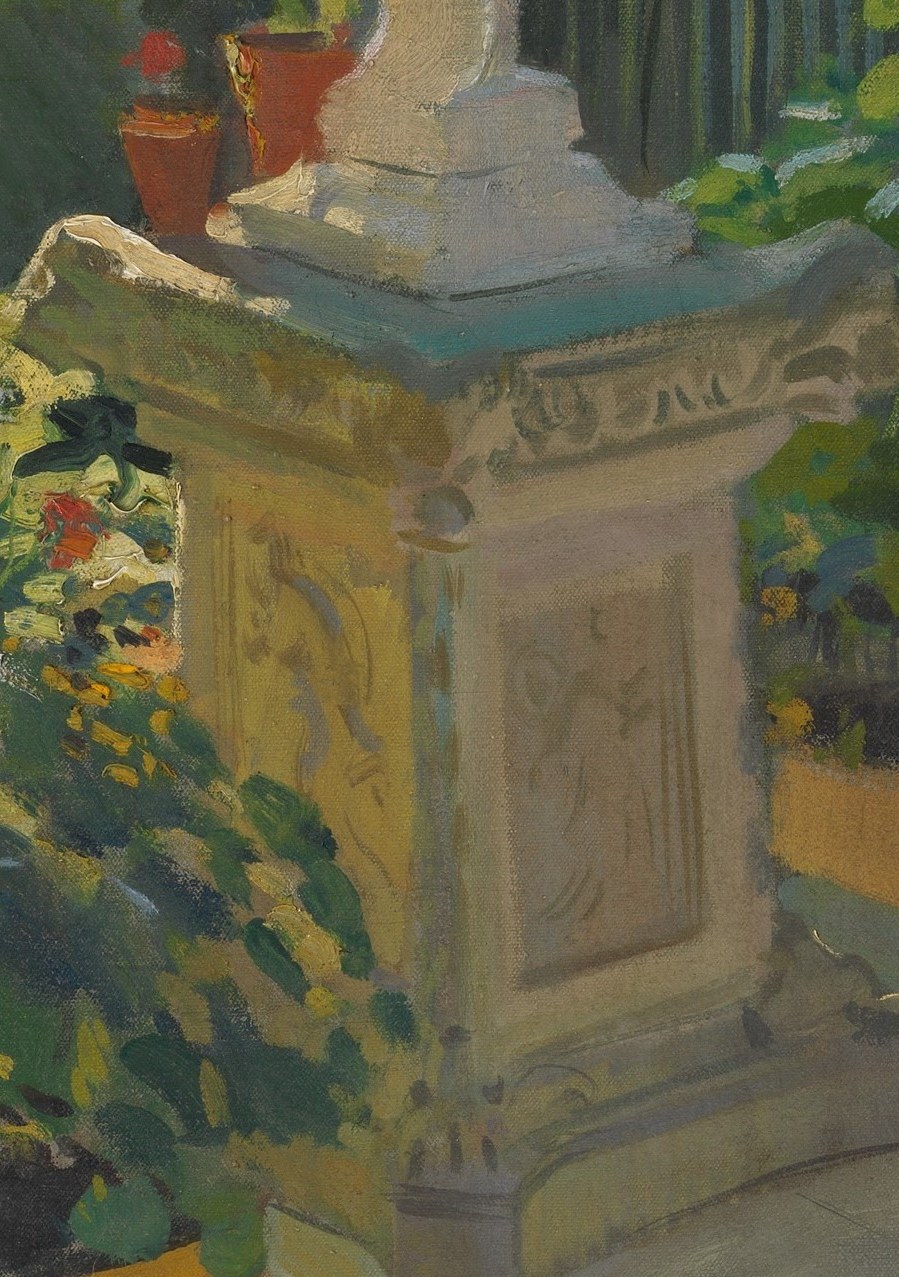
The statue itself, a headless Venus, catches the full force of the atrium window. Its white marble glows against the deep reddish wall behind it, a complementary contrast that makes the cool stone feel almost warm. The potted plants on either side frame her like a garden sanctuary, their dark leaves amplifying the brightness at center.
Dodge trained in Paris at the Académie Julian and brought that French Impressionist understanding of broken color back to America. The next time you see sunlight on a sidewalk, squint a little, you will see the same separate patches of light that he painted here.
Details

Transcript
This is not a photograph of an atrium. Sunlight floods a classical statue and potted plants. But look down at the tiled floor. Those are not tiles catching the light. They are thick, separate strokes of yellow paint. Seen from inches away, this is just a smear of ocher. Step back and the smear dissolves into solid stone. The painting is a magic trick your eye performs on itself.