Portrait of a One-Eyed Man by Vincent van Gogh
Portrait of a One-Eyed Man by Vincent van Gogh, 1889, at the Rijksmuseum in Amsterdam. The right eye was never painted, just bare canvas where an eye should be. The absence makes the portrait impossible to look away from.
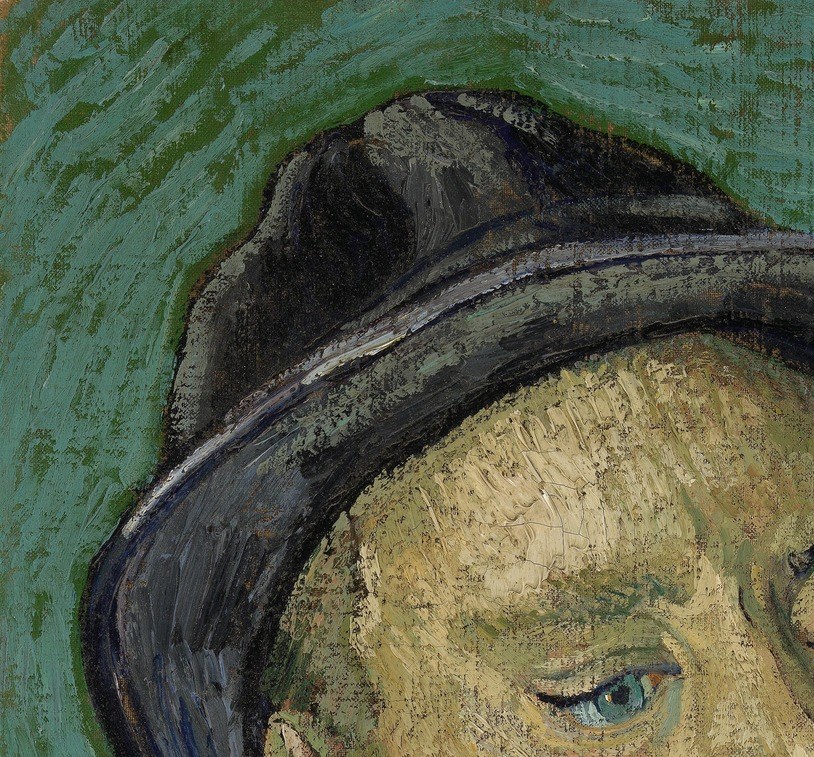
Find the blue left eye. It stares straight out, unblinking. Then look at the cheek: the paint is piled into ridges you could measure with your finger. A green background hums with restless brushstrokes behind the still figure. A pipe hangs from his mouth, a long moment of thought, or fatigue.
Van Gogh painted this in 1889, the last full year of his life. He was in an asylum near Arles, struggling with mental illness and poverty, yet producing more than a painting a day. Most of his 860 oil paintings were made in those final two years. A year after this portrait, he walked into a field in Auvers and shot himself. He was 37.
It is a small painting and a quiet one: a man in a dark hat, one eye missing, nothing moving. But every brushstroke feels like it was laid down by someone who knew time was short.
Details
Transcript
1889, the last full year of Van Gogh's life. The right eye is not closed. It was never painted. He laid the paint on so thick you can feel the ridges. His left eye is electric blue. A year after this, he walked into a field and shot himself.