Equestrian portrait of Charles I of England by http://www.wikidata.org/.well-known/genid/3638aed585fb317c37ed1c2300aaecce
Anthony van Dyck's "Equestrian Portrait of Charles I," painted in 1638, captures King Charles I at the height of his regal power, just years before his world crumbled.
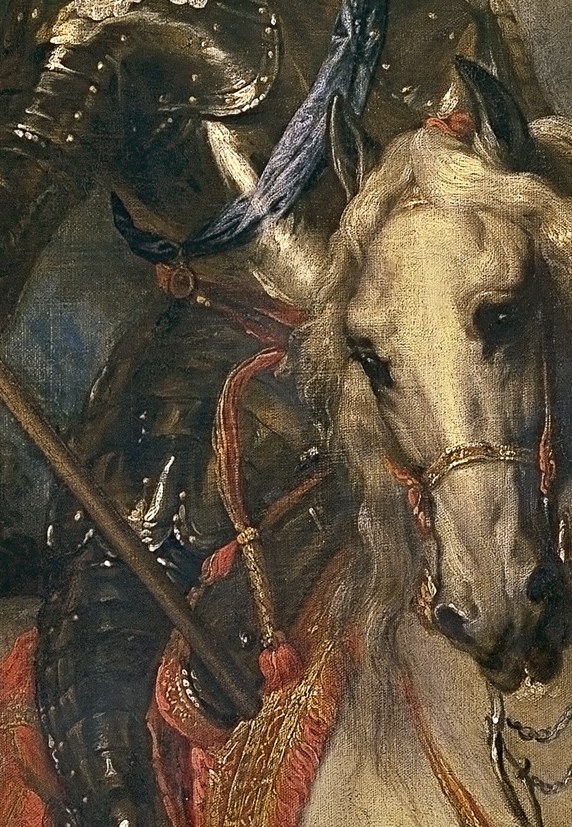
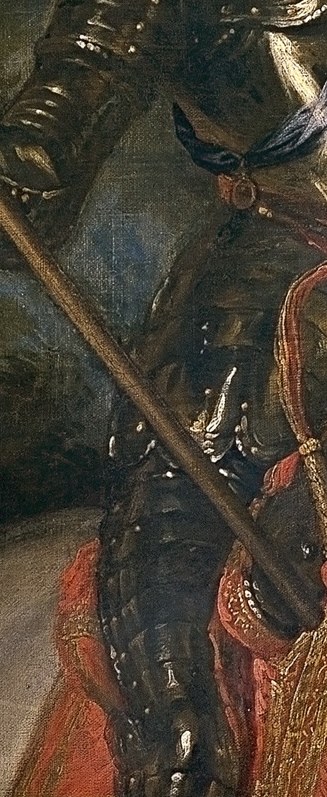
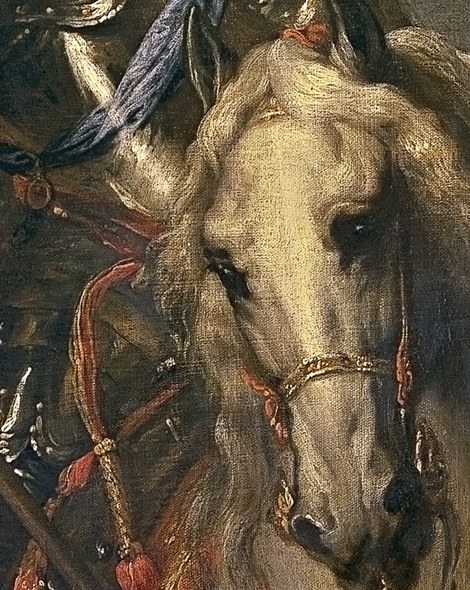
Van Dyck meticulously crafted this image to convey strength and authority. Notice the king's ornate armor and the commander's staff, all carefully rendered to emphasize his military leadership and sovereign status. The powerful white horse, with its red saddle cloth and flowing mane, further adds to this grand display.
However, this portrait serves as a poignant historical marker. Only four years after its completion, England plunged into a devastating civil war. This conflict would ultimately lead to Charles I's execution in 1649, a dramatic end to his reign. Van Dyck himself, a favored court painter, fled the war and died shortly after.
This painting is a powerful testament to a king's carefully constructed image, tragically juxtaposed with the tumultuous events that would soon engulf his life and kingdom.
Details
Transcript
This is King Charles I, in a portrait from 1638. He commissioned it to project an image of power. Look at his commander's staff, a symbol of authority. Just four years later, a civil war would break out. The conflict would end with his execution in 1649. The painter would also die, fleeing the war.