Último sueño de una virgen by Manuel Villegas Brieva
Manuel Villegas Brieva’s “Último sueño de una virgen” (Last Dream of a Virgin) from 1898 captures a profoundly quiet and contemplative scene, believed to depict a moment of spiritual transition or death. This oil painting is part of the Museo del Prado's esteemed collection.
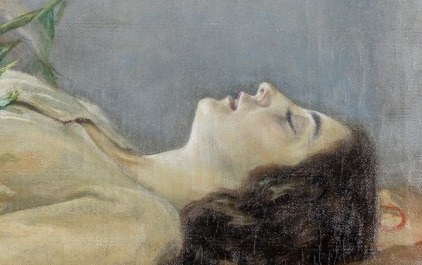
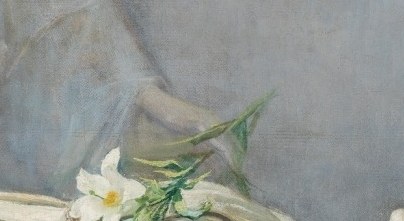
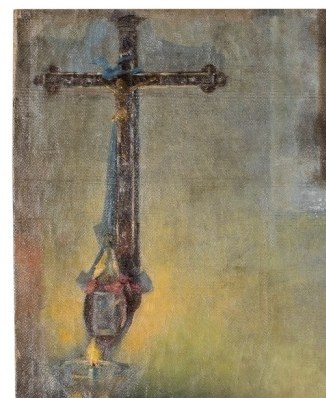
The artwork invites viewers to observe the delicate details: the serene expression of the reclining figure, the angel's compassionate gaze, and the symbolic irises. The solitary flickering candle casts a soft, dim light, emphasizing the solemn atmosphere.
Painted at the close of the 19th century, this work is an example of religious genre painting from the period. Villegas Brieva uses a restrained palette and chiaroscuro to model forms, creating a sense of stillness and reverence.
The painting offers a glimpse into the devotional practices and spiritual beliefs prevalent at the turn of the century. What details in the scene resonate most with you?
Details
Transcript
This painting from 1898 shows a quiet, final moment. Her closed eyes suggest a peaceful, last sleep. An angel watches over, offering irises, a symbol of mourning. The flickering candle represents life, faith, and transition. Her open hand rests, accepting what comes next. The cross on the wall reinforces the devotional scene.