The Contemporary Poets. A Reading of Zorrilla in the Artist's Studio by Antonio María Esquivel

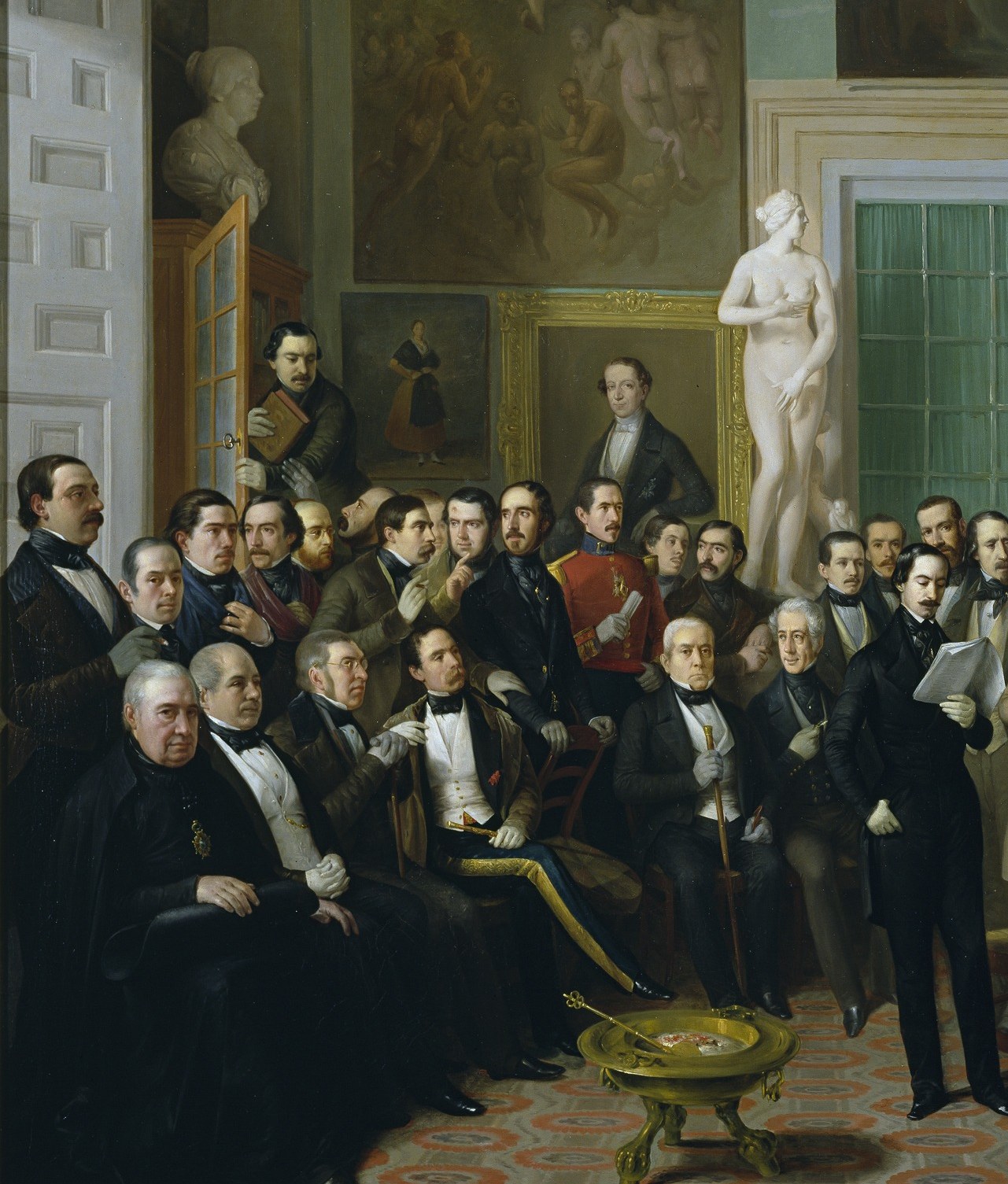
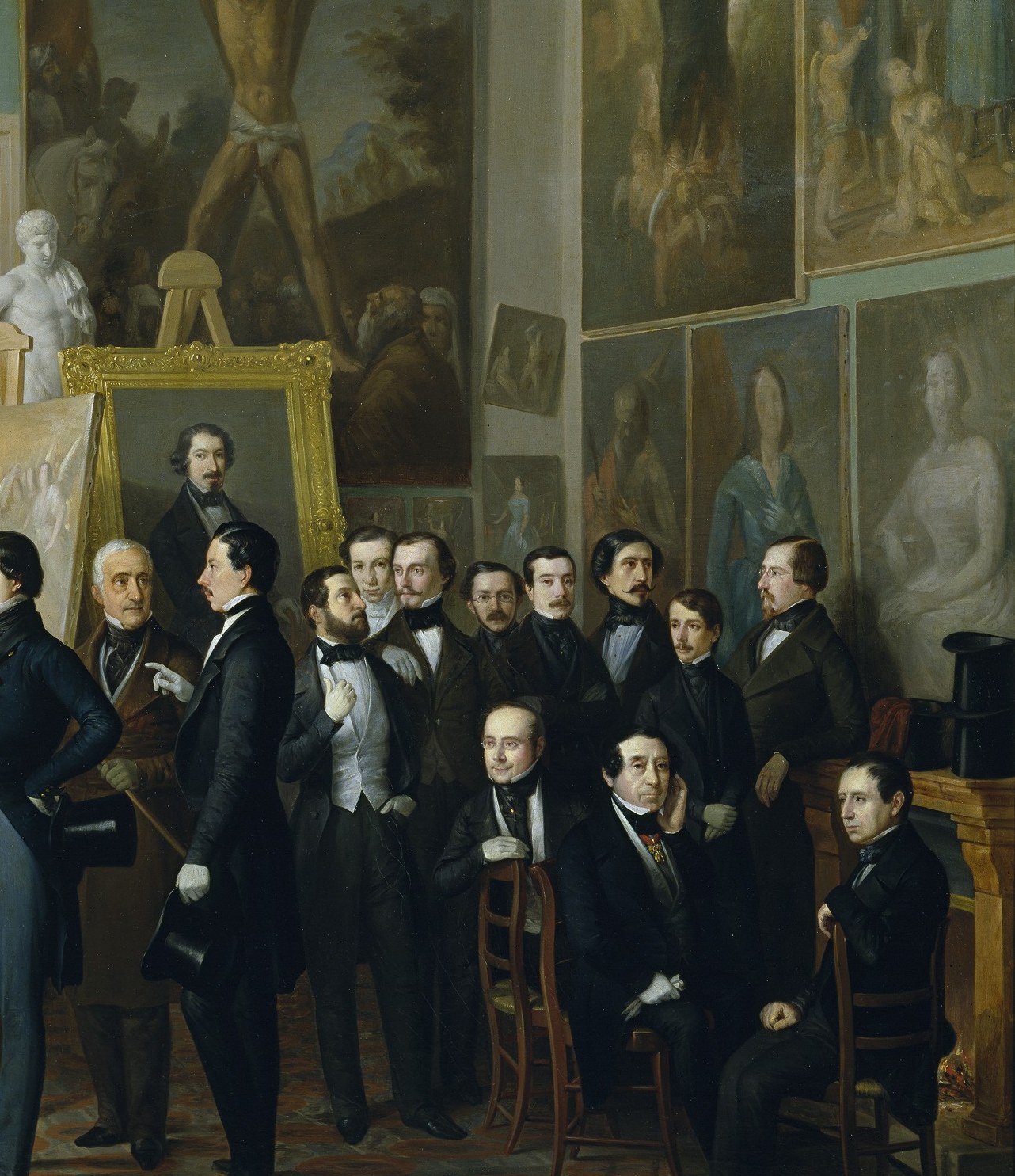
This is Antonio María Esquivel's "The Contemporary Poets. A Reading of Zorrilla in the Artist's Studio," painted in 1846 and held at the Museo del Prado. It is a fiction: a gathering of forty-four of Spain's greatest Romantic-era writers that never actually took place.

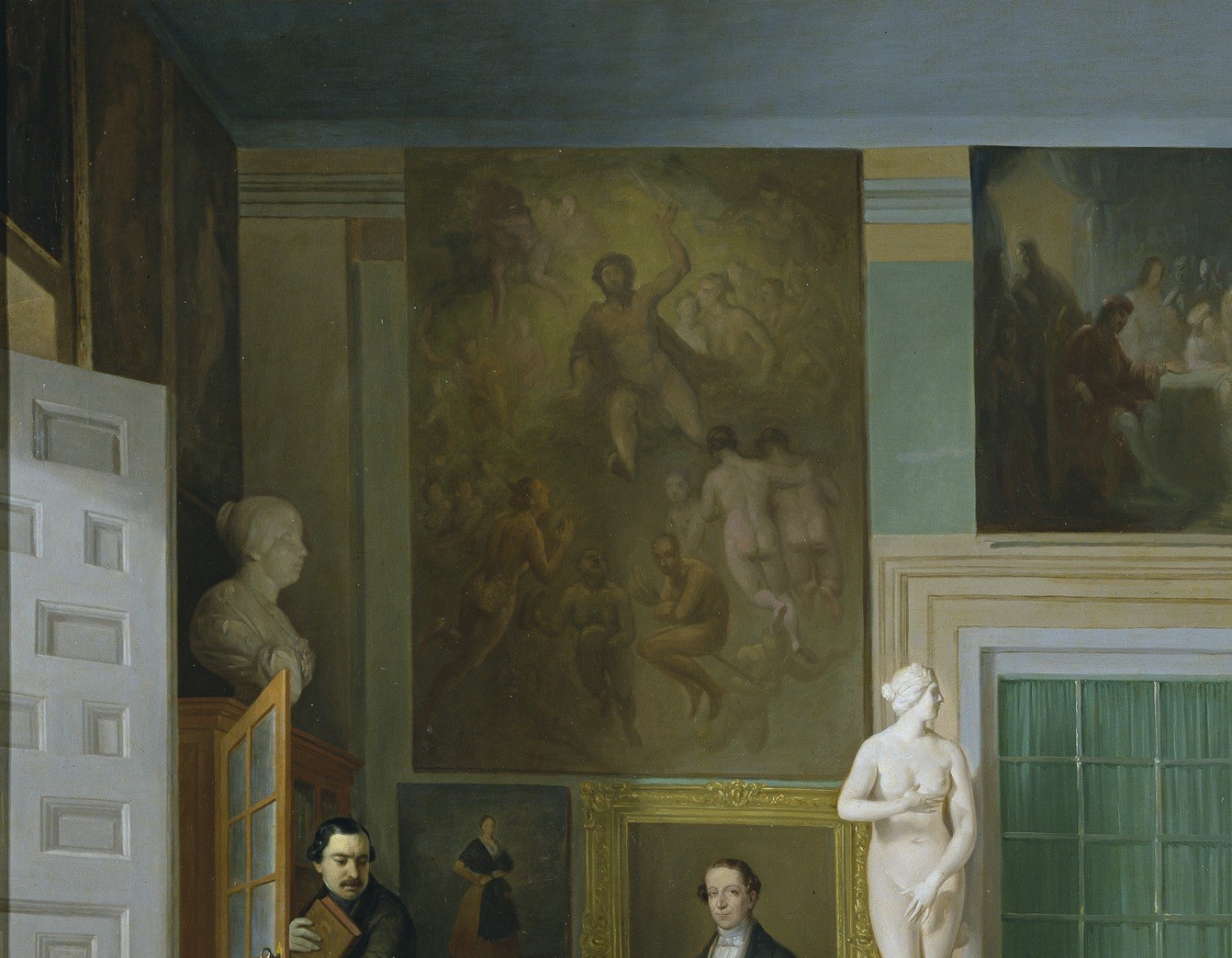
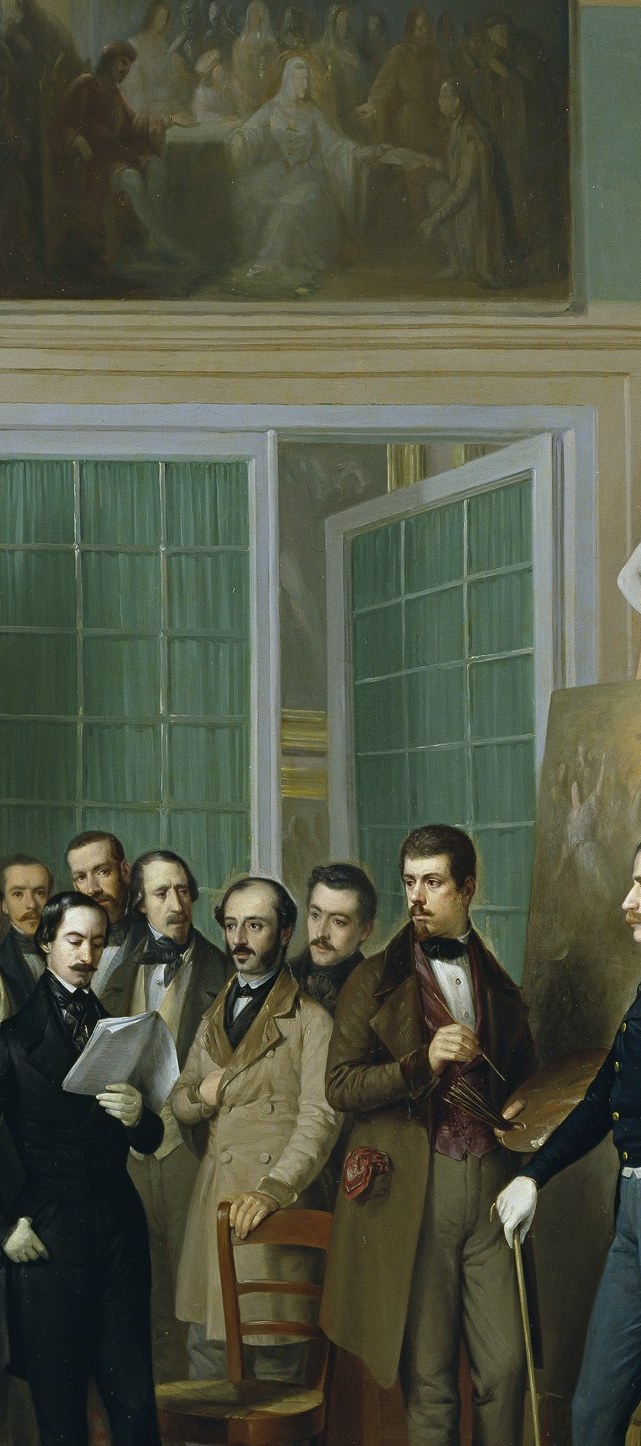
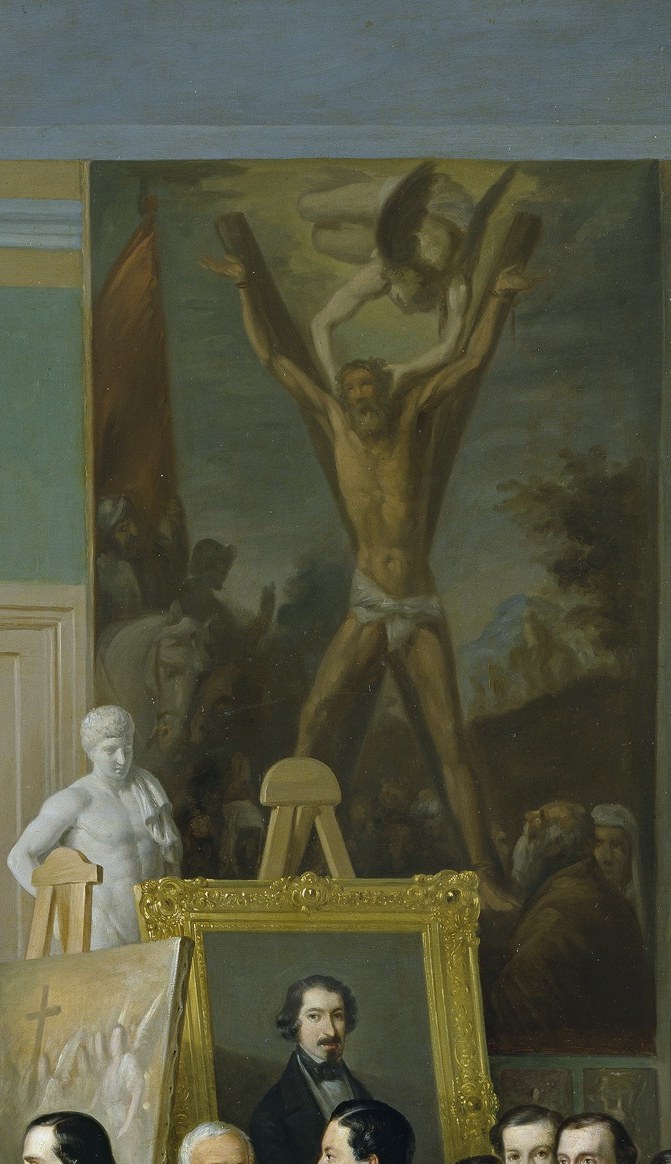
The painter Esquivel inserted himself at the center right, holding his brush and palette. He is both the creator and a guest at his own imaginary party. José Zorrilla stands reading aloud from a manuscript, and around him orbit the named literary figures of mid-19th-century Madrid. But on the back wall hangs a framed portrait of José de Espronceda, who had died in 1842. He is a ghost at the feast, present only as a painting-within-a-painting.

Esquivel painted this during the peak of his career, shortly after being appointed Court Painter in 1843. He had co-founded the Liceo Artístico y Literario and knew these men personally. The canvas became a monument to a generation, a group portrait that preserved a community in oil even if they never stood in the same room together.

It is a painting about longing. About the desire to gather everyone you admire, living and dead, in one place. And about the only art form that can actually do it.

#arthistory #romanticism #esquivel

Details
The only pale vertical in a field of 44 dark-suited men , its presence consecrates the studio as a space of high art and functions as a silent presiding muse over the literary reading
Named identifiable portraits of Spain's leading intellectuals , faces turned toward the reader with varying degrees of attention; recoverable from contemporary engravings, this is historical documentation masquerading as genre painting
Senior figures including Quintana and Mesonero Romanos; their varied postures , some rapt, some in quiet side-conversation , suggest a living salon rather than a stiff academic assembly
Esquivel's own finished works serve as backdrop, transforming the studio into a gallery and making the entire scene a display of the painter's professional identity alongside the poets'
The hinge of the entire composition , every other figure orbits his voice; the upward tilt of the papers distinguishes performance from private reading and makes this a theatrical rather than scholarly moment
Transcript

Forty-four men listen to a poem. But this room full of great writers never existed. The painter invented the gathering. He stands here, with his brush, as host and witness. Around him, the real literary lights of Madrid. But look on the back wall. The poet Espronceda had been dead four years. He could only attend as a painting within a painting.