Virgin and Child by Dieric Bouts
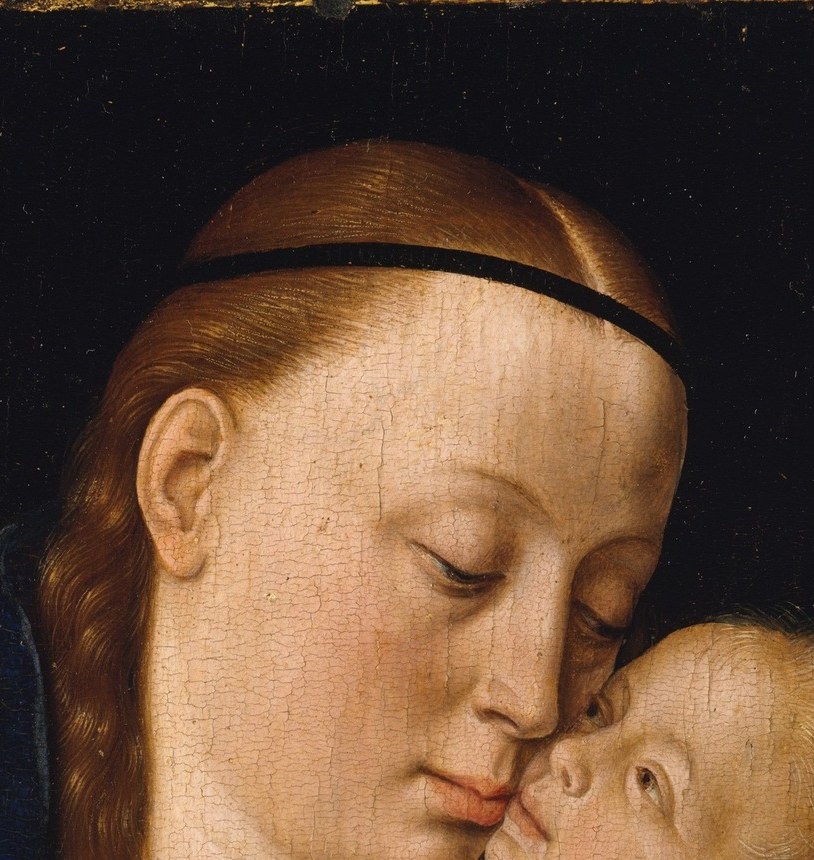
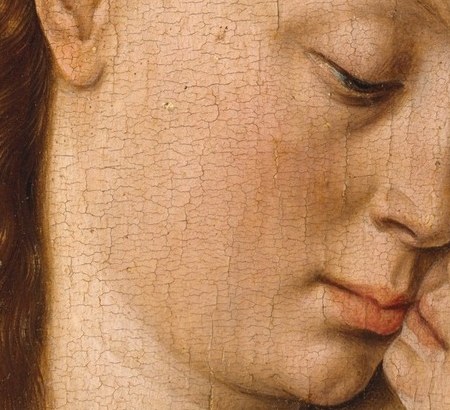
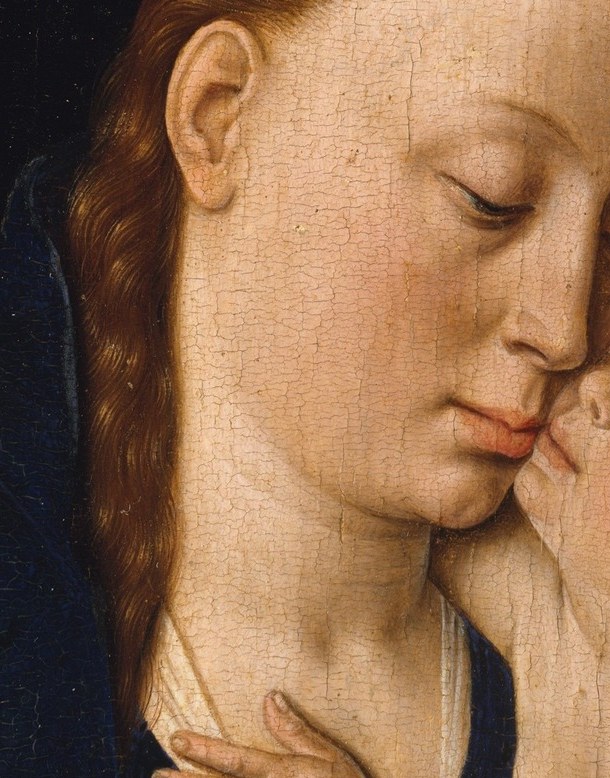
This is Dieric Bouts's Virgin and Child, painted in 1457 and held by The Metropolitan Museum of Art. The painting is built on a visual illusion: the Virgin's face and the Christ Child's forehead appear to touch, but the exact point of contact is hidden in shadow.
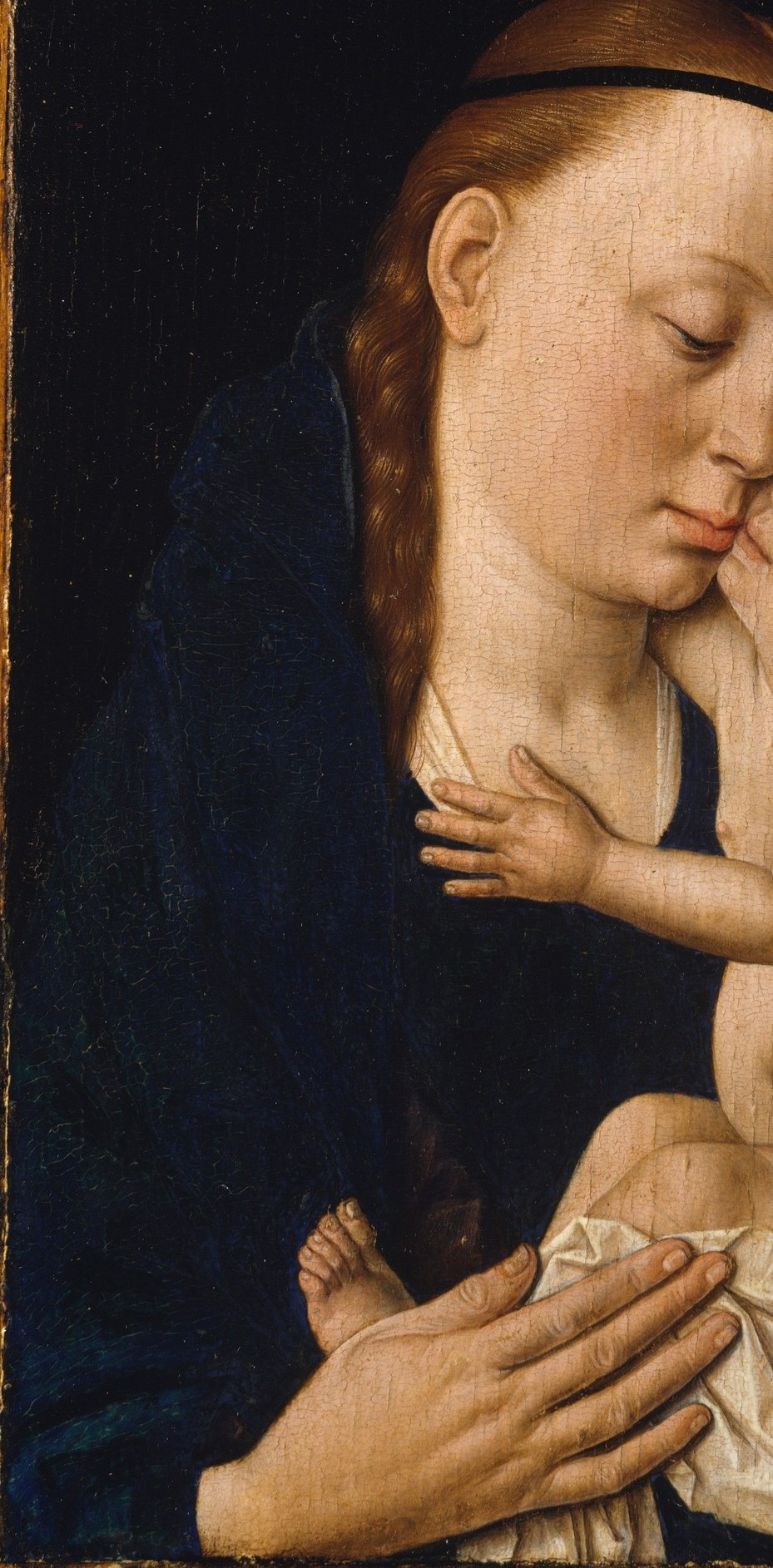
Look closely at the dark sliver between Mary's parted lips and the infant's brow. Bouts refused to paint a clear gap or a clear touch. The shadow does the work, and your eye completes the kiss. Around it, the ultramarine mantle and the crisp white veil show a Flemish painter in full command of oil technique, carrying forward what Van Eyck had proven.
Bouts had just arrived in Leuven when he made this panel. He would become the city's official painter and one of the first northern artists to use a single vanishing point. But here, in a small devotional image, he was after something simpler: a sacred moment that feels physically, achingly close.
The painting is only about fourteen inches tall. It rewards the kind of looking a phone screen can't quite give, but you can start here.
Details
Transcript
A mother holds her child in near-total darkness. Her eyes are closed. Her lips are barely parted. Bouts painted this the year he arrived in Leuven. Look at the space between her mouth and his forehead. There is no gap. Her lip touches his skin. He painted a kiss so close it vanishes into shadow.