The Burning of the Houses of Lords and Commons, 16 October 1834 by J.M.W. Turner
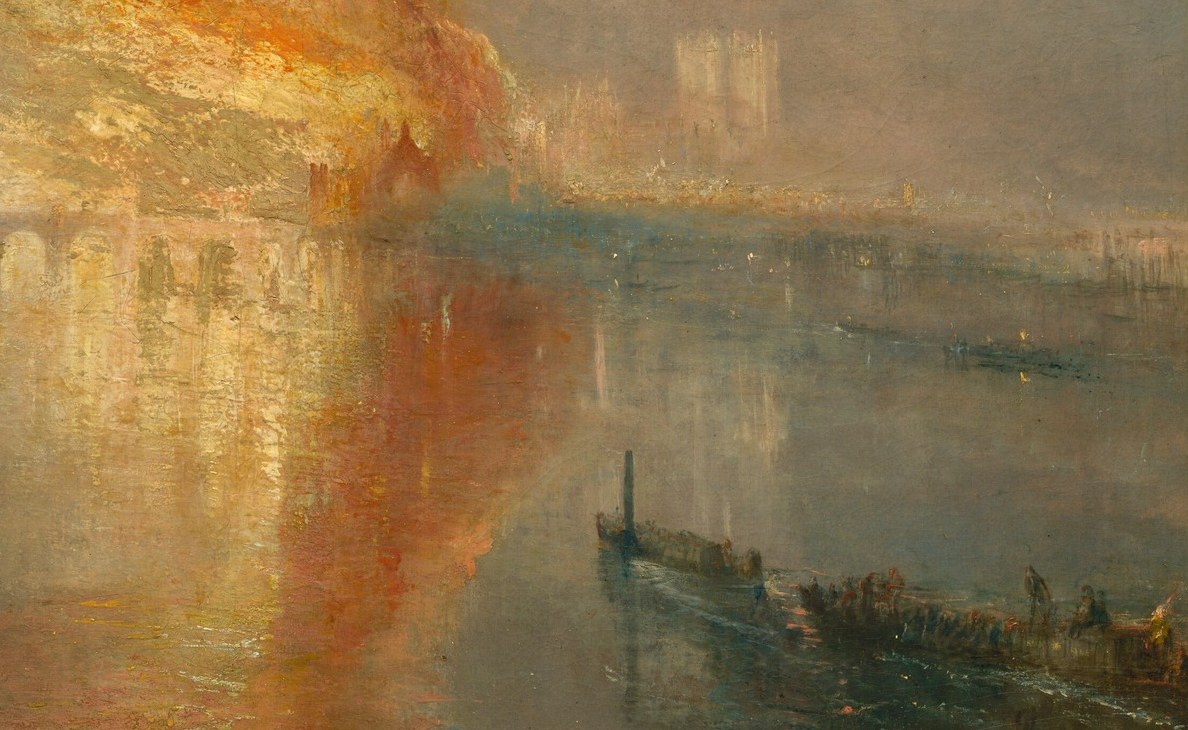
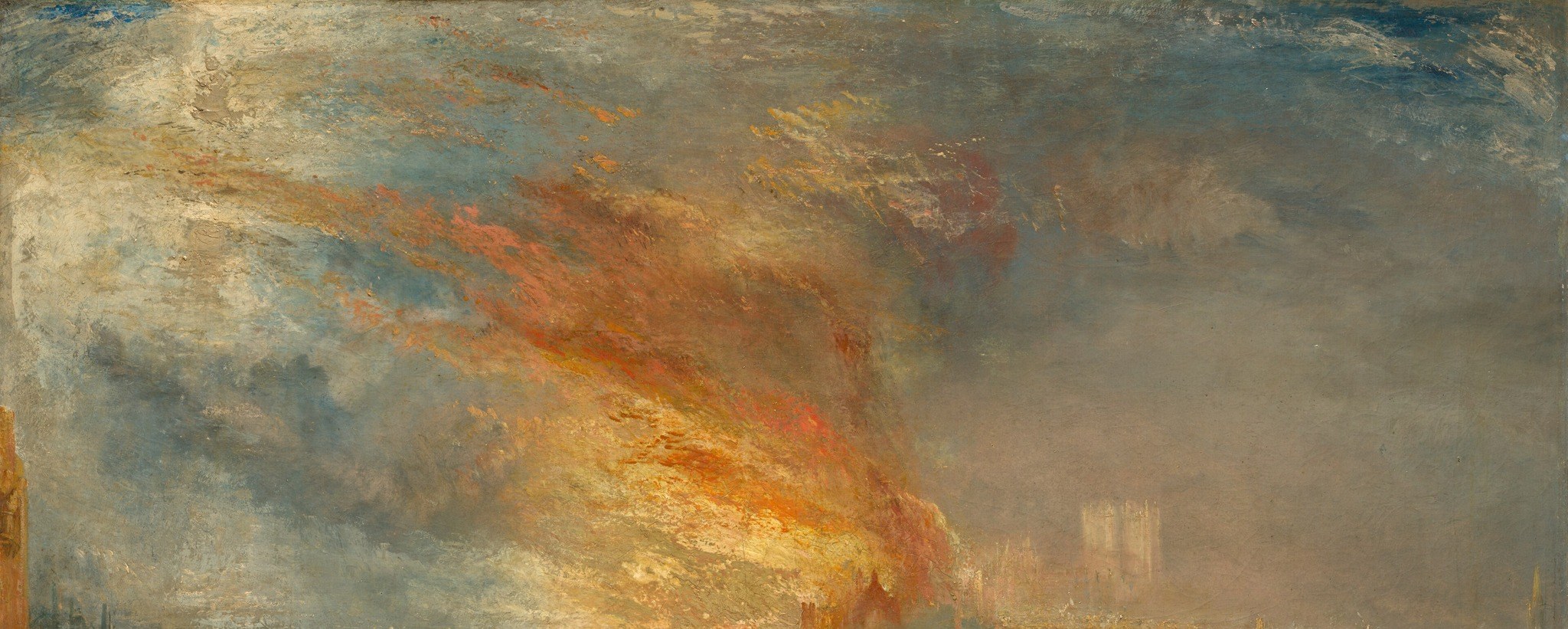
J.M.W. Turner's "The Burning of the Houses of Lords and Commons, 16 October 1834" (1835) at the Philadelphia Museum of Art, captures a pivotal moment in London's history and in art itself.
Turner was famously on the scene, sketching from a boat on the River Thames as the old Palace of Westminster, home to the Houses of Parliament, was consumed by fire. His painting transforms a catastrophic event into a spectacle of light and color, where the flames become an almost abstract force.
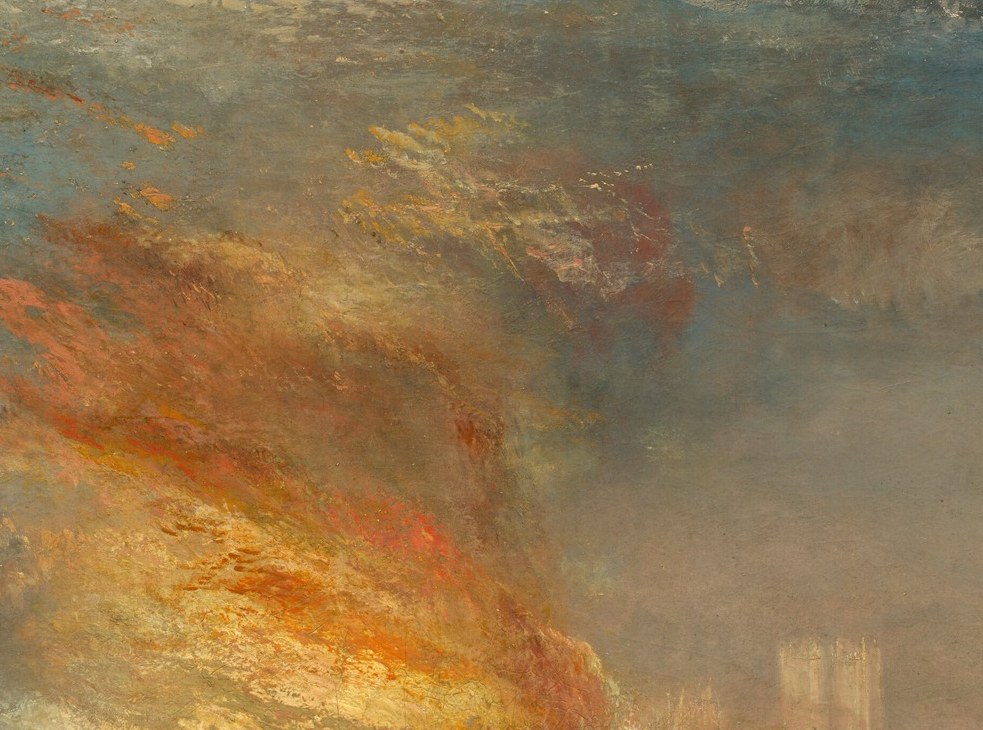
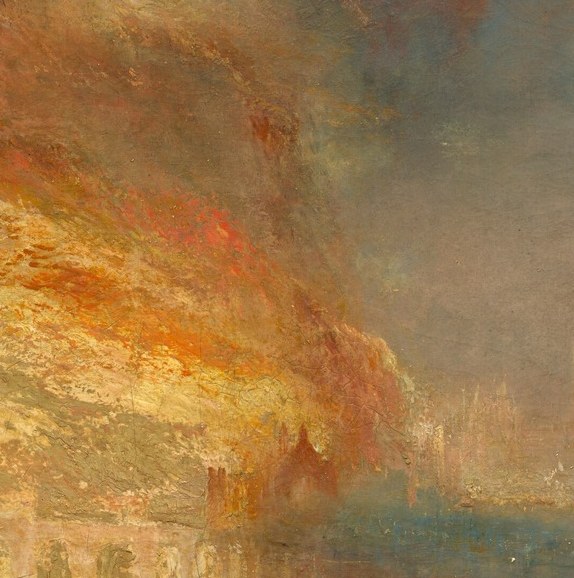
This work is a testament to Turner's groundbreaking style, which pushed the boundaries of traditional landscape painting. His focus on atmospheric effects and the raw power of nature, often at the expense of precise detail, anticipated later art movements like Impressionism.
What do you see in the dramatic interplay of fire, water, and sky?
Details
Transcript
October 16, 1834, London's Houses of Parliament caught fire. This painter was there, sketching from a boat on the Thames. He captures the blaze consuming the Palace of Westminster. The sky is a canvas of turbulent, fiery color. The flames become pure, destructive energy. A symbol of the old order burning away. His art was changing, just like his world.