Mary of Burgundy by Master H.A. or A.H.
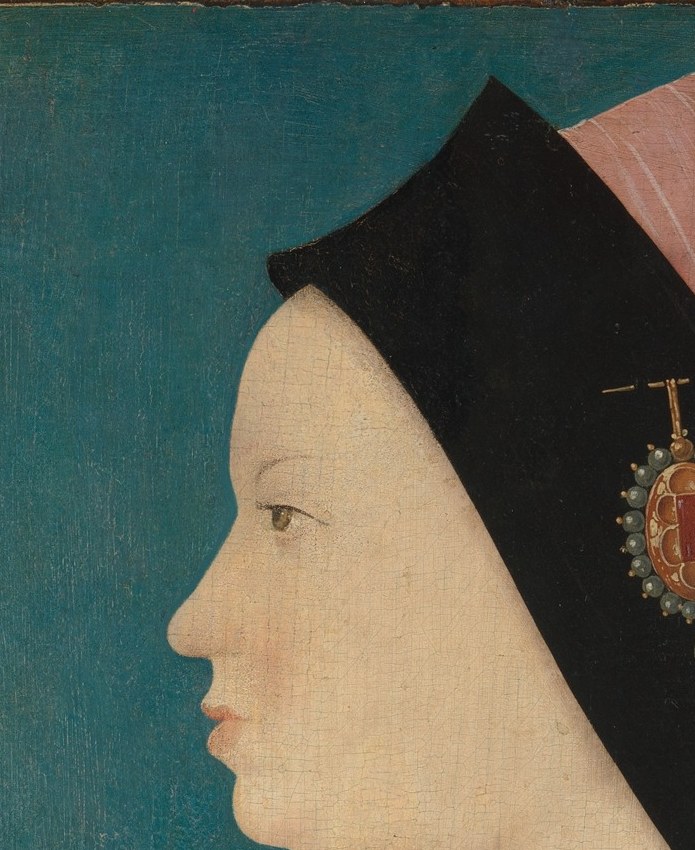
Mary of Burgundy died in 1482, thrown from a horse at twenty-five. Her daughter was four. This portrait, now at The Metropolitan Museum of Art, was painted in 1528, forty-six years after she died.
The painter never saw her face. He worked from a single drawing made during her life, a sketch now lost. What we see is not a direct likeness but a chain of memory: a court determined to preserve the image of a woman whose political legacy was immense. Her marriage united Burgundy with the House of Habsburg, so her face, even after death, remained a dynastic tool.
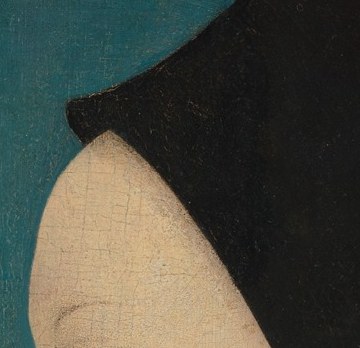
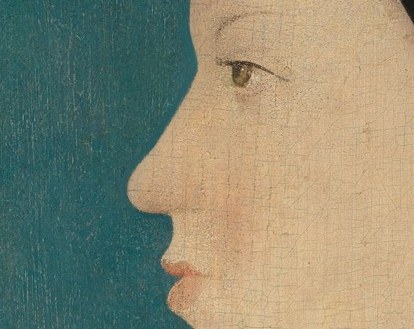
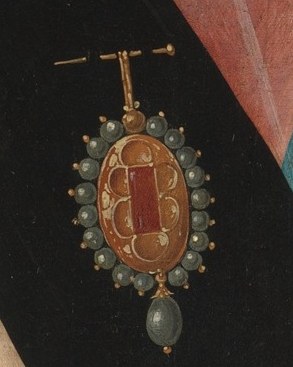
Look closely at the strict profile, the downcast eye, the rigid composure. These are not signs of a painter capturing a moment. They are signs of a painter copying a formula, working from a single frozen source, trying to summon a living presence from a dead model. The jeweled pendant and the elaborate headdress carry more documentary weight than the face itself, they are precisely rendered because they could be checked against physical objects kept in the treasury.
The result is a paradox: a portrait of absence, endlessly reproduced from one lost drawing, the copy of a copy of a memory.
Details

Transcript
This woman died in 1482, at twenty-five. She fell from a horse. Her daughter was four. This portrait was painted in 1528. Forty-six years after she died. The painter never saw her face. He worked from a single sketch, now lost, made during her life. Her husband kept her memory alive for decades. Look at her eye. This is a copy of a copy of a memory.