Ann Biddle Hopkinson (Mrs. Francis Hopkinson) by Sully, Thomas
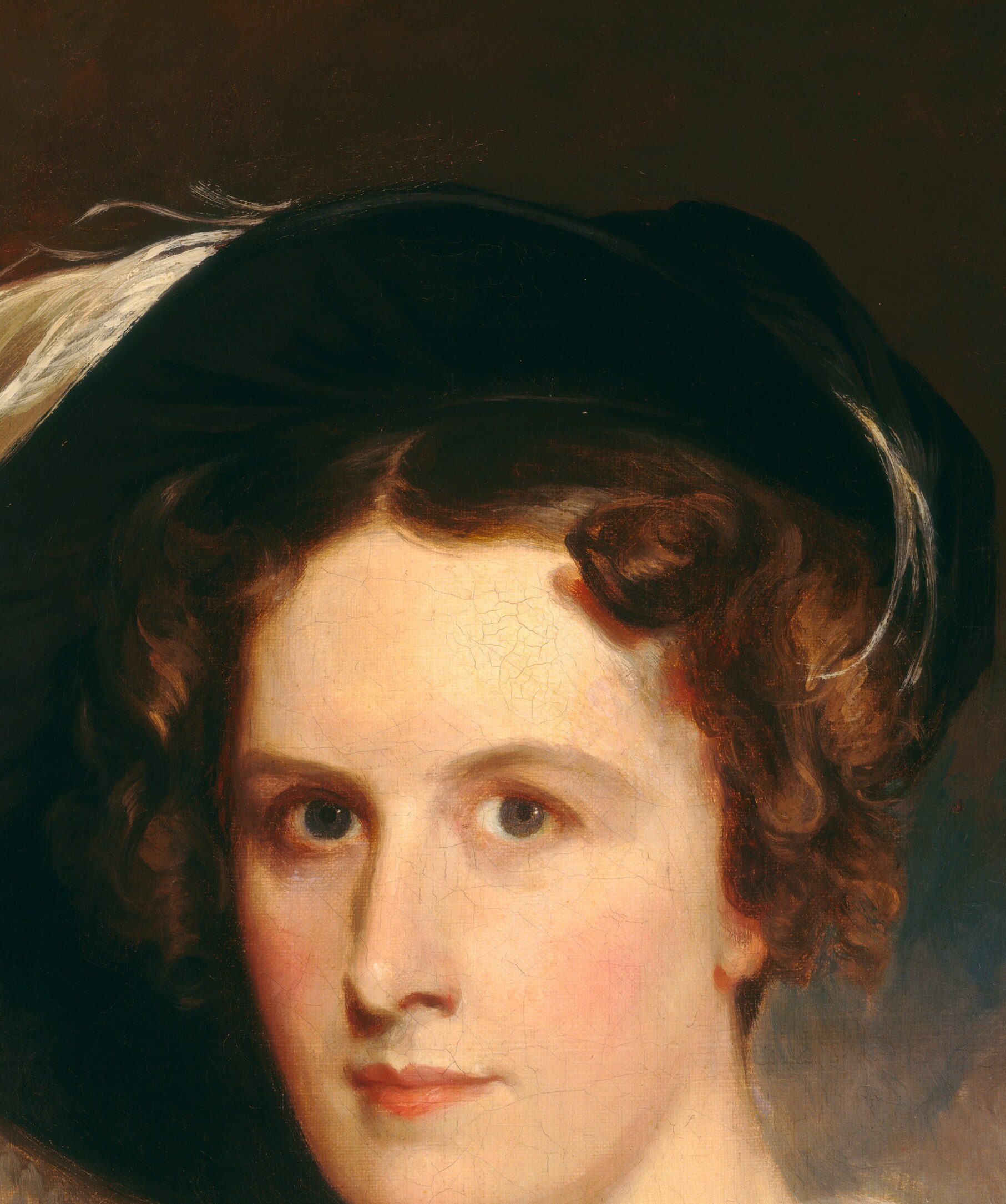
This is Thomas Sully's portrait of Ann Biddle Hopkinson, painted in 1834 and now held by the Smithsonian American Art Museum. Sully was the most sought-after portraitist in Philadelphia, and he built his reputation on a single, almost impossible skill: making oil paint feel like air.
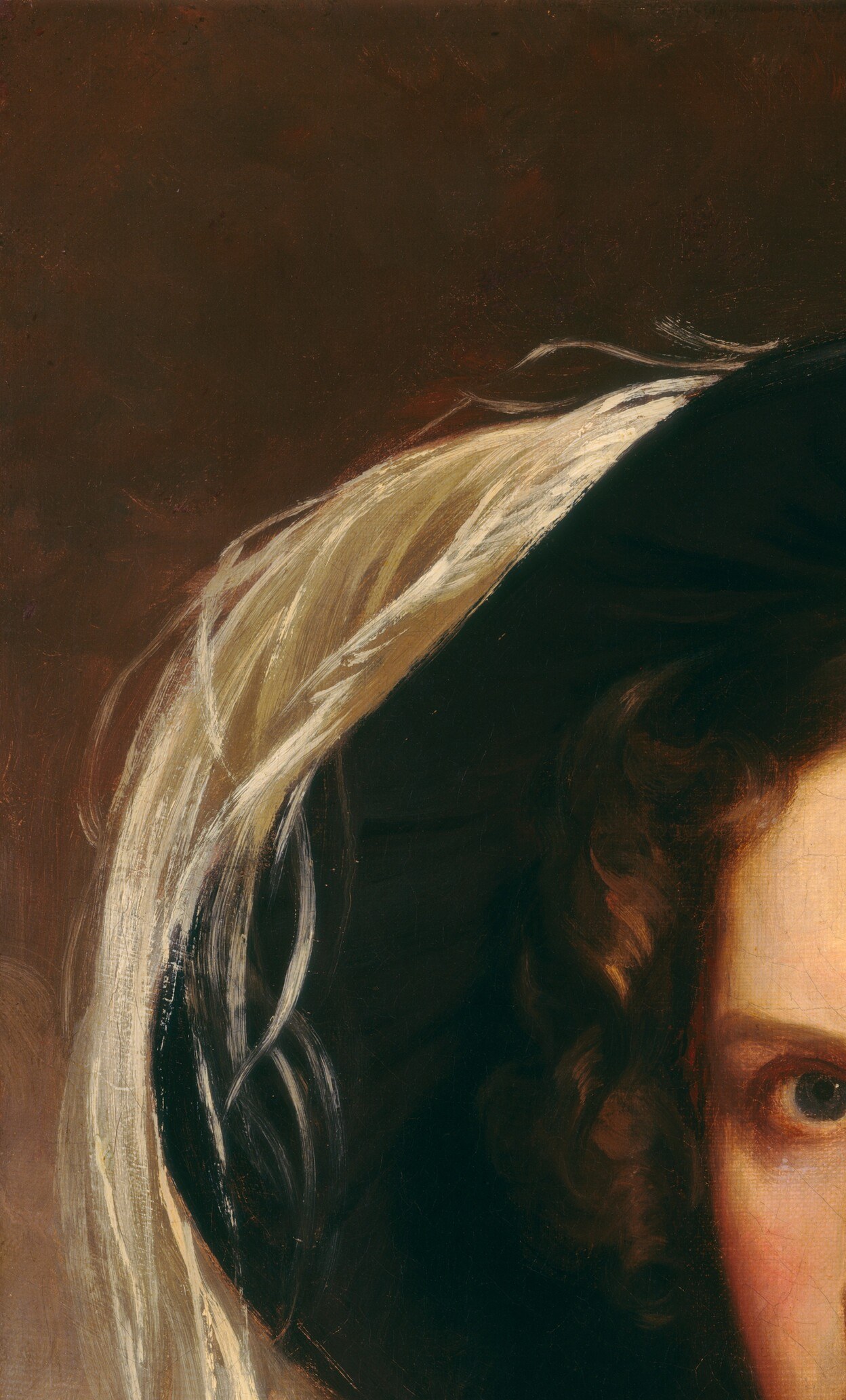
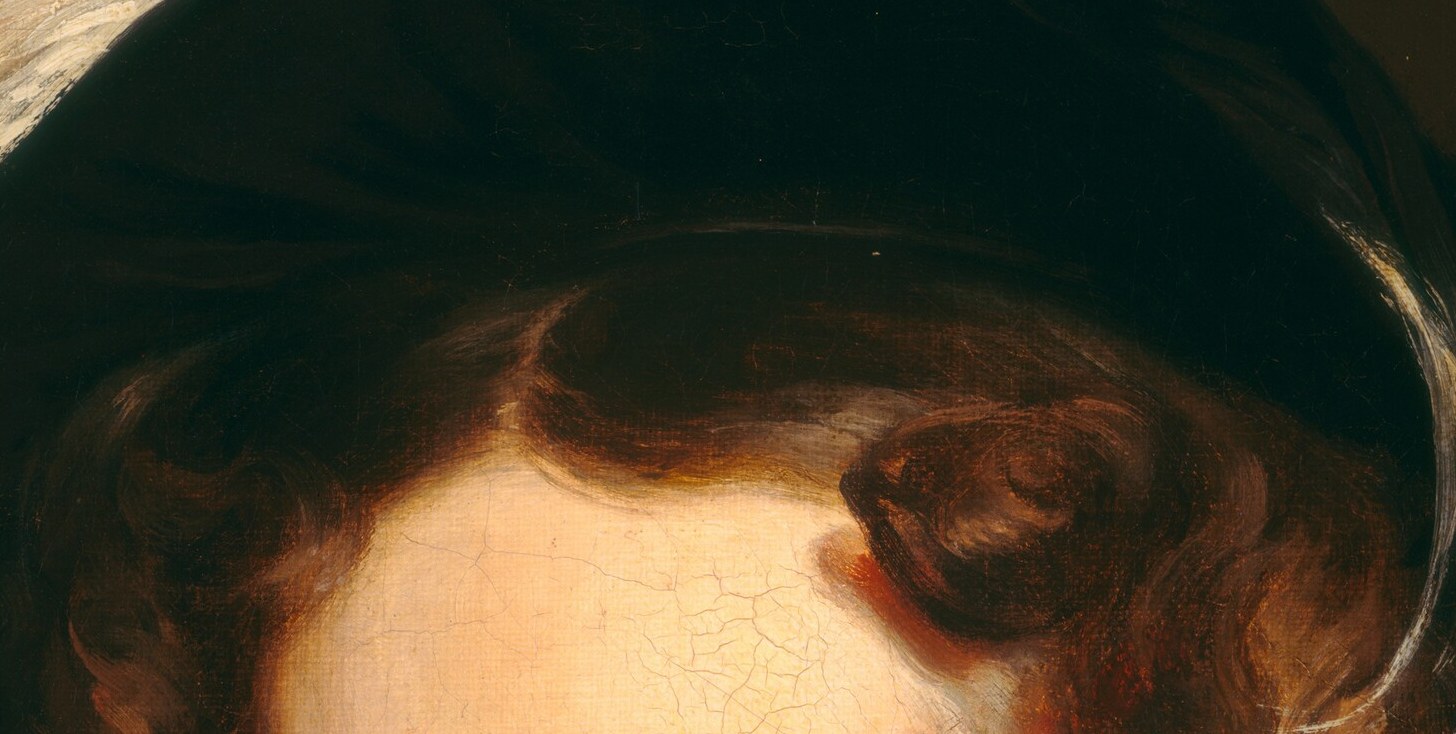
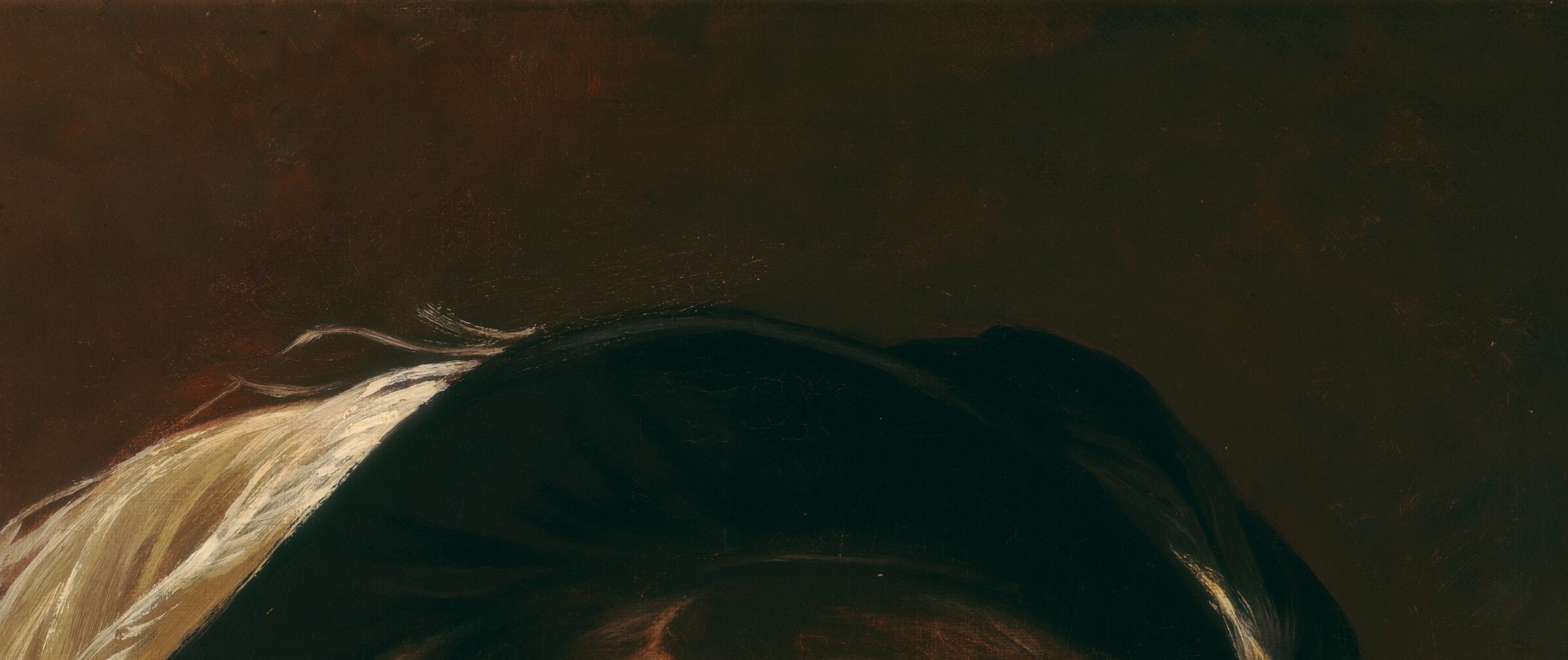
Look at the white veil falling from her bonnet. It crosses her dark hair, her skin, and the background behind her, yet everywhere it passes the surface beneath remains perfectly visible. This is not a glaze in the usual sense. Sully laid in the face and hair completely, then dragged a dry brush carrying the faintest whisper of white across the top. The paint sits on the high points of the canvas weave while the dark ground shows through between them. Your eye blends the two into a continuous film of gossamer.
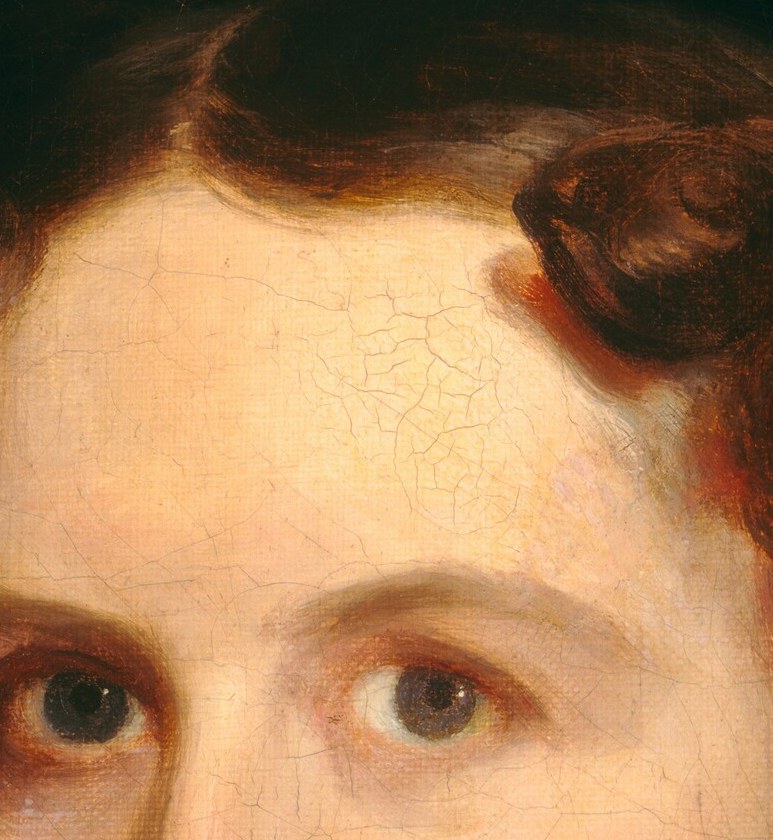
Now look at the tip of her nose. That highlight is a single, cool stroke of lead white, placed once and left alone. Every art student learns to build form through careful modeling. Sully understood that a portrait lives or dies in the economy of its marks. The veil took daring. The nose took discipline. Both tricks work because they are surrounded by soft, quiet passages that ask for nothing.
Sully lived to be 89 and painted over two thousand portraits. The veil in this picture remains one of the quietest feats of his hand: a thing that is not there, made so you cannot look away.
Details
Transcript
She seems like any other 1830s society portrait. A woman of means in the latest fashion. Direct. Composed. But Thomas Sully hid one daring experiment in plain sight. A sheer white veil. Look at what it passes over. It crosses her forehead and hair without obscuring a single detail. This is not liquid fabric. It is dry pigment, scumbled whisper-thin. Sully built illusion from almost nothing. One stroke for a nose. A veil that isn't there. He knew that less is more astonishment.