The Annunciation by Petrus Christus
View the artwork: The Annunciation →
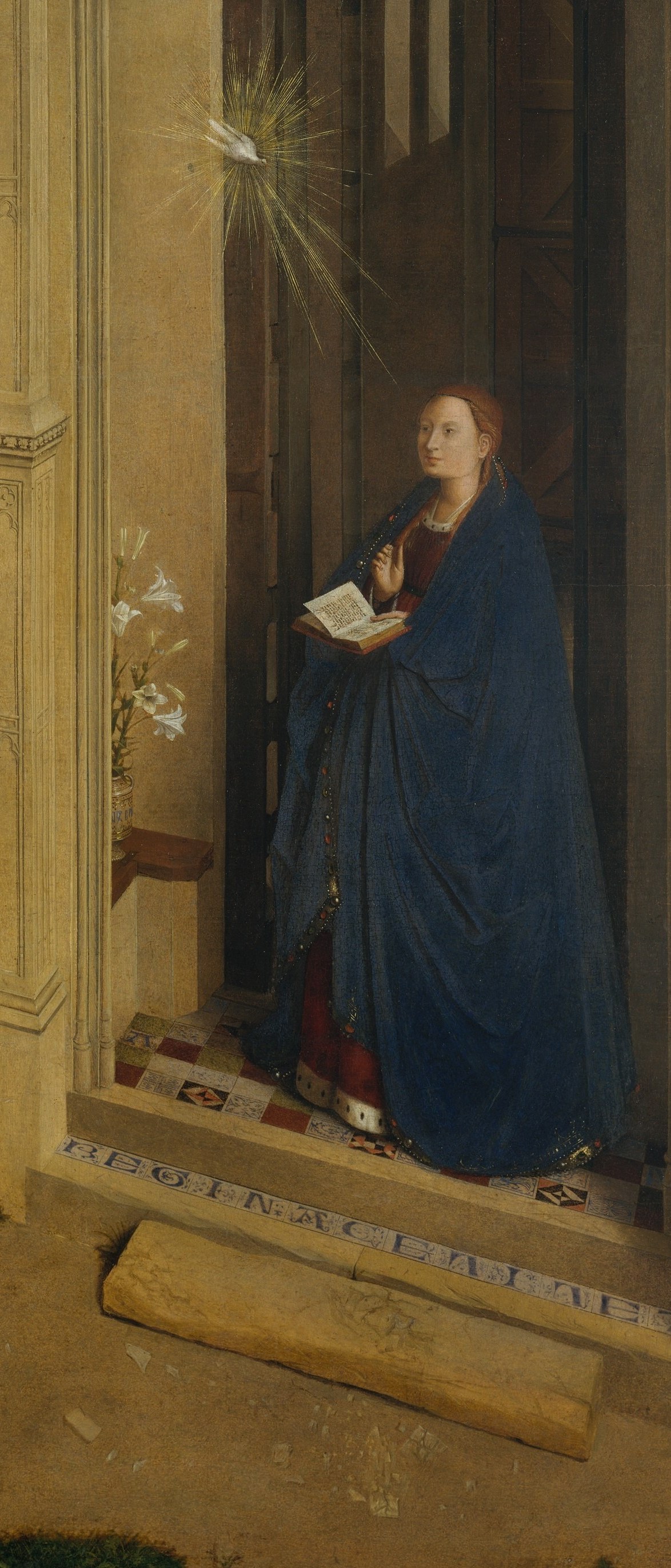
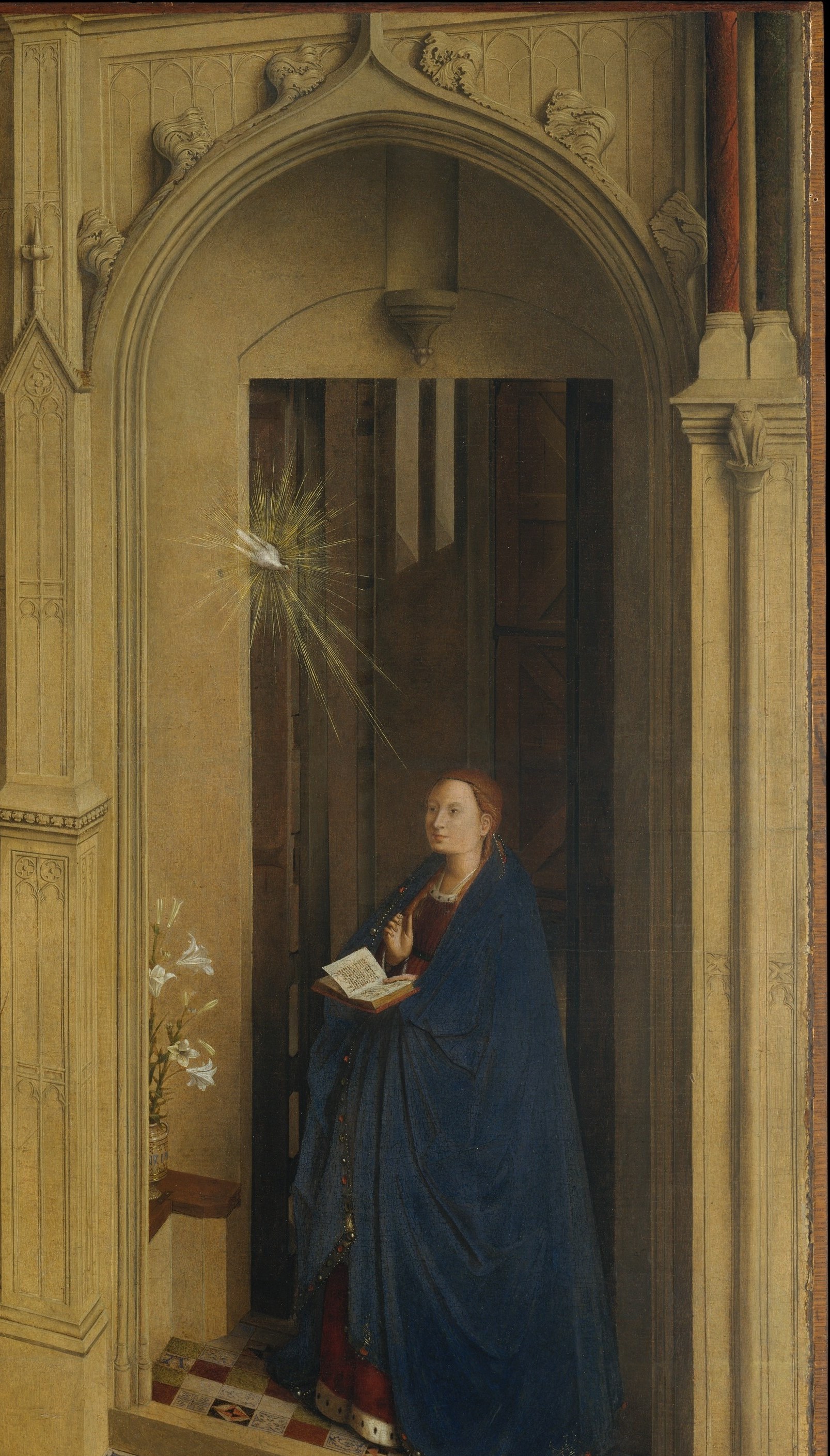
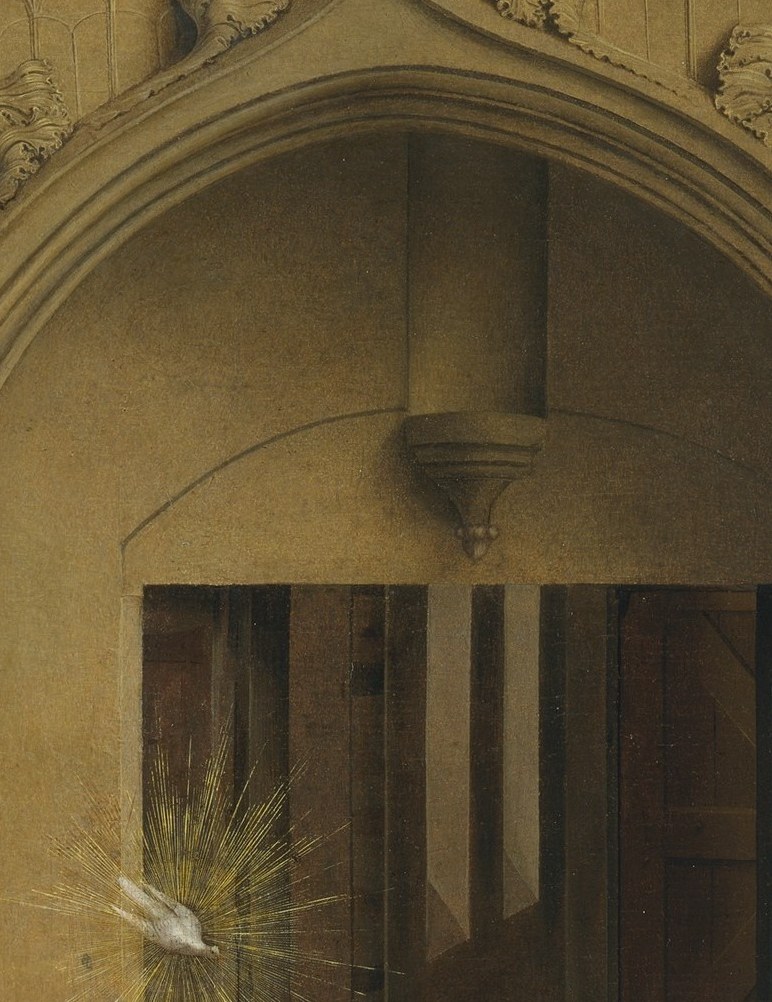
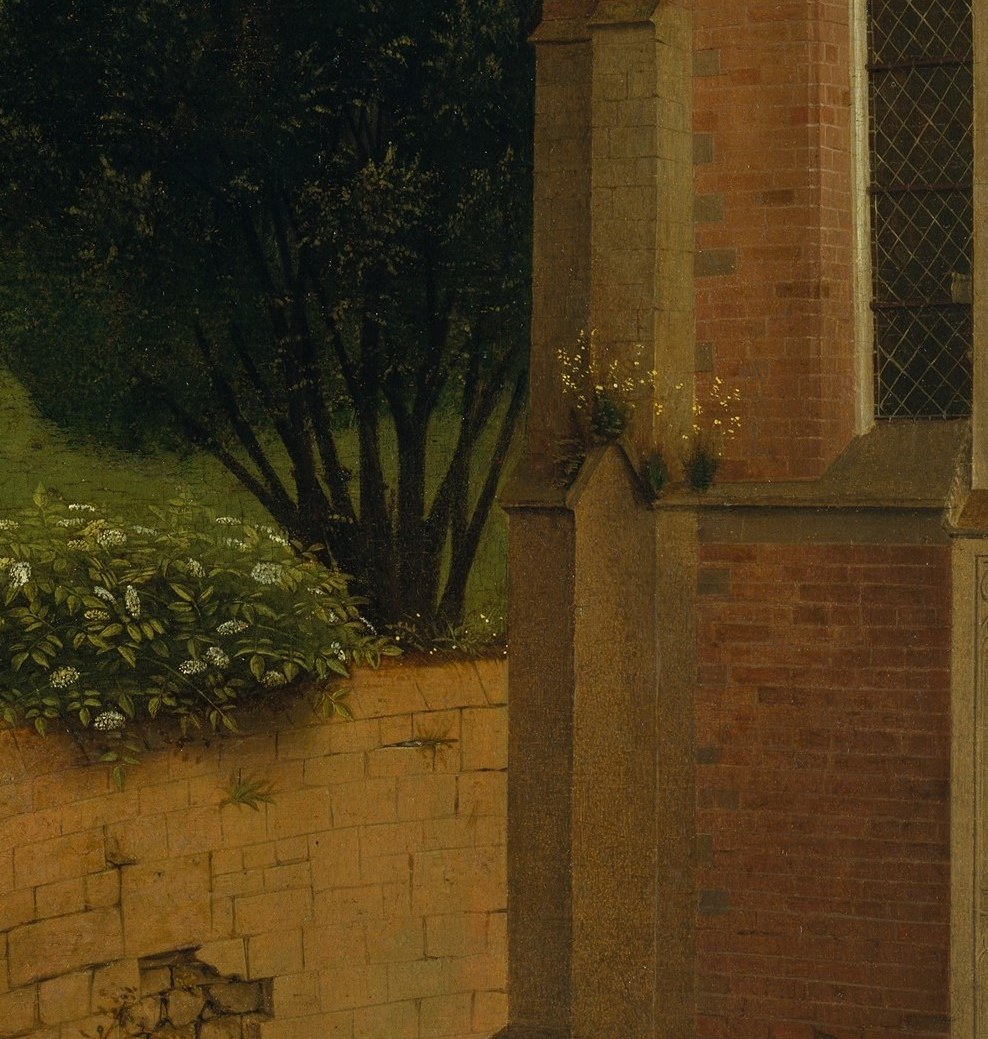
The Friedsam Annunciation, painted around 1445, is a fragment of something larger. Petrus Christus likely made it as the left wing of a triptych altarpiece, and at some point before the twentieth century, someone cut it down on three sides. That cropping erased the horizon and left the composition feeling subtly unmoored.
Look at the tiled floor first. The perspective places you high above the scene, looking down, but the tiles recede at an angle that does not resolve into a vanishing point. The Gothic arch that frames Mary makes more sense when you imagine the now-missing central panel it once opened toward.
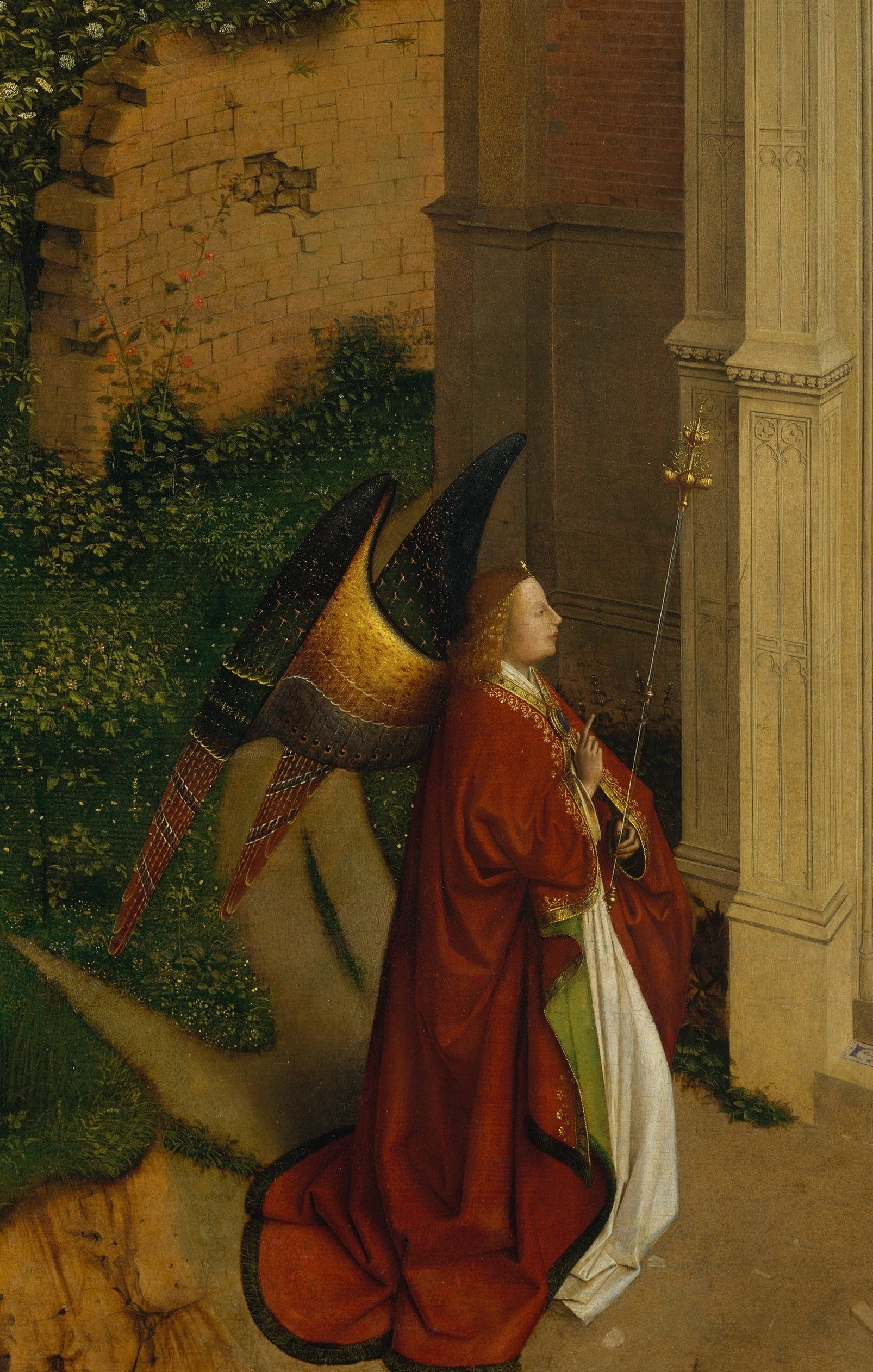
Then let your eye settle on Gabriel's crimson robe. Christus built that red with translucent oil glazes over a gold-brocade underlayer. The paint does not just describe silk; it recreates how light moves through fabric, catching on threads beneath the surface.
Petrus Christus was the leading painter in Bruges after Jan van Eyck's death in 1441. His innovations in linear perspective were ahead of their time, but his authorship of this panel was disputed for decades. Some scholars argued for Hubert or Jan van Eyck himself, dating it as early as 1420. The painting came to the Metropolitan Museum of Art in 1931 as a bequest from the collector Michael Friedsam, whose name it still carries.
When you look at a painting, sometimes the story in the paint is just as compelling as the story in the image. What else might have filled those lost panels?
#arthistory #petruschristus #earlynetherlandish
Details
Transcript
The artist gives us a bird's-eye view. But he also paints the floor tilting away. And hides the horizon completely. The panel was cut down on three sides. This is a surviving wing of a lost triptych. Now watch the paint become silk. Oil glazes layer crimson over carved gold brocade.