Still Life with a Skull and a Writing Quill by Pieter Claesz
View the artwork: Still Life with a Skull and a Writing Quill →
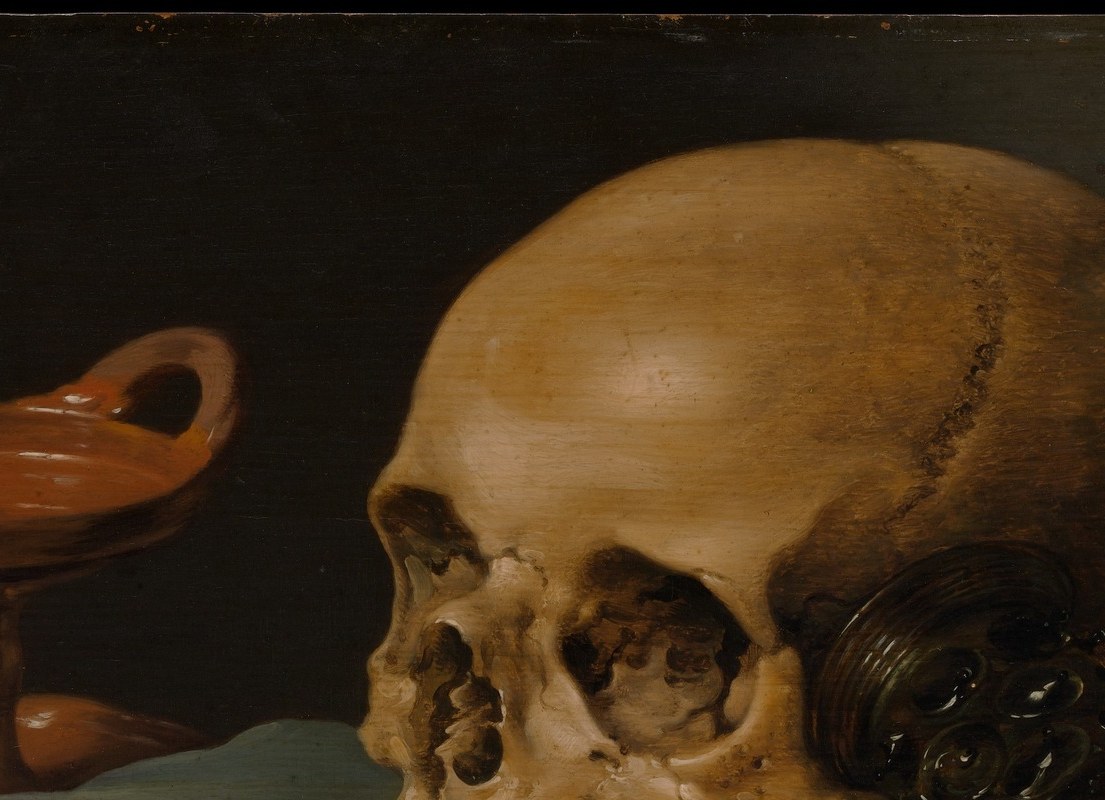
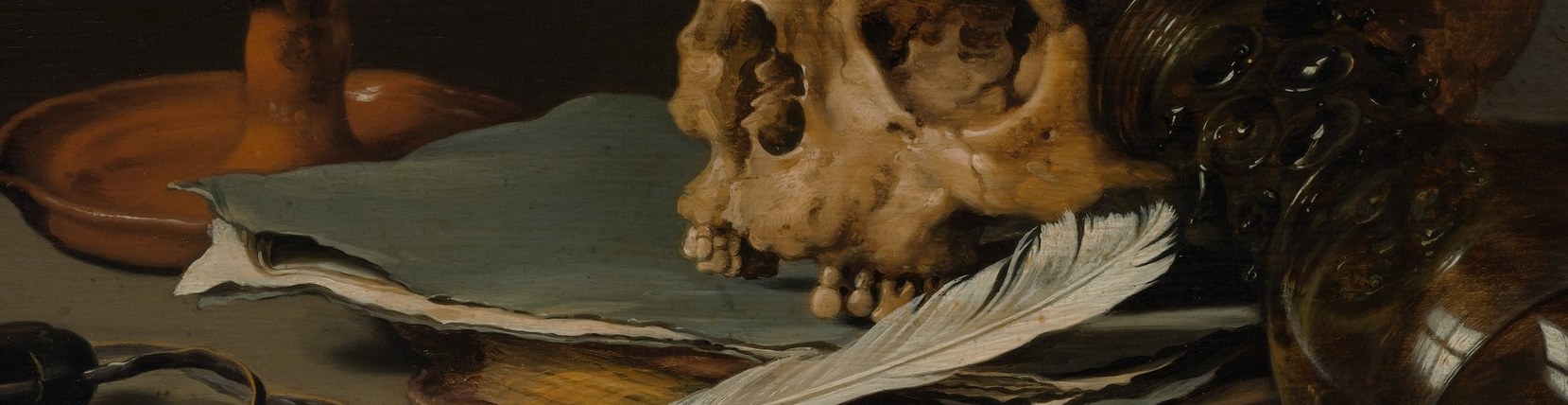
This is "Still Life with a Skull and a Writing Quill," painted by Pieter Claesz in 1628. Housed at the Metropolitan Museum of Art, it is one of the earliest dated still lifes of his career and a remarkably compact guide to the vanitas genre.
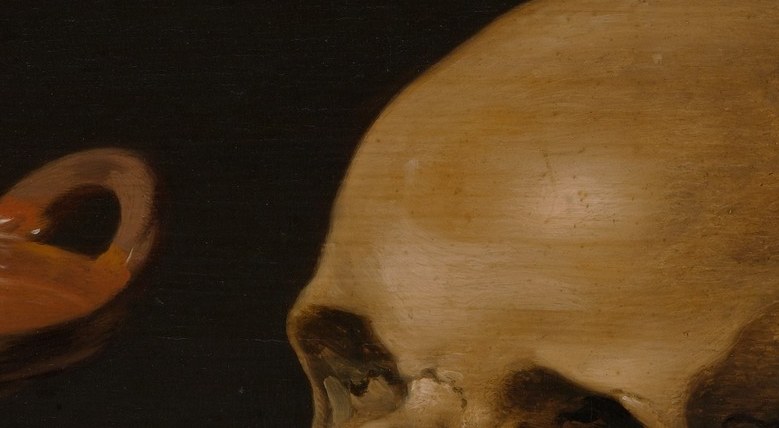
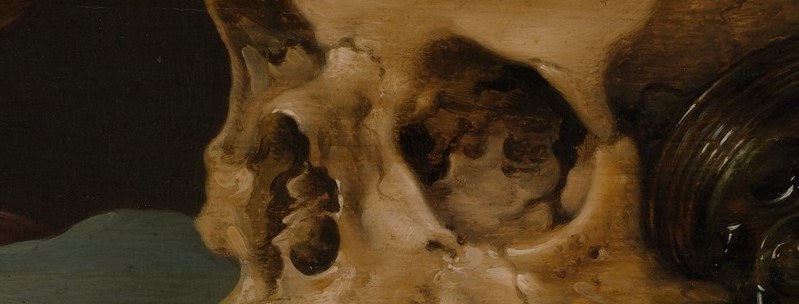
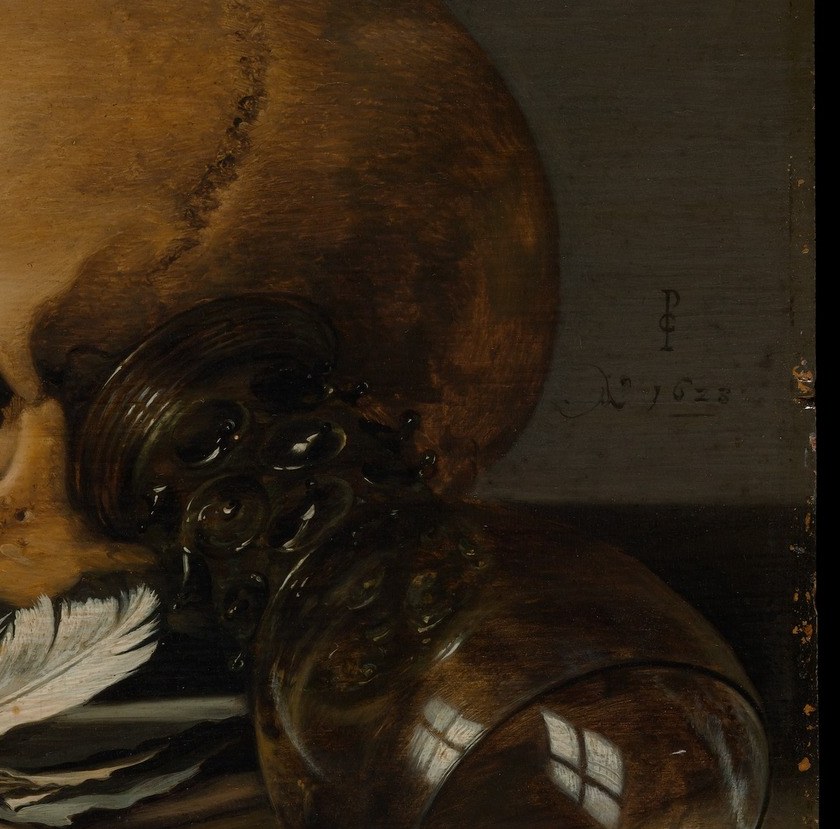
Move through it slowly. The skull is the unavoidable center, but every other object is a sentence in the same argument. The lamp is snuffed, a life extinguished. The glass is overturned, pleasure spilled and done. The quill, inkwell, books, and papers represent human learning and labor. And the tip of that quill rests directly against the bone.
Claesz painted this on a small wood panel, just 24 by 36 centimeters, using a severely restricted palette of grays, browns, and muted blues. For years scholars believed the date inscribed on the work was 1623. A technical examination in 1982, confirmed by the Claesz specialist Martina Brunner-Bulst, proved it read 1628. The Met acquired the panel in 1949 through the Rogers Fund.
The vanitas is not trying to frighten you. It is making a proposition: in the face of death, what did all your work and worry add up to? Claesz offers the question, not the answer.
#arthistory #dutchgoldenage #pieterclaesz
Details
Transcript
A skull. A quill. A snuffed-out lamp. In 17th-century Holland, this arrangement had a name: vanitas. The skull is death. No getting around it. The lamp's wick is cold. A life gone out. An overturned glass. Pleasure, spilled and finished. The writer's tools: books, paper, ink. The quill touches the skull. All that learning comes to this. The date on this panel was misread as 1623 for decades.