Artwork
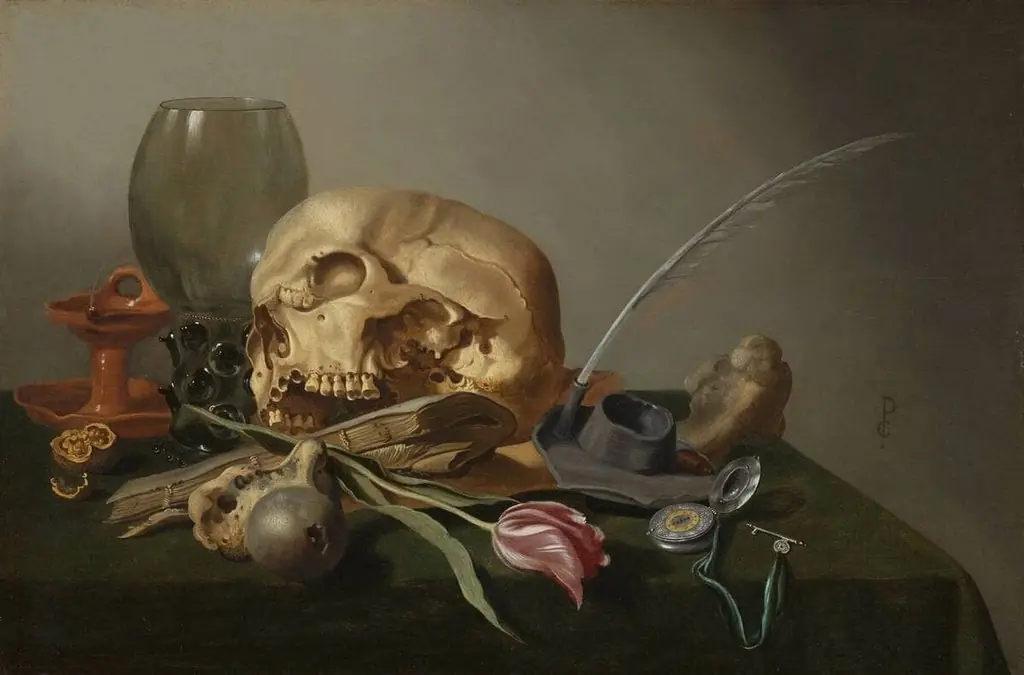
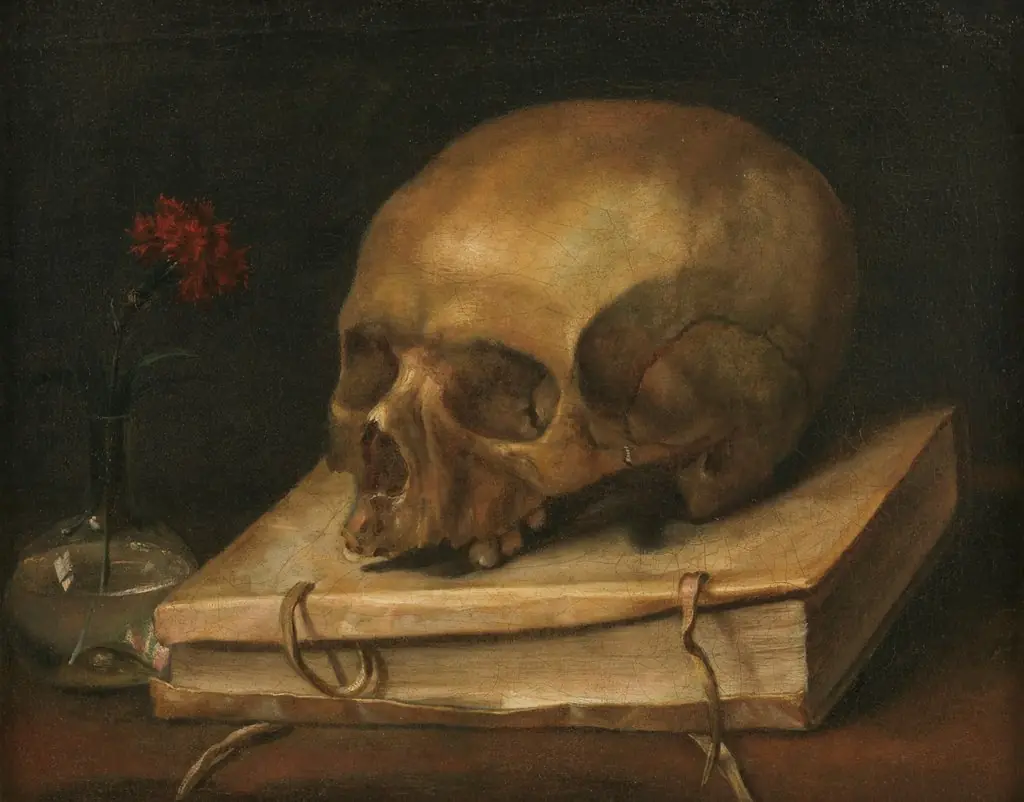
Still Life with a Skull and a Writing Quill
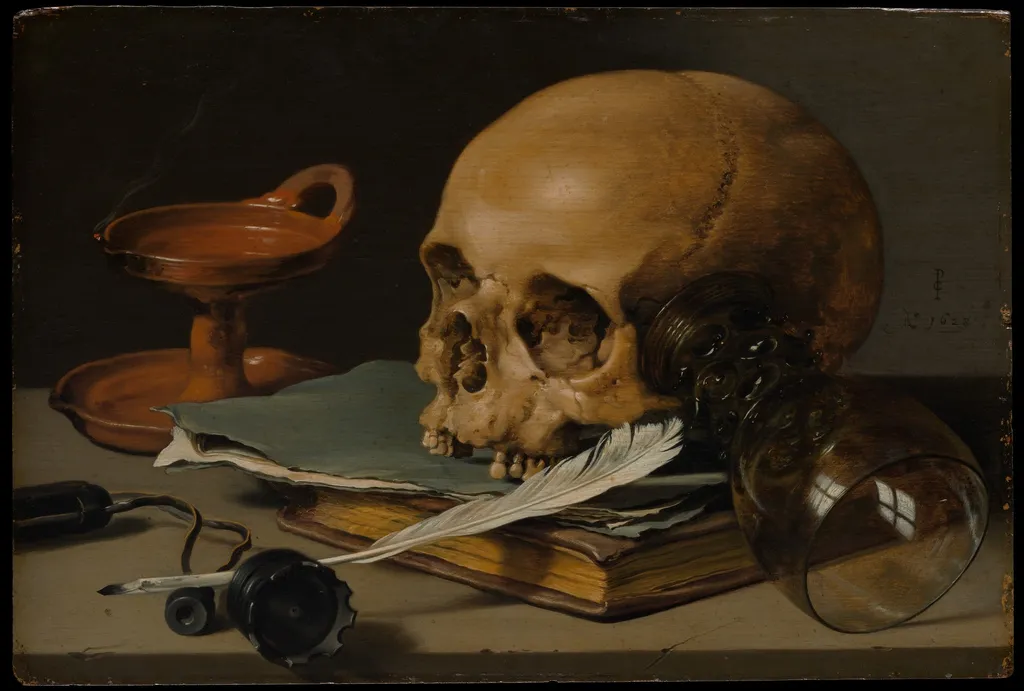
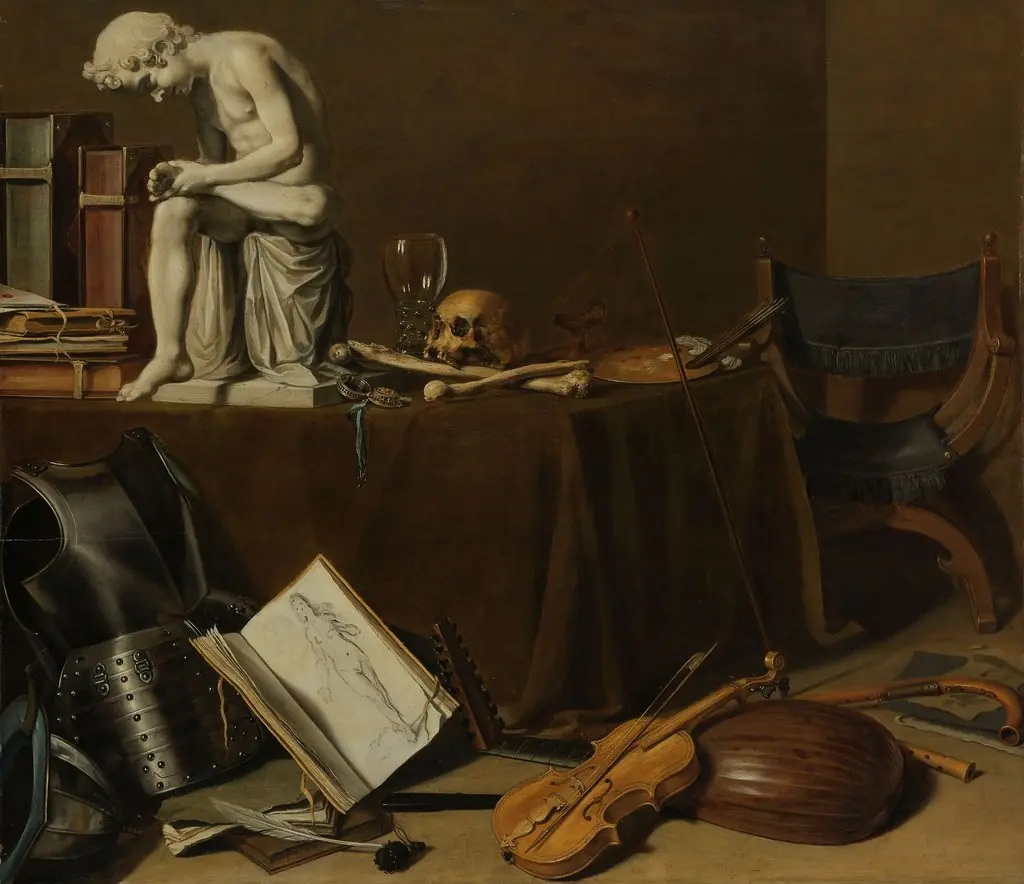
Still Life with a Skull and a Writing Quill is an oil painting by the Dutch Golden Age artist Pieter Claesz. It dates from 1628 and is held in the collection of the Metropolitan Museum of Art.
About this work
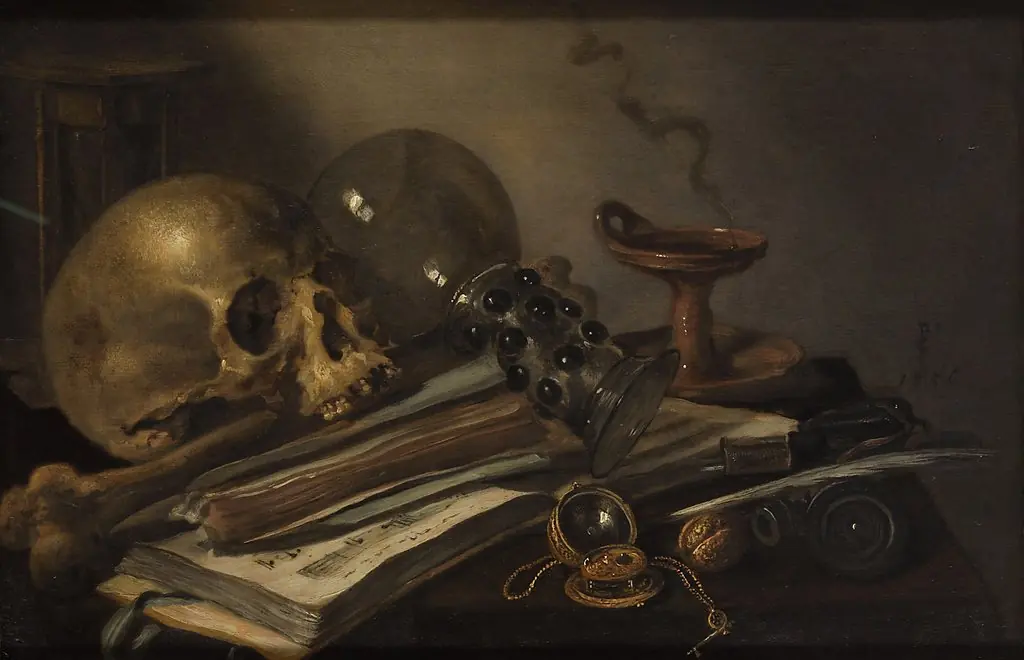
A gap-toothed skull rests on worn stationery folders in Pieter Claesz's 1628 panel, an overturned roemer catching reflections beside a guttering lamp. Painted in Haarlem, this vanitas gathers worldly accomplishment into a few gray and brown objects on a pitted stone ledge. The Metropolitan Museum of Art acquired it in 1949, and study later confirmed the 1628 date, long misread as 1623.
Overview
Pieter Claesz's 1628 painting, Still Life with a Skull and a Writing Quill, is an early example of his work in Haarlem.
Pieter Claesz's 1628 painting, Still Life with a Skull and a Writing Quill, is an early example of his work in Haarlem. This small oil on wood panel exemplifies the vanitas genre, a popular form in the Dutch Republic. It presents a collection of objects, including a skull, an overturned glass, and writing implements, arranged on a stone surface, inviting contemplation on the transient nature of existence and worldly endeavors.
Subject & Meaning
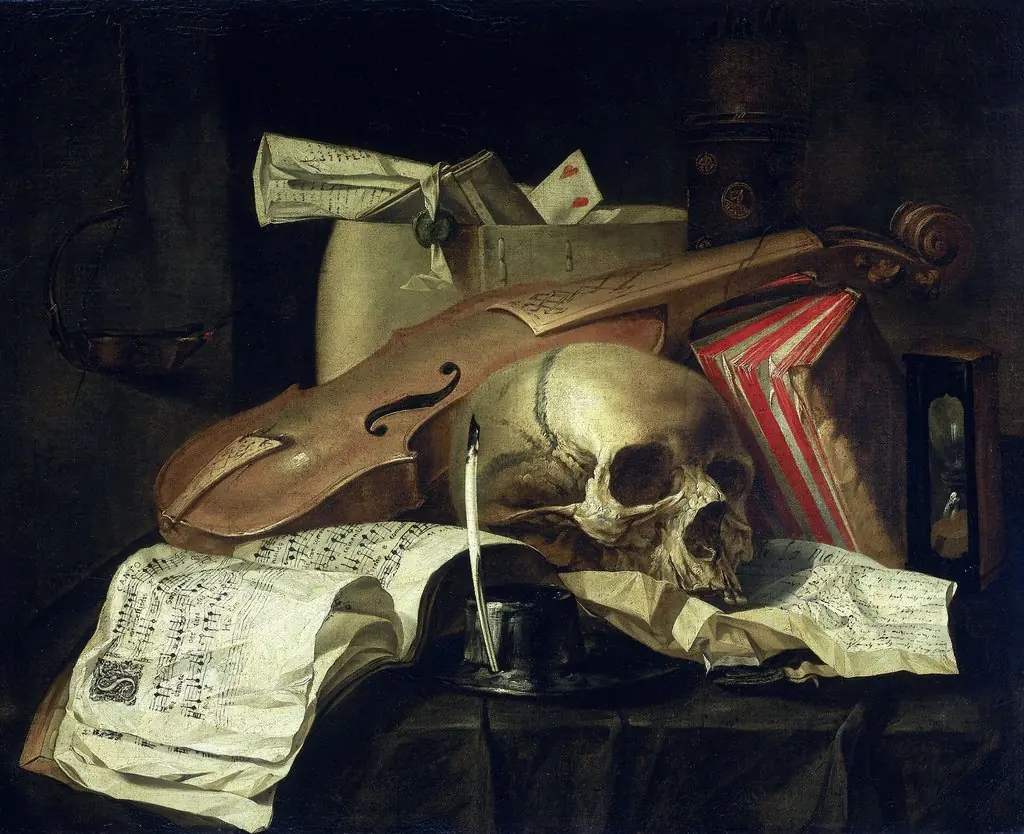
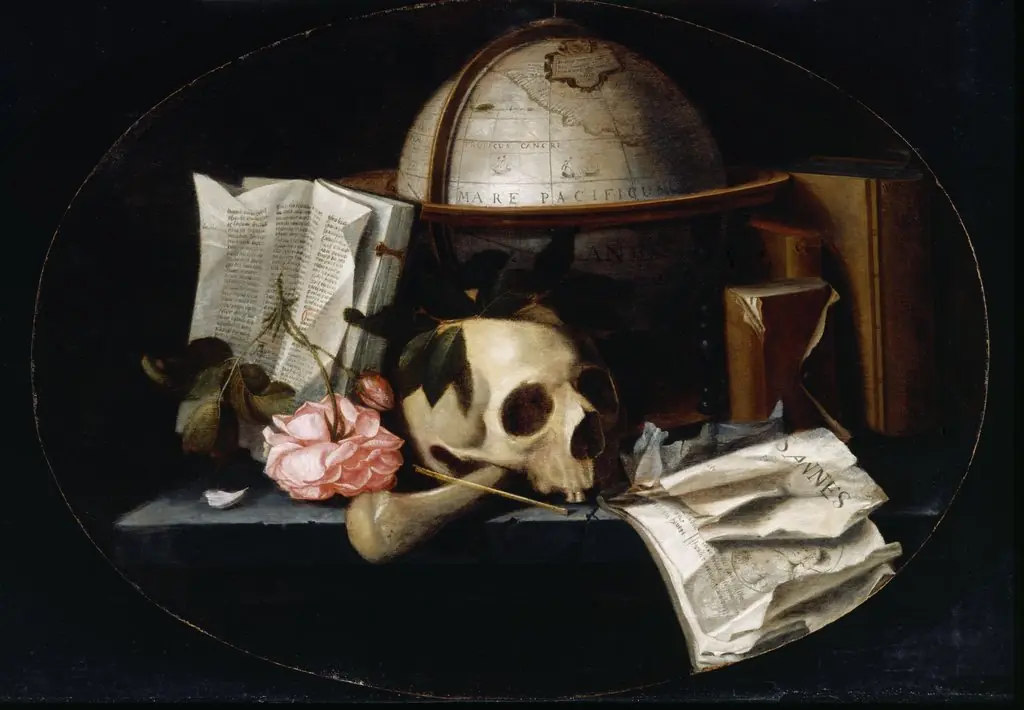
The composition features a skull, an extinguished lamp, and an overturned glass, alluding to the inevitability of death and the fleeting quality of life. Alongside these are scholarly tools: books, paper folders, an inkwell, and a quill. These elements collectively suggest that even intellectual pursuits and human achievements are ultimately ephemeral, serving as a solemn reminder of mortality.
Technique & Style
Claesz rendered these symbolic items with meticulous detail, employing a restricted palette primarily of grays, browns, and muted blues. His technique emphasizes the interplay of light and shadow, which subtly illuminates the varied textures of bone, glass, and aged parchment. This precise observation and understated color scheme contribute to the work's contemplative and somber atmosphere.
History & Provenance
For many years, the painting's inscribed date was misread as 1623. However, a 1982 technical examination, later corroborated by Martina Brunner-Bulst's 2004 monograph and a subsequent exhibition, definitively established the year as 1628. The Metropolitan Museum of Art acquired this panel in 1949 through the Rogers Fund, where it remains part of their European Paintings collection.
Own this work as a print
Artist & collection



 Studied in the Dutch Golden Age course