The Storming of Rheinfelden by Vincenzo Carducci
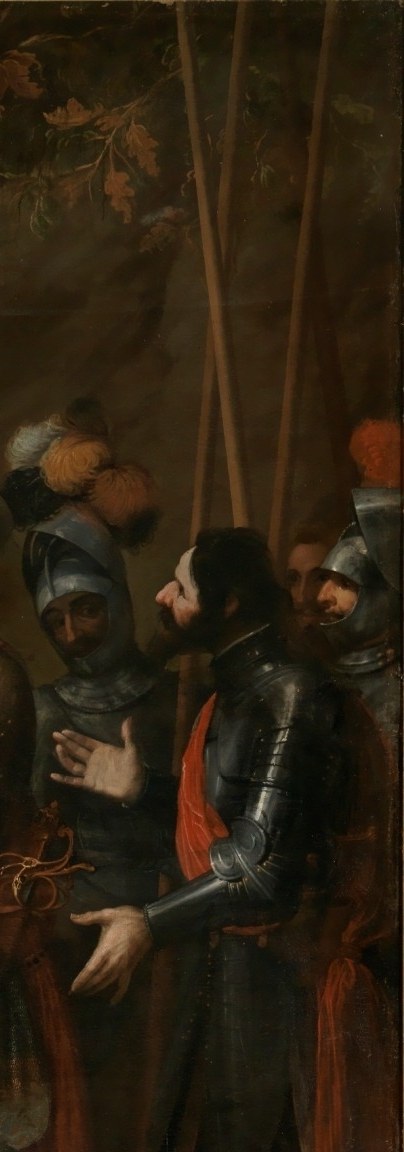
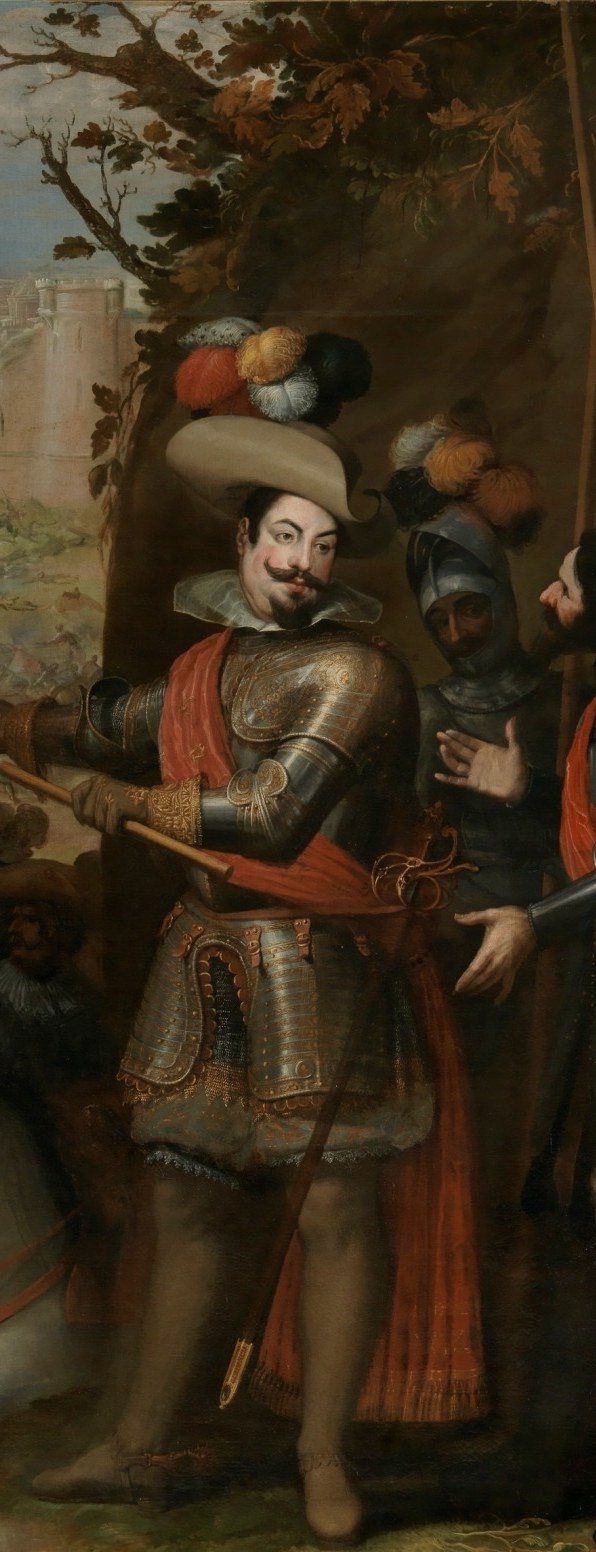
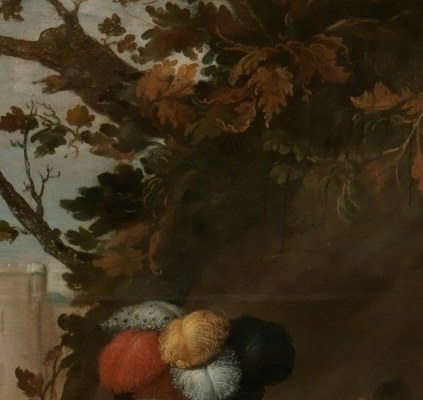
The dark tree behind the Duke of Feria is not a random bit of landscape. It is a Baroque repoussoir, a deliberately opaque mass placed at the edge of the canvas to make the lit figure read as brighter and closer. Vincenzo Carducci, an Italian painter who spent his career in Spain, used the trick to turn a report from the Thirty Years' War into a portrait of command. The painting is *The Storming of Rheinfelden* (1634), oil on canvas, now in the Museo del Prado.
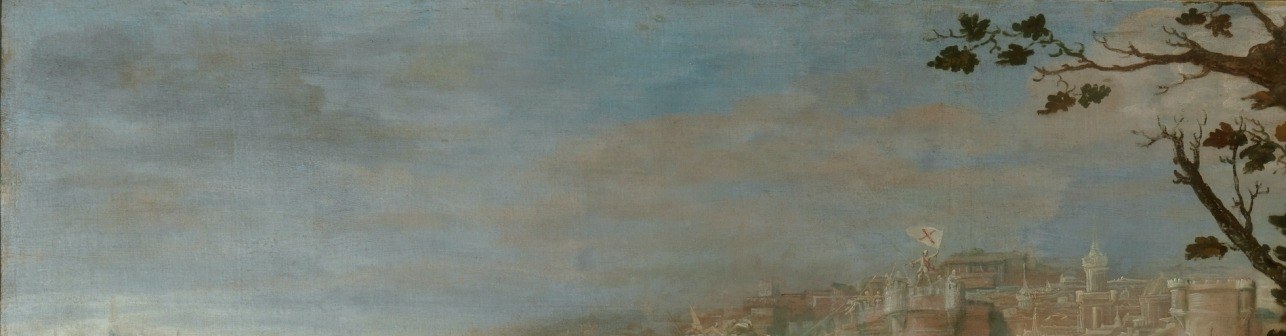
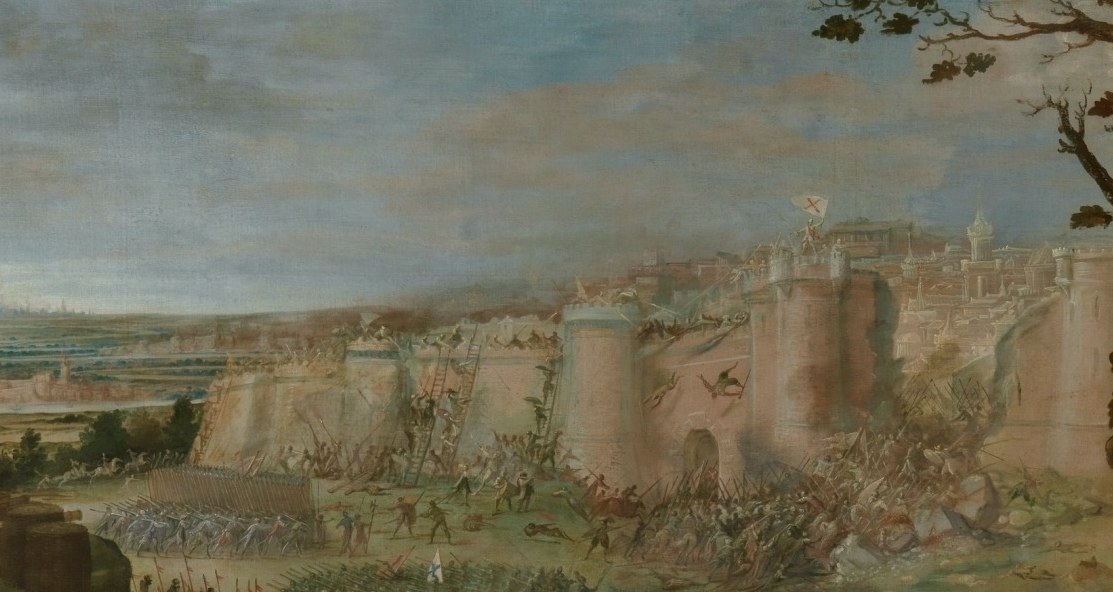
Trace the Duke's silhouette. The black armor and crimson sash would already read as authority, but the dark tree behind him removes any competition. Then look past his outstretched arm: the smoke above Rheinfelden is barely there. Carducci thinned his oil paint until the city walls dissolve into a pale, atmospheric haze. The battle in the middle ground, full of horses and struggling men, is the only part of the painting that moves.
The real siege took place in 1633 during the Thirty Years' War. Spanish forces under the Duke of Feria captured the Swiss town of Rheinfelden, a strategic crossing on the Rhine. The duke died of illness weeks later, but the painting outlived him as a piece of Habsburg propaganda, hanging in the Buen Retiro Palace in Madrid alongside other battle scenes commissioned to project Spanish military dominance.
Every square inch of this canvas is engineered. The cannon in the foreground aims toward the city wall. The plume on the Duke's hat is the lightest, tallest thing in the frame. The chaos is real, but the picture is a machine for making one man look inevitable.
Details
Transcript
Look at the Duke. He shines against the dark. The tree behind him is painted as a dense, nearly black mass. This is a Baroque device called a repoussoir. A dark foreground element that pushes the lit figure forward. Now look past him: the smoke is a veil of pale glaze. Carducci thinned the oil until the city almost dissolves. The battle in between is the only chaos. Everything else is a lever.