Andromache and Astyanax by Pierre Paul Prud'hon
Pierre Paul Prud'hon completed Andromache and Astyanax in 1818, and from the first glance you know the story does not end well. The painting hangs at The Metropolitan Museum of Art, and it draws on a myth the artist's audience would have recognized instantly: the Trojan War's aftermath.
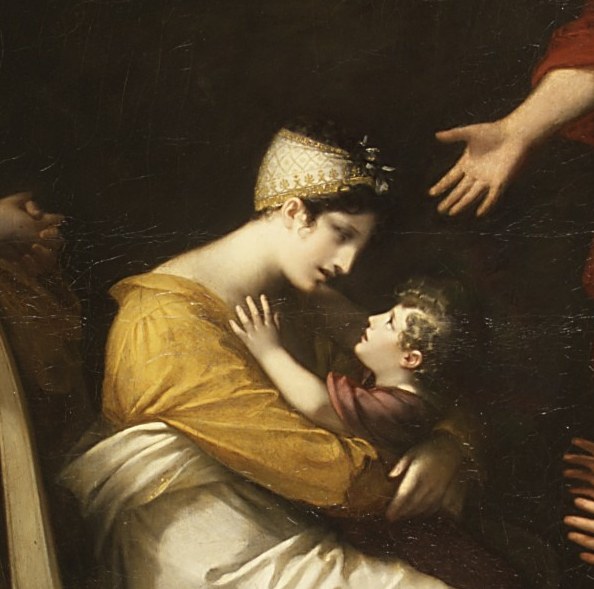
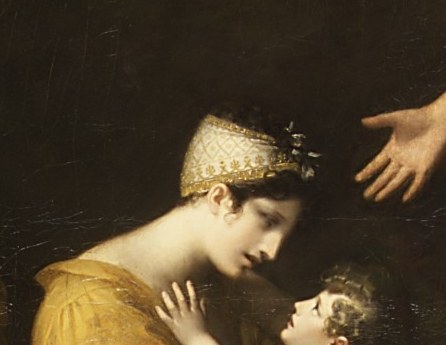
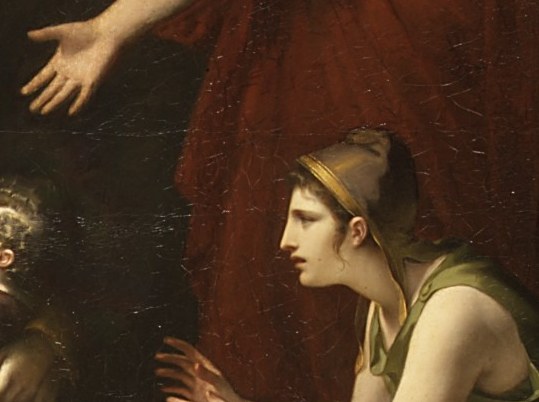
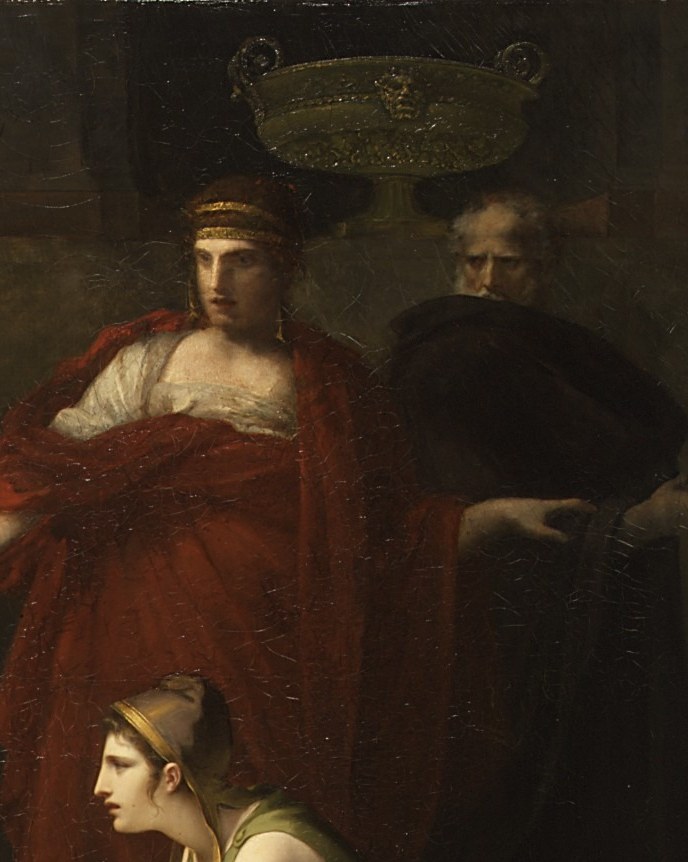
Look at the hierarchy of grief. Andromache, center, is collapsed, her white drapery glowing against the void. Her small son, Astyanax, presses against her. A kneeling figure on the right throws her hands up in a gesture of pure lament. But in the upper right, one woman stands apart: Hecuba, the queen mother, upright and watching. She already knows what will happen.
The myth is brutal. After the fall of Troy, the Greeks decreed that Hector's young son, Astyanax, must not be allowed to live. He was thrown from the city walls to extinguish the royal line. Prud'hon paints the quiet before that horror, and every figure's posture encodes their relationship to the prophecy.
Prud'hon was a French Neo-classicist who bridged into Romanticism, influencing later artists like Géricault. He was known for allegory and a particular gift for emotional intimacy, often collaborating so closely with the painter Constance Mayer that their hands became indistinguishable in the work.
Details
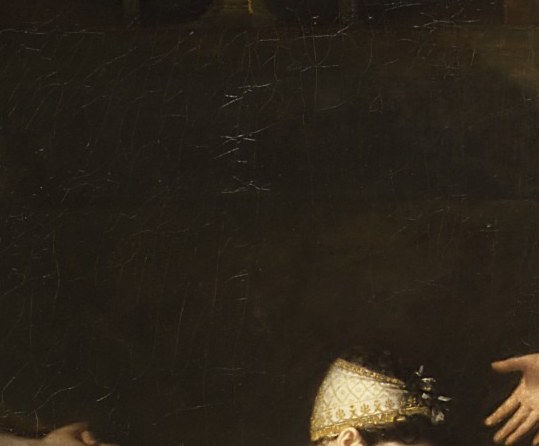
Transcript
She is not just sad. She is a queen who knows what comes next. Andromache clutches her son, Astyanax. Heir to Troy. A prophecy has already sealed his fate: he will be thrown from the city walls. A kneeling woman raises her hands. Grief made physical. But one figure refuses to kneel. Queen Hecuba, the child's grandmother, stands in the shadows. A royal witness to the inevitable. A reaching arm divides the canvas. Is it consolation, a claim, or a final farewell?