The Adoration of the Magi by Jan Mostaert
This is Jan Mostaert's The Adoration of the Magi (c. 1525), housed at the Rijksmuseum. It's one of many depictions of this biblical scene, but Mostaert includes hidden details for the observant viewer.
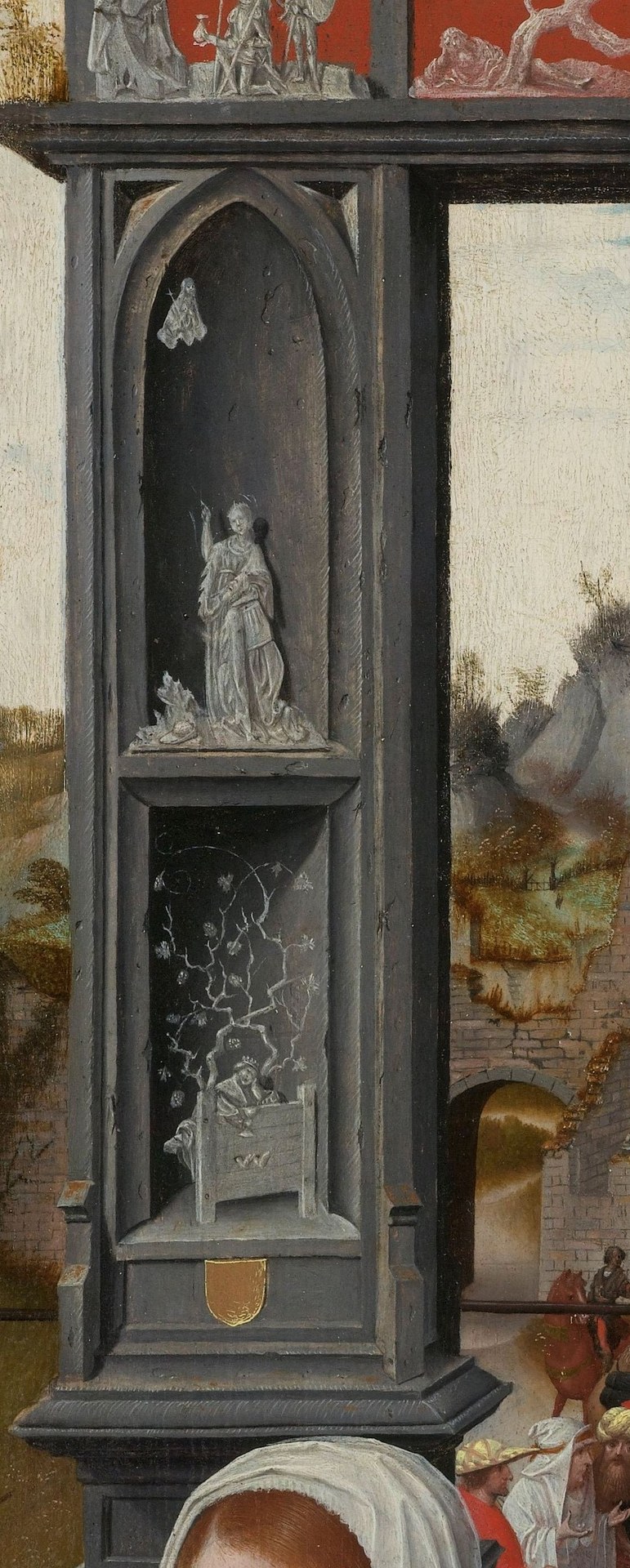
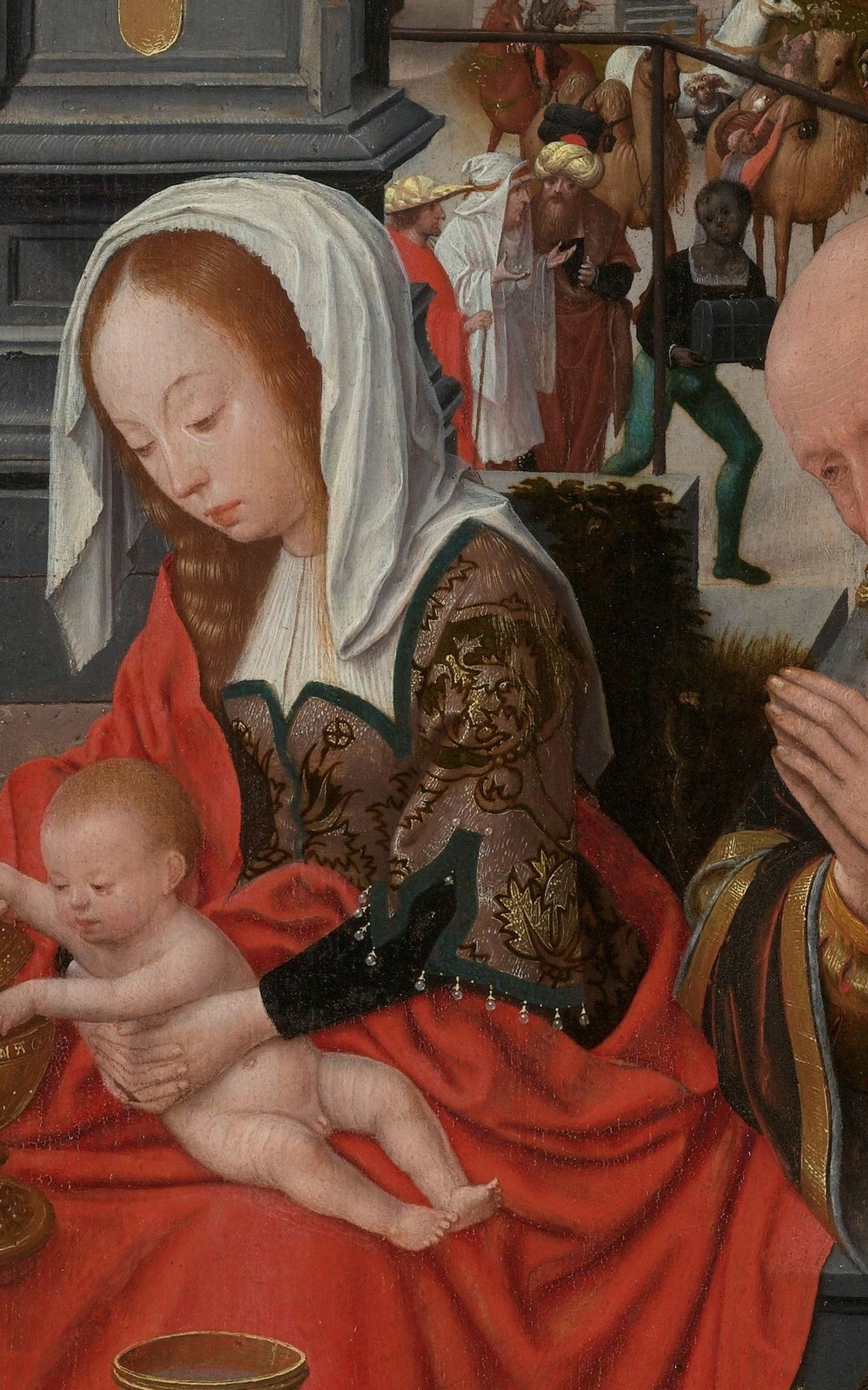
Look closely at the crumbling architecture for small, embedded scenes from the Old Testament, a subtle layer of symbolism. The Christ child's focus on Melchior's goblet, inscribed 'Ave Maria,' draws attention to a key element of devotion.
Commissioned for private viewing, the painting's intimacy suggests it was intended for a home. The figure of Melchior, the elder Magus, is widely believed to be a portrait of the patron who commissioned the work, making his face the true hidden detail.
This painting invites us to look beyond the main narrative for deeper layers of meaning and personal connection.
Details
Transcript
This is one of many Adorations of the Magi. The painter hid small Old Testament scenes. Look at the inscription on the goblet. It reads Ave Maria, Hail Mary. The Christ child reaches for the goblet. Melchior may be a portrait of the patron. His face is the hidden detail.