Landing the Shore End of the Atlantic Cable by Robert Charles Dudley
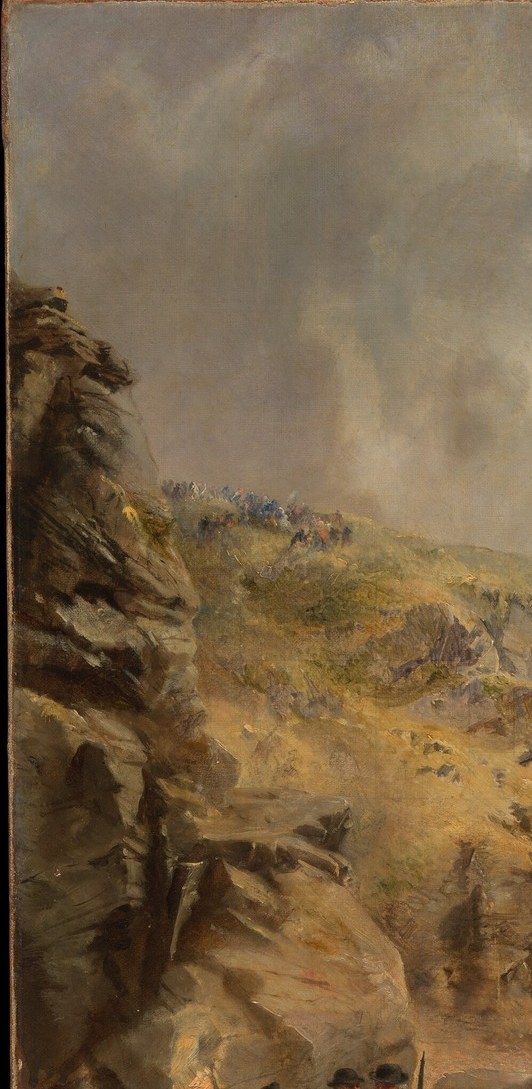
This is Robert Charles Dudley's 'Landing the Shore End of the Atlantic Cable', 1866, now at The Metropolitan Museum of Art. It looks like a serene celebration of Victorian engineering, a crowd on a beach greeting the ship that has just strung a telegraph wire across the Atlantic. But nearly everyone in this scene is terrified.
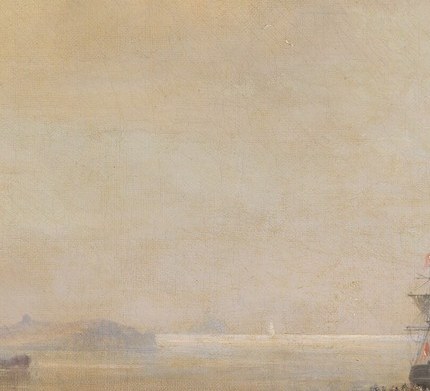
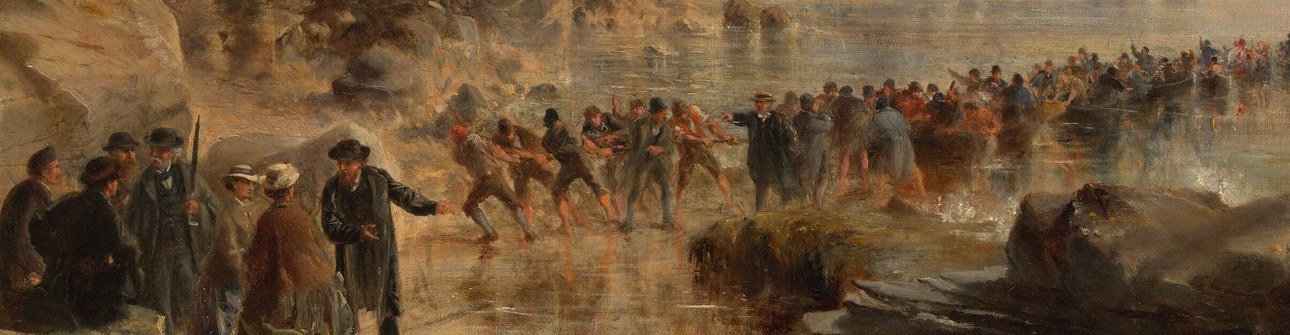
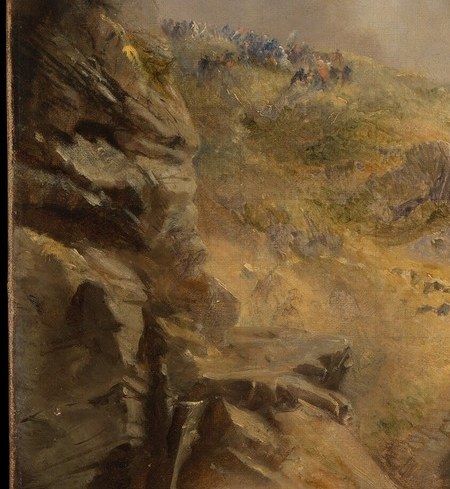
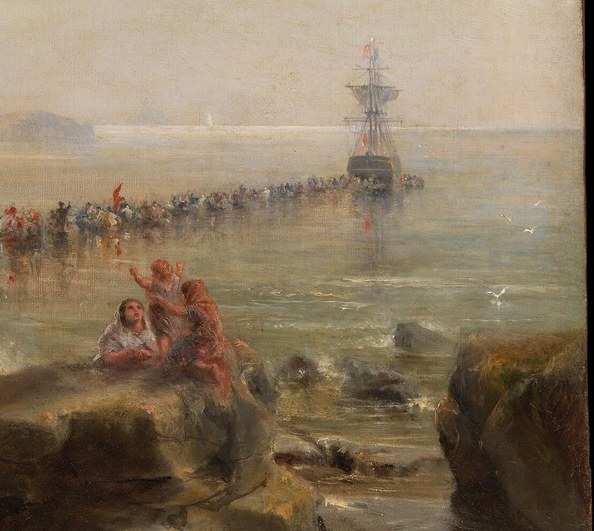
The man in the top hat on the cliff isn't just a dignitary. He represents the investors and scientists who had already failed once. Dudley shows the cable ship small against the sea, the sky still turbulent from a passing storm, and the crowd pressing into the water not in joy, but in anxious watchfulness. This was the moment the cable touched land, the exact same moment the previous cable had, before it failed.
The first transatlantic cable landed in 1858. Queen Victoria sent a congratulatory message to President Buchanan. Parades were held. And then, three weeks later, the signal collapsed. The cable's insulation had failed. The public turned; the financiers behind it were called frauds. When this second attempt was made in 1866, no one was taking a single volt for granted.
This one held. It worked for decades and changed global communication forever. Dudley painted it not as a triumph, but as a held breath, the instant between history repeating and history being made. Look at the faces you can see in the crowd. What would you be feeling if you were standing on that shore?
Details
Transcript
July, 1866. A crowd watches a miracle arrive. The first transatlantic telegraph cable. Men wade into the surf to haul it ashore. The elite watch from the cliff top. This was the second attempt. The first cable worked for three weeks, then went dead. A public humiliation. The investors were ruined. So they watched this one land with more than hope. With dread.