Madonna and Child by Vivarini, Bartolomeo
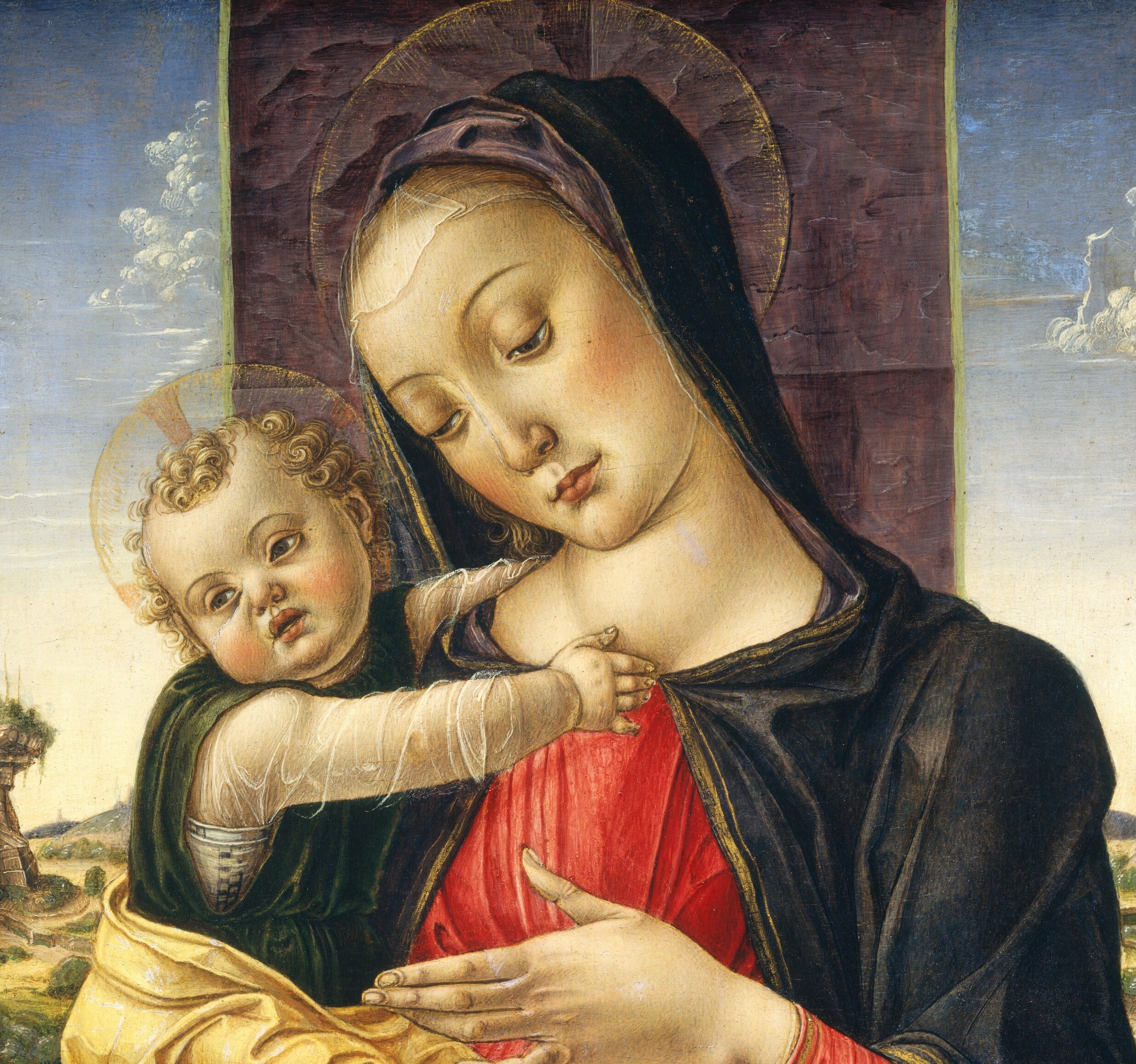
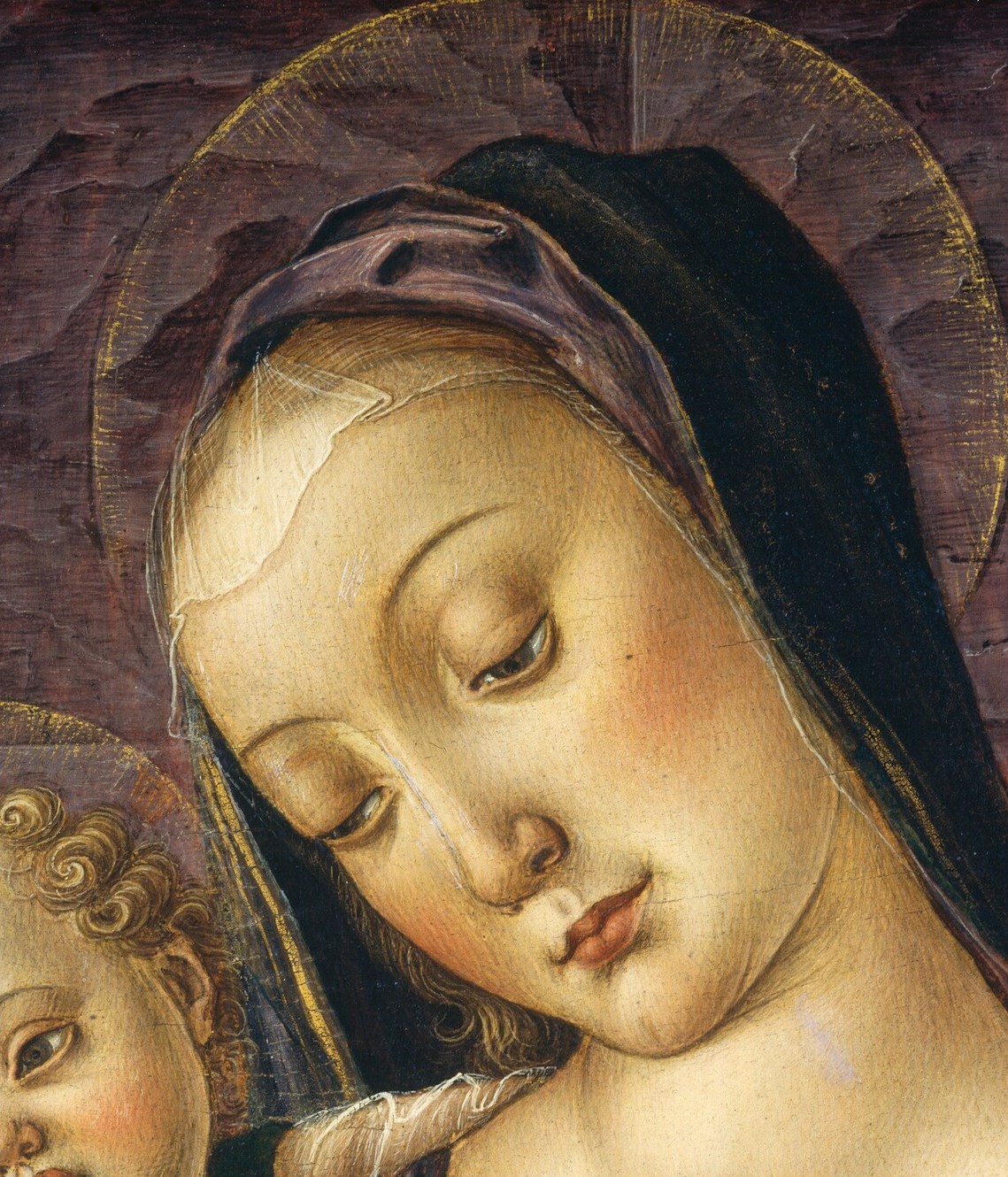
Bartolomeo Vivarini's 'Madonna and Child' (c. 1475) holds a secret in plain sight, painted in tempera on a poplar panel. What reads at first as a formal devotional icon from the Venetian Renaissance slowly opens into something more grounded and human.
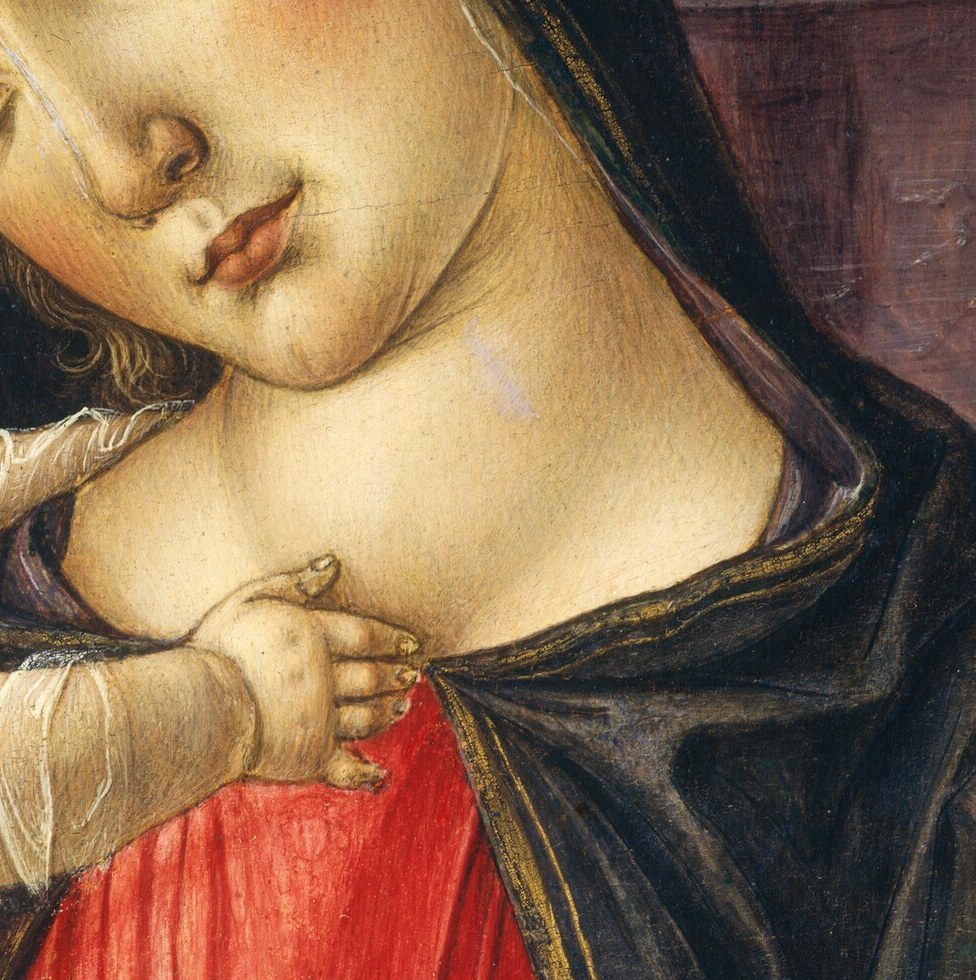
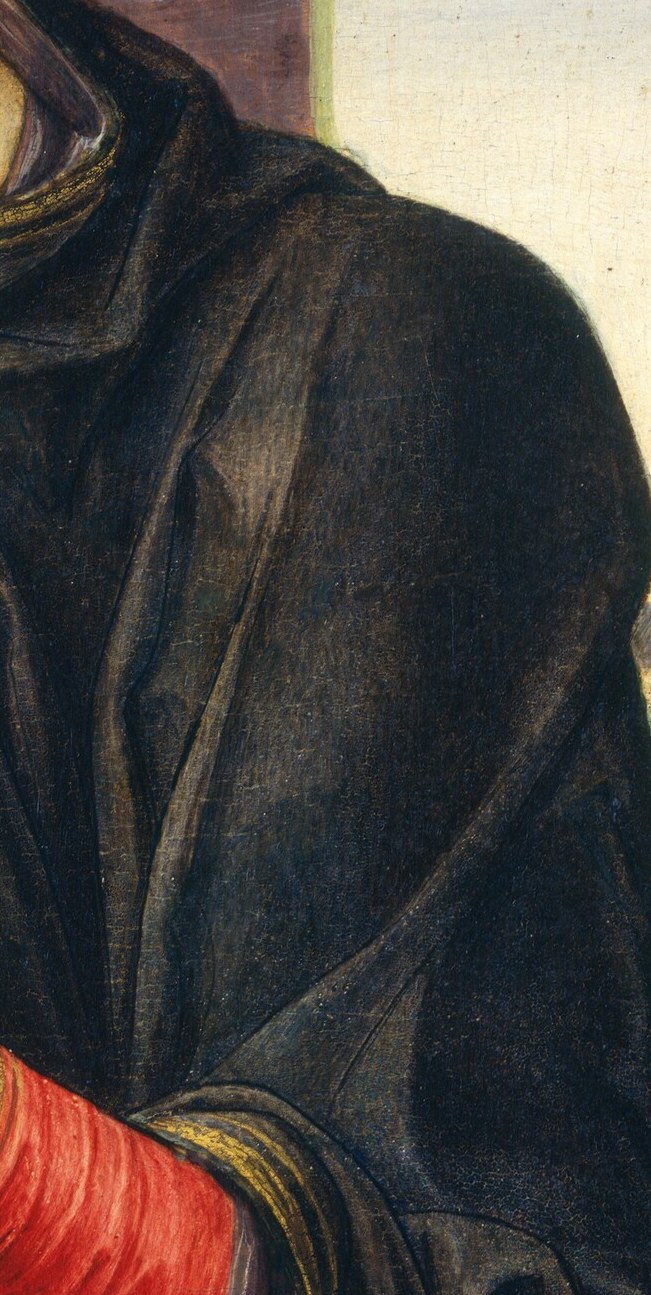
The Madonna's deep cobalt mantle is ultramarine, ground from lapis lazuli imported at greater expense than gold. The blue wraps her face tightly, framed by a crisp white wimple that grounds her as a modest woman of her century. Her eyes are fixed entirely on the Child, while the infant alone turns outward toward the viewer, a silent theological exchange built into the composition.
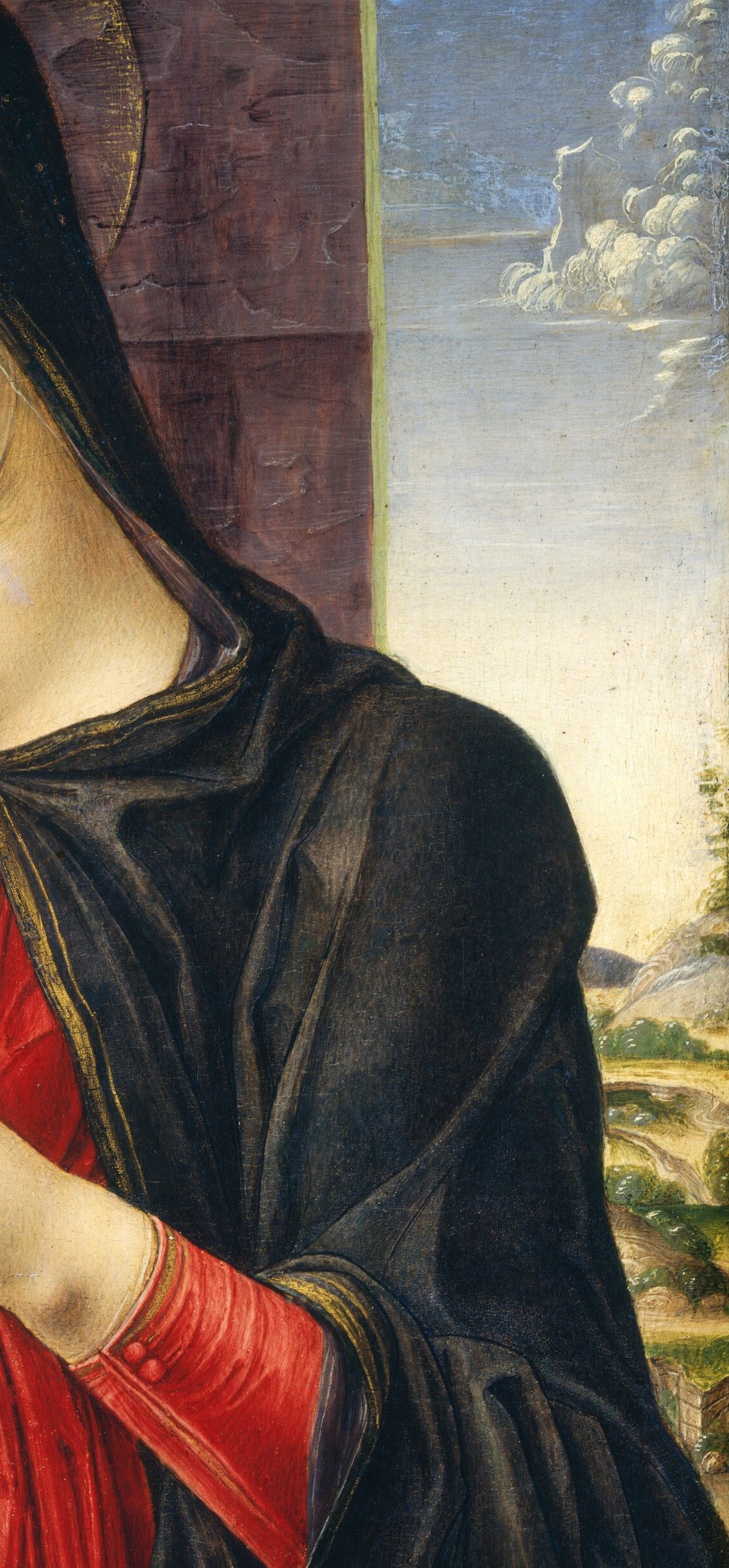
Then there is the landscape. Past the dark throne, an open view of pale sky and rolling hills stretches away on the right. And there, at the far edge of legibility, stands a solitary figure. A monk, a shepherd, or a wandering saint, just a few strokes of paint small enough to miss. Vivarini placed this witness not as a symbol but as a link: a reminder that the sacred drama unfolds inside a real world where someone, somewhere, is always watching.
Next time you stand before a Renaissance Madonna, look into the margins. The painter often left someone there.
Details
Transcript
A queen and her child. Gold, blue, and silence. The blue is ultramarine. In 1475, it cost more than gold. She looks only at him. He looks out at us. Now look past them, into the world on the right. A single figure stands in the distance. A monk, a shepherd, perhaps a saint. Tiny and alone. Vivarini painted this witness as a reminder: the sacred sits inside the real world.