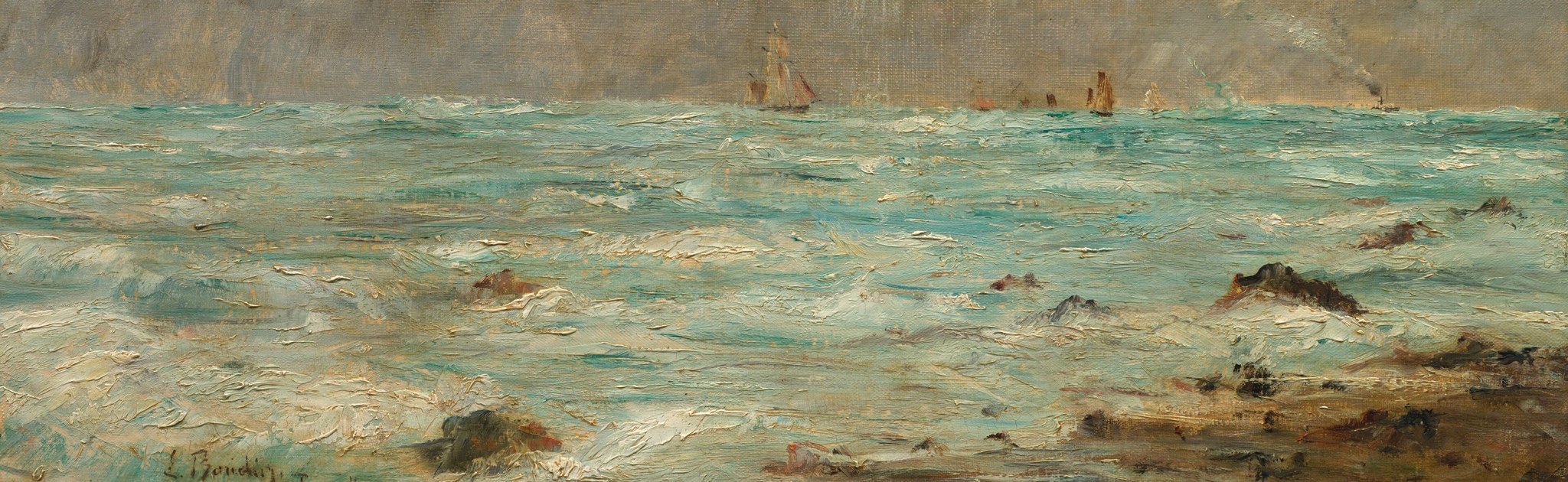
The Coast at Trouville by Eugène Louis Boudin
Eugène Boudin, a pioneer of outdoor painting, masterfully captured the ever-changing light and texture of coastal scenes. In his 1891 oil painting, *The Coast at Trouville*, held at the Cleveland Museum of Art, Boudin demonstrates the techniques that made him a key figure in early Impressionism.
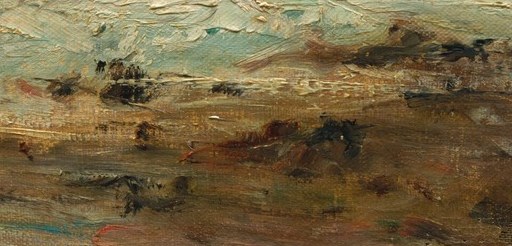
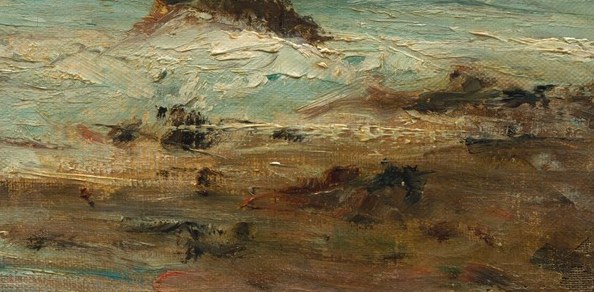
Look closely at the foreground, where Boudin used thick impasto, a technique of applying paint so densely that it stands out from the canvas. This creates a tangible, rough texture that brings the rocky shoreline to life.
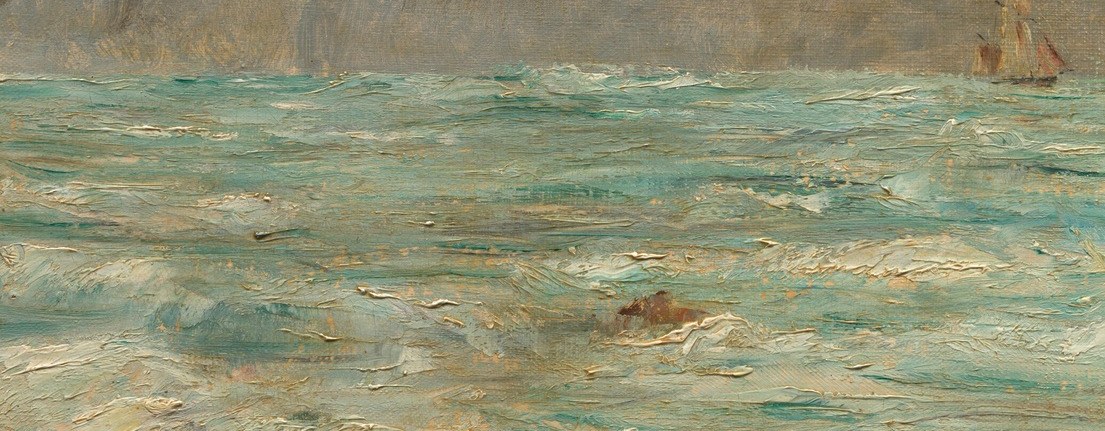
Then, turn your attention to the water. The way he renders the light reflecting on the turbulent surface is remarkable, creating a shimmering, almost living quality. His ability to capture these fleeting atmospheric effects was what set him apart.
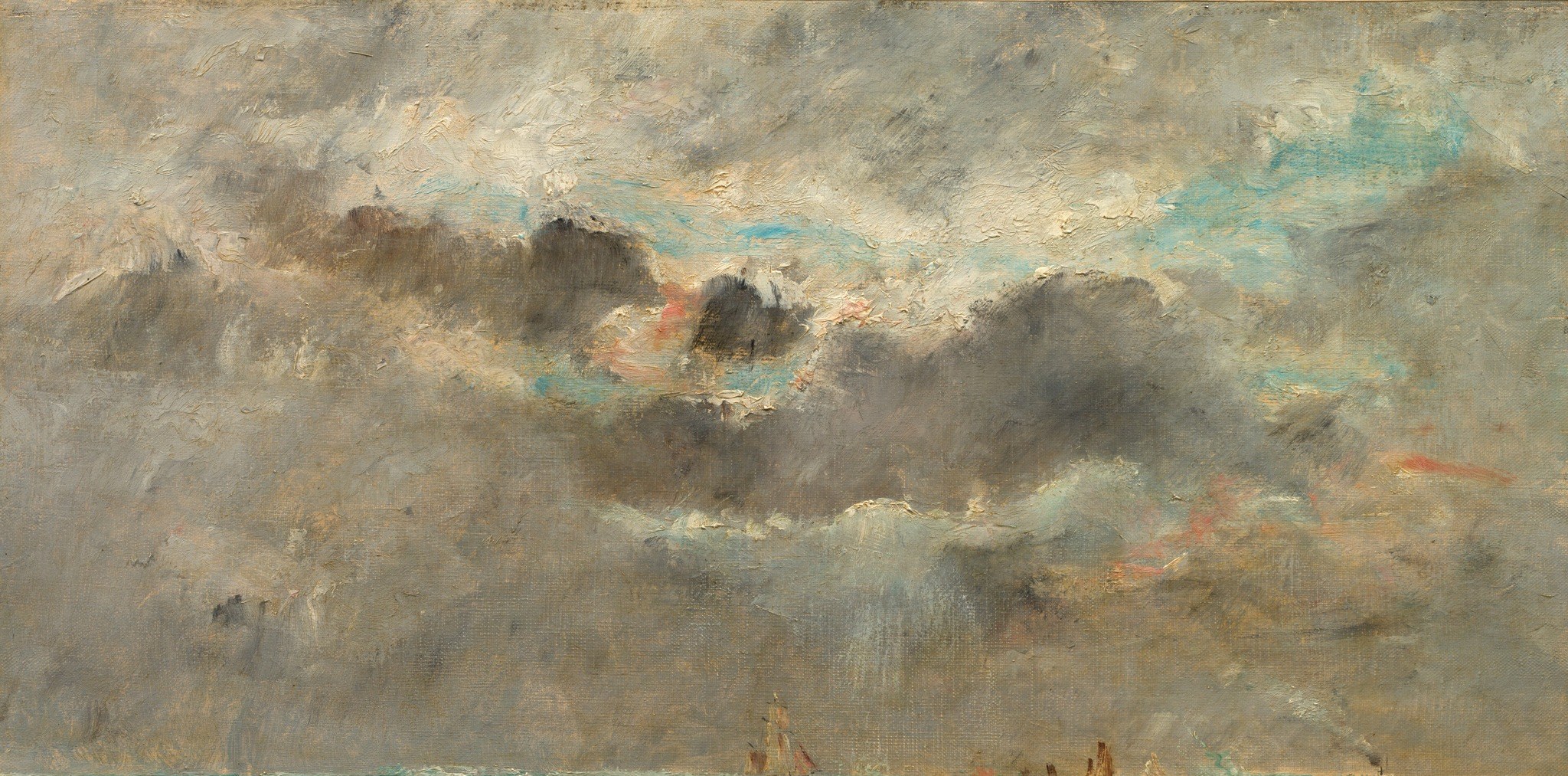
Boudin’s dedication to painting directly from nature influenced many younger artists, including Claude Monet. This piece showcases why he was called the "King of the skies" by Corot.
Details
Transcript
This painter was a pioneer of painting outdoors. He became famous for painting the sea and its shores. Notice the thick paint on these rocks in the foreground. This impasto gives the rocks a real, rough texture. Now see how he renders light on the turbulent water. The flickering light feels almost alive.