Still Life with Ham by Philippe Rousseau
Philippe Rousseau's "Still Life with Ham," painted around 1870, showcases the artist's exceptional skill in rendering everyday objects with stunning realism. This oil on canvas, part of the Metropolitan Museum of Art's collection, invites viewers to appreciate the beauty in the mundane.
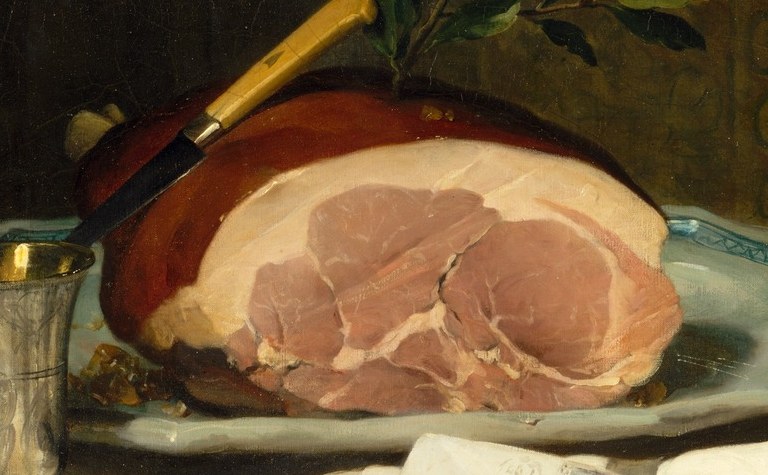
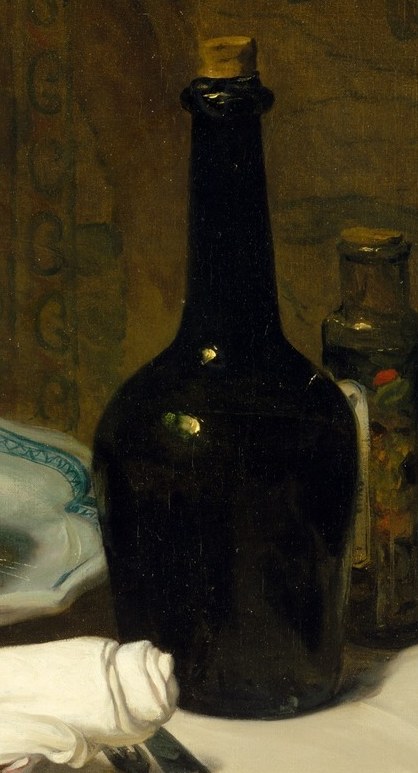
Notice the incredible detail in the slice of ham, from its marbled texture to its glistening surface. The carving knife, the wine bottle, and even the simple bread roll are painted with a precision that makes them feel tangible.
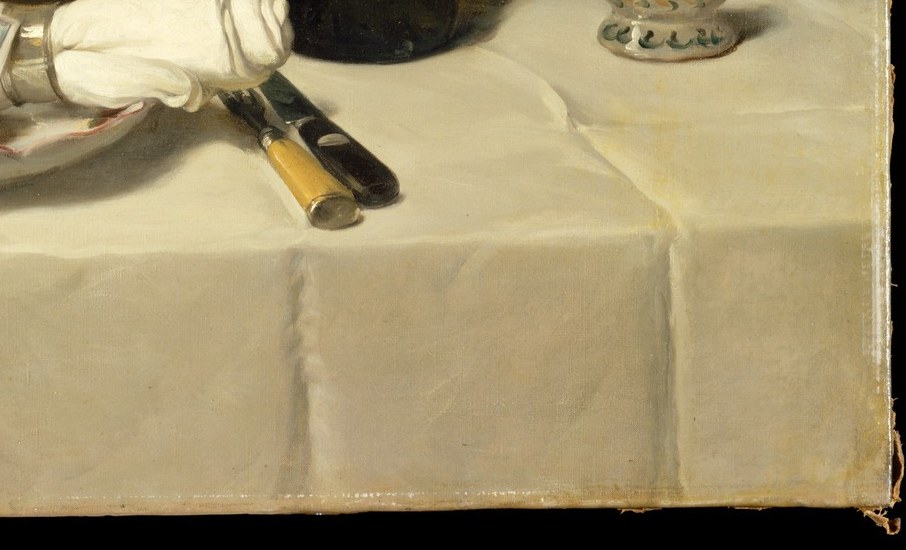
Rousseau was known for his still life paintings, and this work is a prime example of his mastery. He expertly uses light and shadow (chiaroscuro) to create depth and volume, drawing the eye to each element on the table and giving the composition a truly palpable presence.
This painting reminds us that extraordinary artistry can transform even the simplest subjects.
Details
Transcript
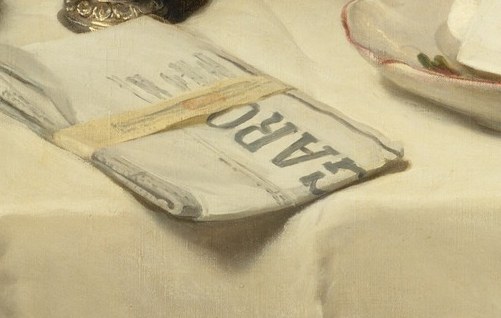
This painter was a master of still life. He made everyday objects feel tangible. Look at the glistening detail on the ham. Every element shows his precise brushwork. Even the folded newspaper feels real. His use of light and shadow creates depth. Capturing a humble meal with such skill.