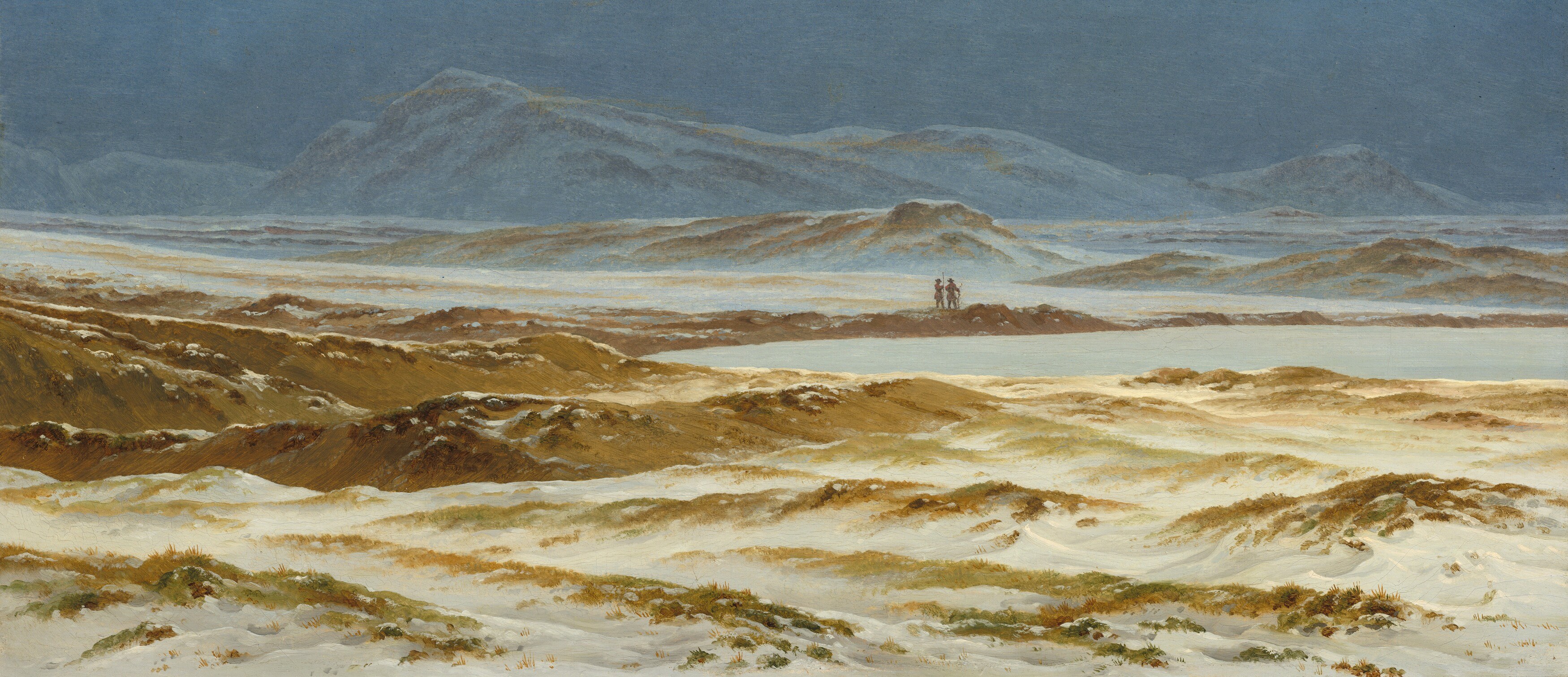
Northern Landscape, Spring by Friedrich, Caspar David
Caspar David Friedrich's "Northern Landscape, Spring" (c. 1825) at the Old National Gallery, Berlin, is a masterclass in Romantic landscape painting that, at first glance, appears almost barren. Yet, it subtly guides the viewer toward profound spiritual contemplation through its sparse composition.
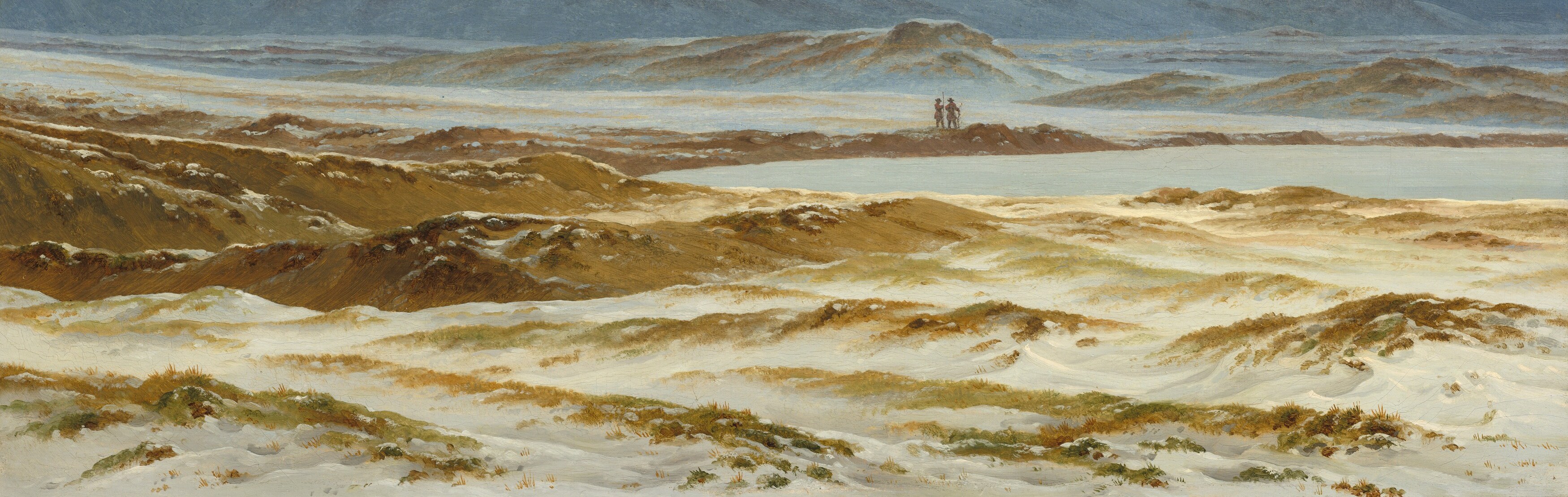
Look for the tiny, solitary figure in the middle distance, a signature motif of Friedrich’s. This "Rückenfigur" (figure seen from behind) invites you to share their contemplative gaze into the vast, dissolving horizon, where earth meets a luminous, overcast sky.
Friedrich was a leading German Romantic painter, known for infusing his landscapes with deep emotional and spiritual meaning. His deliberate absence of traditional religious iconography, replaced by nature itself as a source of the sublime, was considered radical and even controversial in his time.
What emotions does this vast, quiet landscape evoke in you?
Details


Transcript
This German painter was known for vast, empty landscapes. He created sweeping views of nature, devoid of human bustle. But look closely in the far distance, near the center. A single figure stands, nearly swallowed by the scene. This figure, seen from behind, is a signature of his work. It directs your gaze, toward the infinite horizon, toward transcendence. This Romantic idea, that nature reveals the divine, was controversial.