L'Homme au chapeau de paille (Gustave Boyer in a Straw Hat) by Paul Cézanne
Paul Cézanne painted *L'Homme au chapeau de paille (Gustave Boyer in a Straw Hat)* in 1870, and he never sold it. The portrait stayed in his studio until his death in 1906, a keeper that outlasted every stylistic revolution he lived through. It now belongs to The Metropolitan Museum of Art.
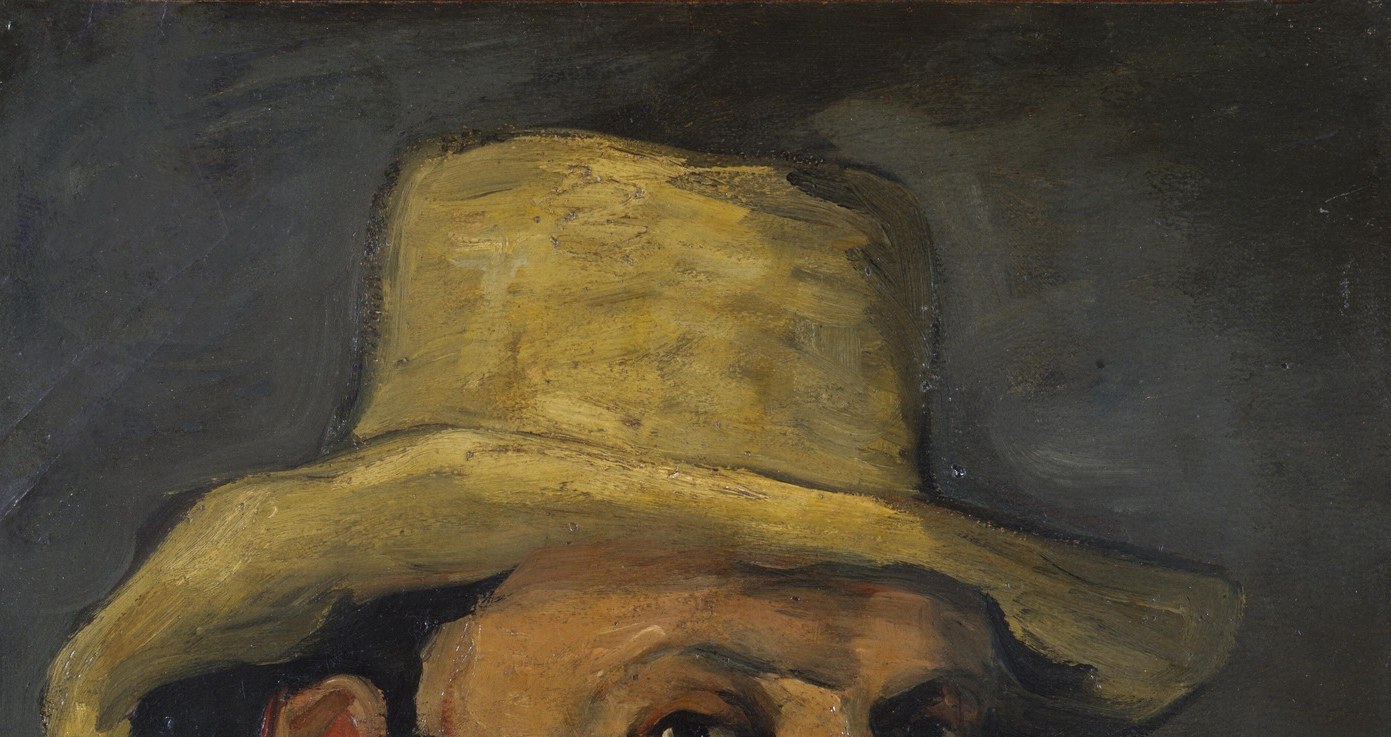
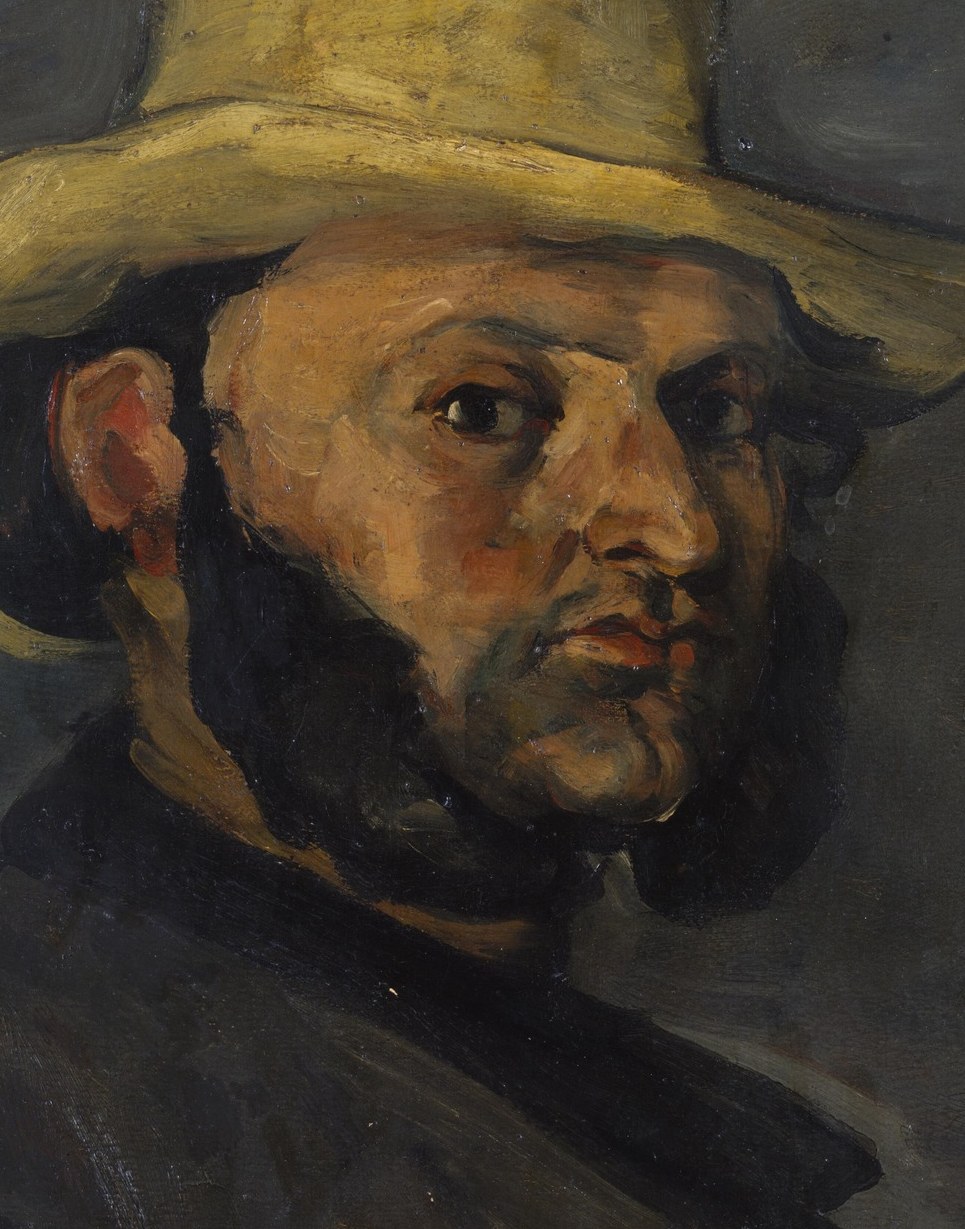
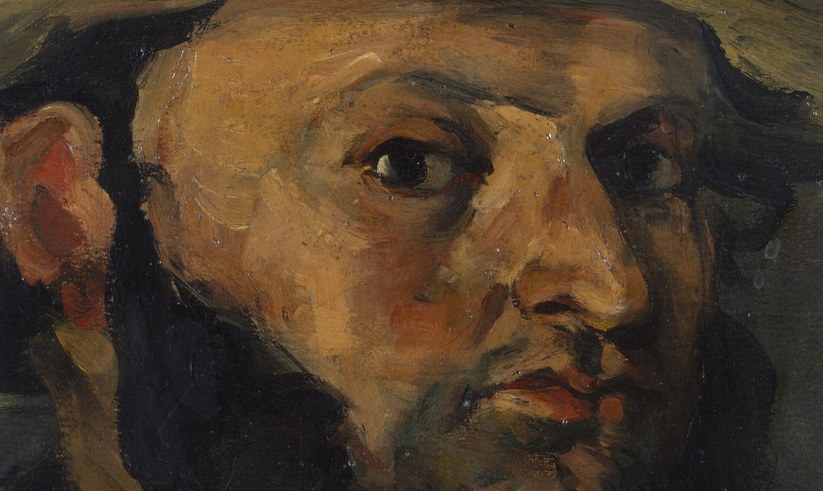
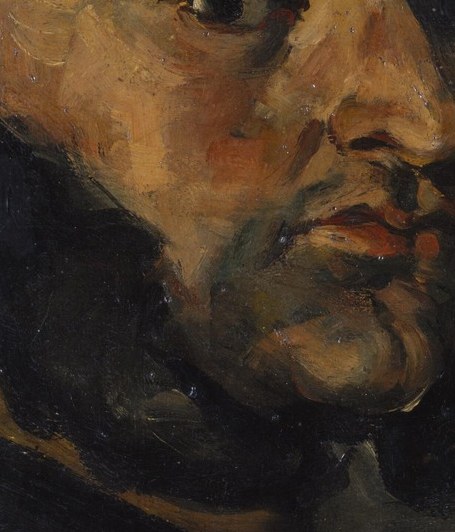
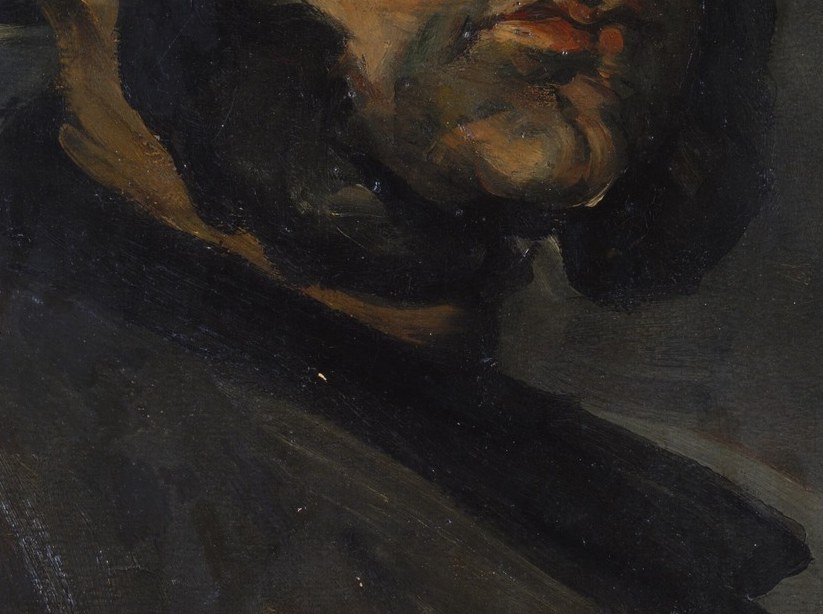
Look at the eyes. They are set deep in shadow under the brim of a broad straw hat, and they are not giving anything away. Cézanne did not chase a polite expression here. The face is built with thick, directional strokes of paint, the nose a solid ridge of warm and cool tones, the beard a loose dark mass. The sitter is a friend, Gustave Boyer, but there is no intimacy in the gaze. It is guarded, inward, a man being studied rather than celebrated.
This is early Cézanne, still working within Realism, still influenced by Courbet's heavy modeling and Manet's dark, isolating backgrounds. But you can already see what is coming. The hat is a virtuoso passage of impasto, the cream and yellow-ochre strokes tracking the weave of the straw with a physicality that would define his later work. The ear and temple nearly dissolve into the background, an early sign of the dissolving edges that would become his signature. He was 31, painting with a palette knife, pushing paint around like he was trying to find the structure underneath everything.
He would find it. But this is the portrait of a man and a painter both holding something back, and that tension is the whole story.
Details
Transcript
In 1870, Paul Cézanne was painting with a palette knife. His friend Gustave Boyer sat for this portrait. Boyer looks at us with a guarded, inward gaze. His eyes are dark, skeptical, nearly lost in shadow. Cézanne builds his face with thick slabs of paint. This is a man being assessed in paint, not flattered. Cézanne would keep this portrait in his studio until he died.