Fan Mount: The Cabbage Gatherers by Camille Pissarro
View the artwork: Fan Mount: The Cabbage Gatherers →
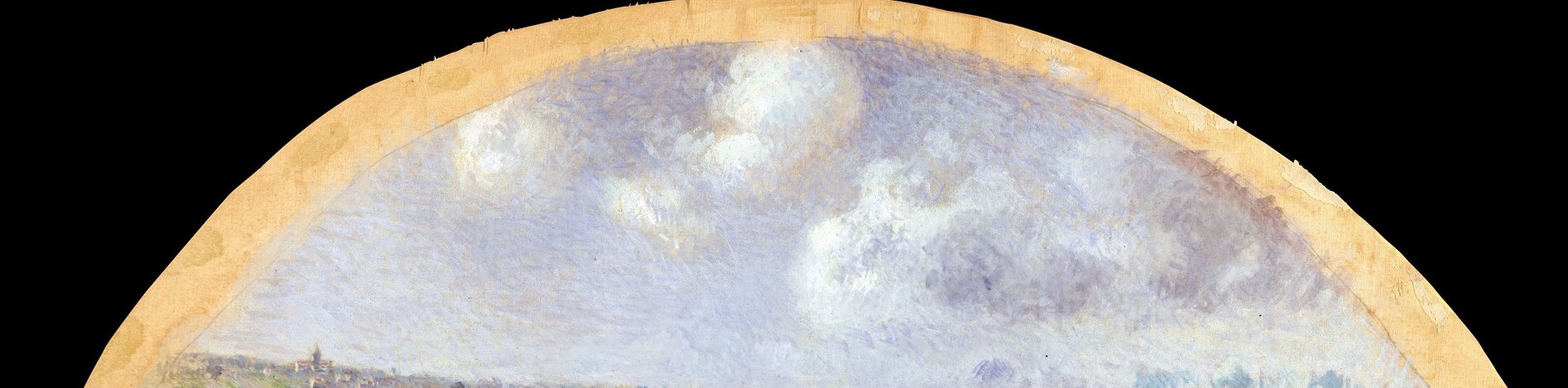
Edgar Degas asked Camille Pissarro to paint decorative fans for the 1879 Impressionist exhibition, imagining a room full of urban entertainment. Pissarro, who lived and worked in the countryside near Pontoise, said yes but painted his own world instead. "The Cabbage Gatherers" is the result: gouache on silk, shaped to the curve of a real handheld fan, now in the Metropolitan Museum of Art.
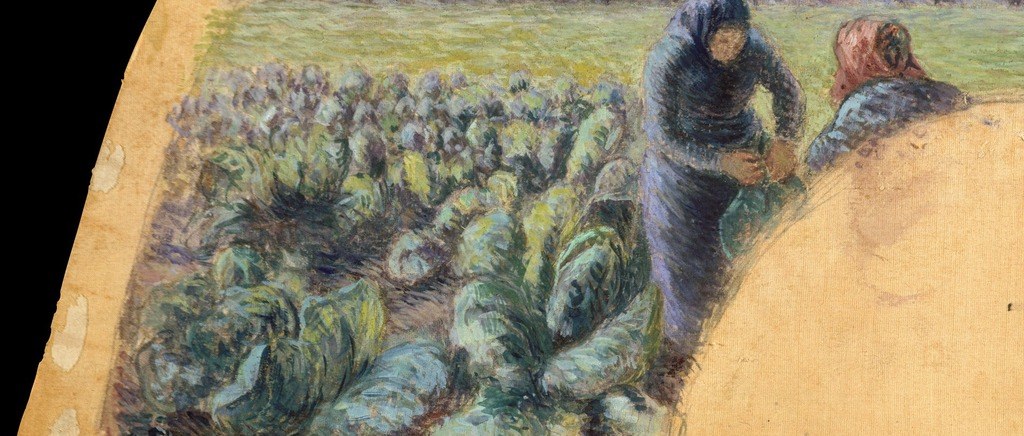
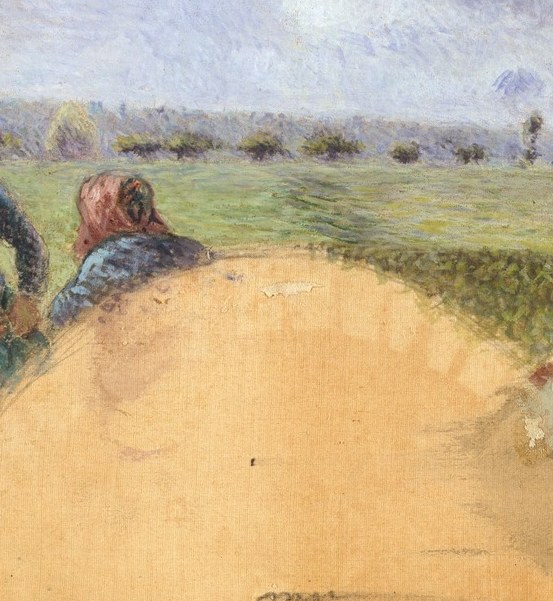
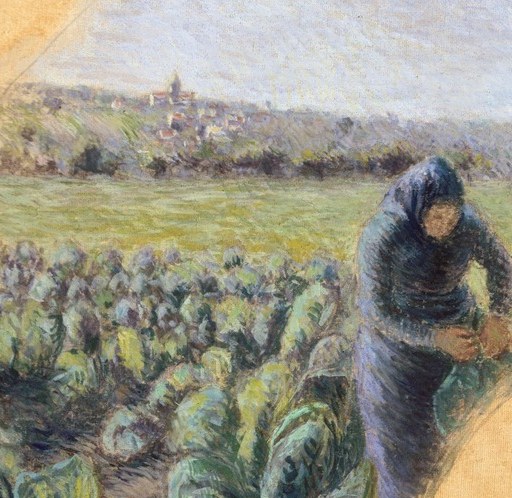
Start with the women in the foreground. Their bright kerchiefs anchor the scene, and their upright posture among all the stooped labor suggests a pause, a social moment in the field. Pissarro never sentimentalizes the work but he refuses to make it lonely, either. The cabbages themselves are rendered with a botanist's care, every leafy head distinct.
Then push into the middle distance. Along the ochre path and past the crouching harvester, tiny silhouettes are scattered across the horizon. They are barely legible at a glance, but they repeat and multiply. Pissarro built a whole community into this fan, a landscape of collective labor that extends to the treeline.
This was one of the first Pissarro paintings ever to reach an American collection. Louisine Elder, later the great patron Mrs. H. O. Havemeyer, bought it in the late 1870s with Mary Cassatt acting as her agent. She took a fan meant for a parlor and started a museum.
#arthistory #impressionism #pissarro
Details

Transcript
It was meant for a fashionable hand. Degas wanted these fans at the Impressionist show: music, dancers, light. Pissarro chose a cabbage field. Look at the women in bright kerchiefs. They talk while they work. He bent the whole horizon to the arc of the fan. But now see what is nearly invisible on a phone screen. More workers, tiny and countless, stretch across the whole field. He painted a whole community. Most people never even see them.