Mr. and Mrs. I. N. Phelps Stokes by John Singer Sargent
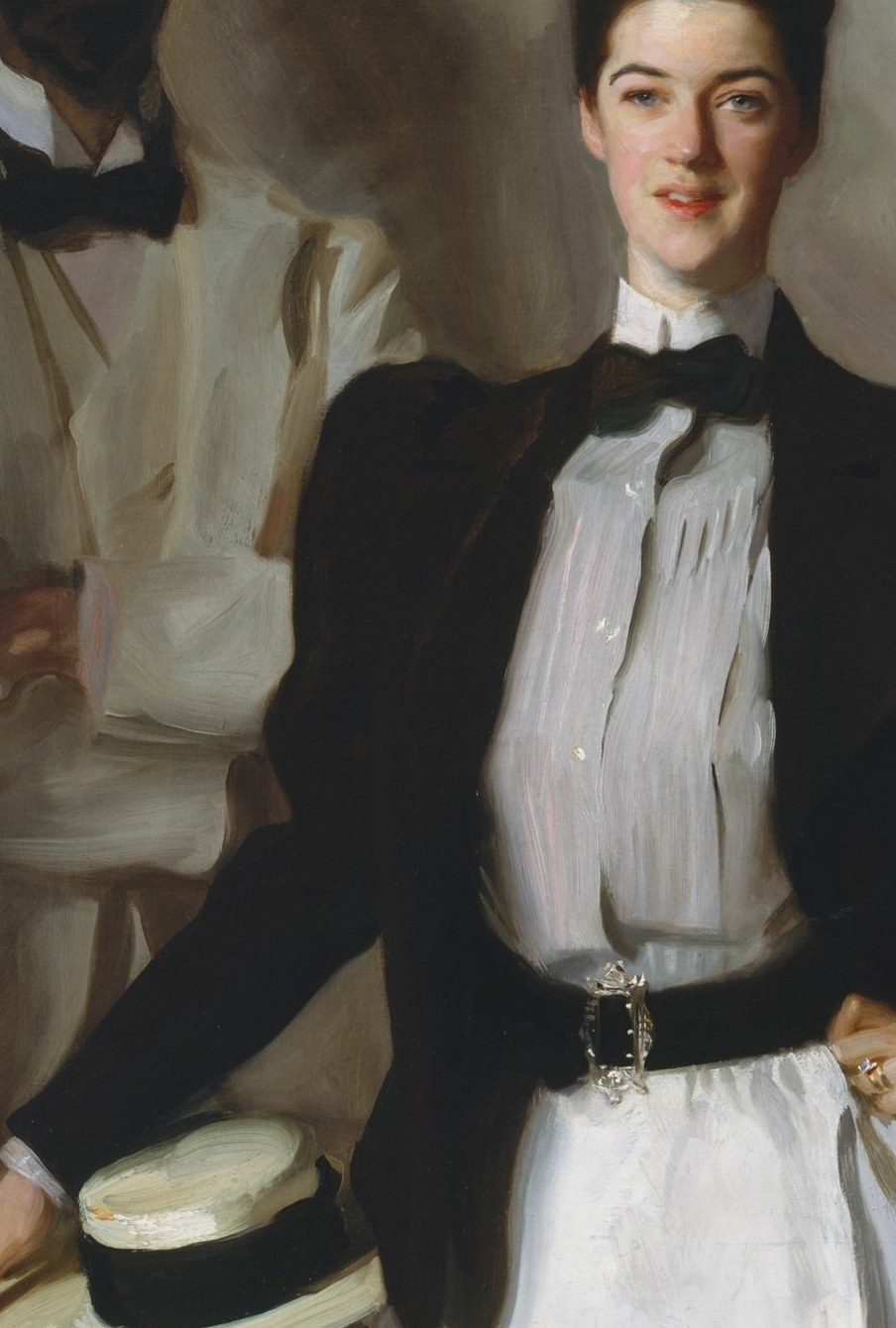
This is Mr. and Mrs. I. N. Phelps Stokes, a double portrait by John Singer Sargent painted in 1897 and now in the collection of the Metropolitan Museum of Art. It started as a solo portrait of the bride, Edith Minturn Stokes, in evening dress. When the couple suggested adding their Great Dane and the dog proved unavailable, her husband Isaac stepped into the literal position the animal was meant to occupy. The story is funny; the resulting painting is quietly radical.
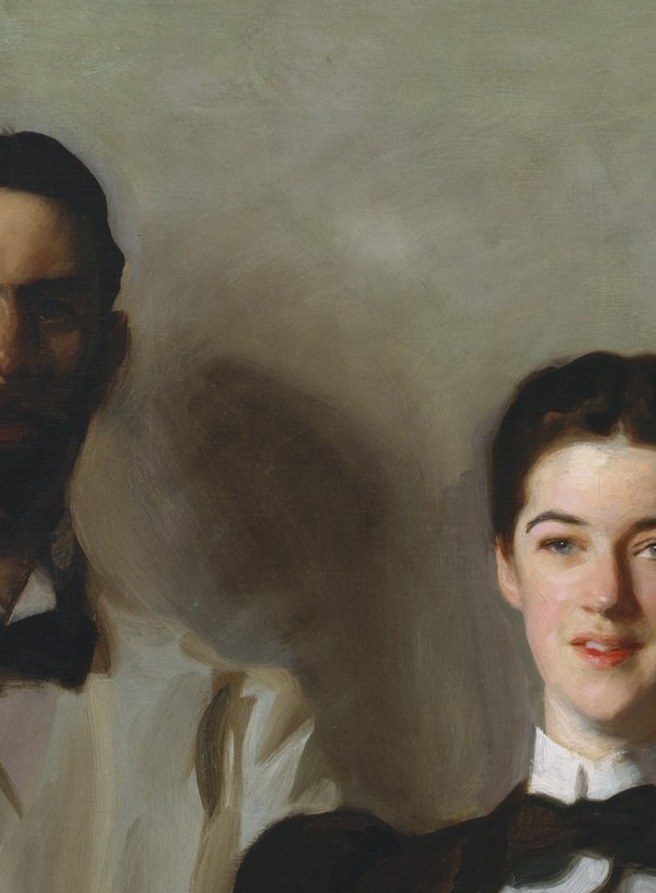
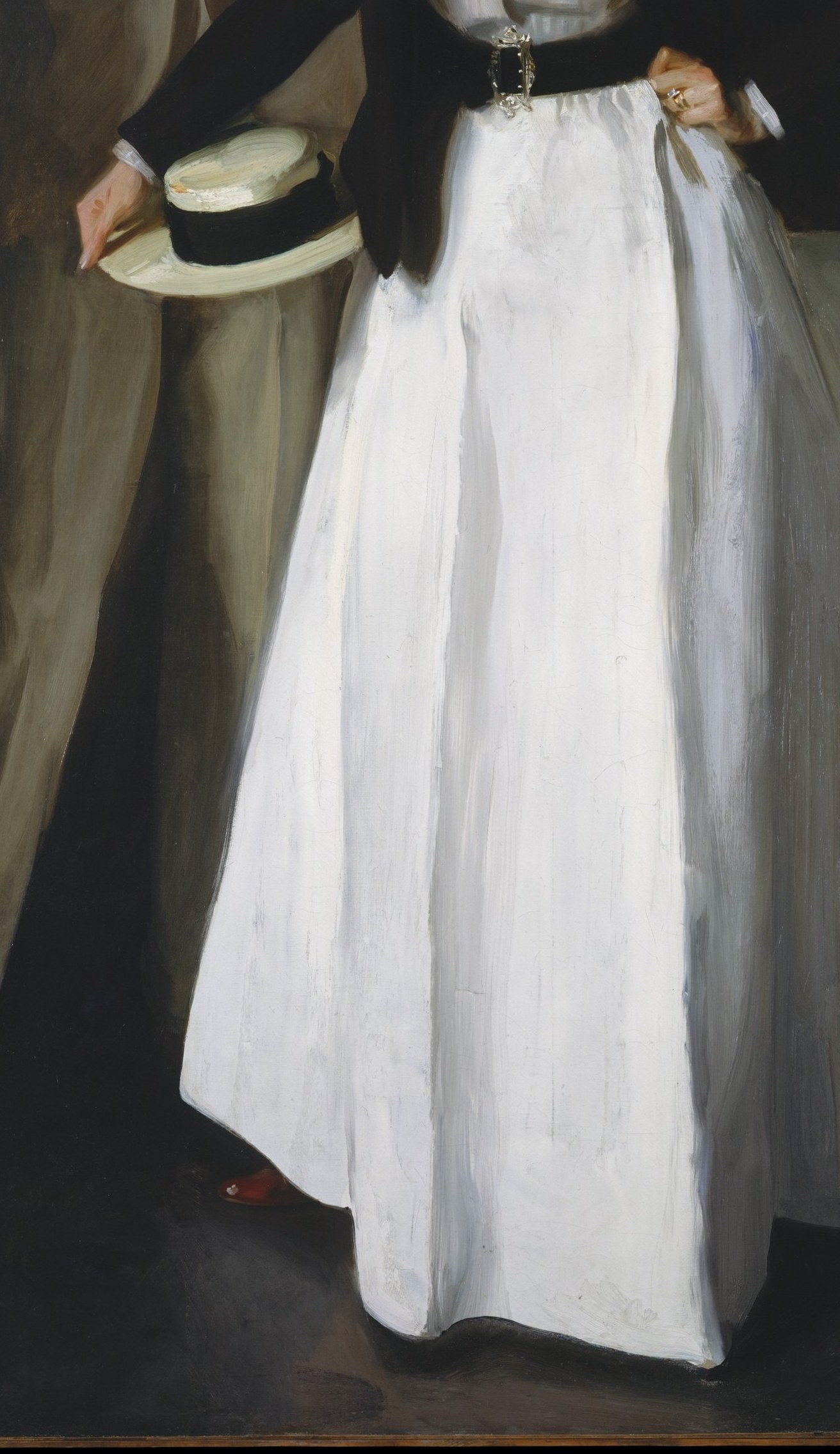
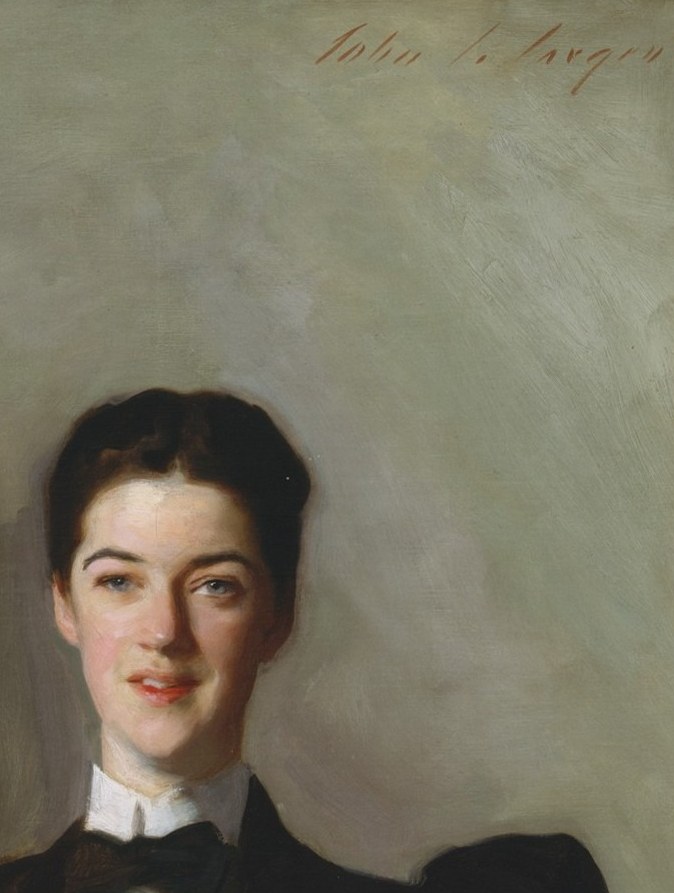
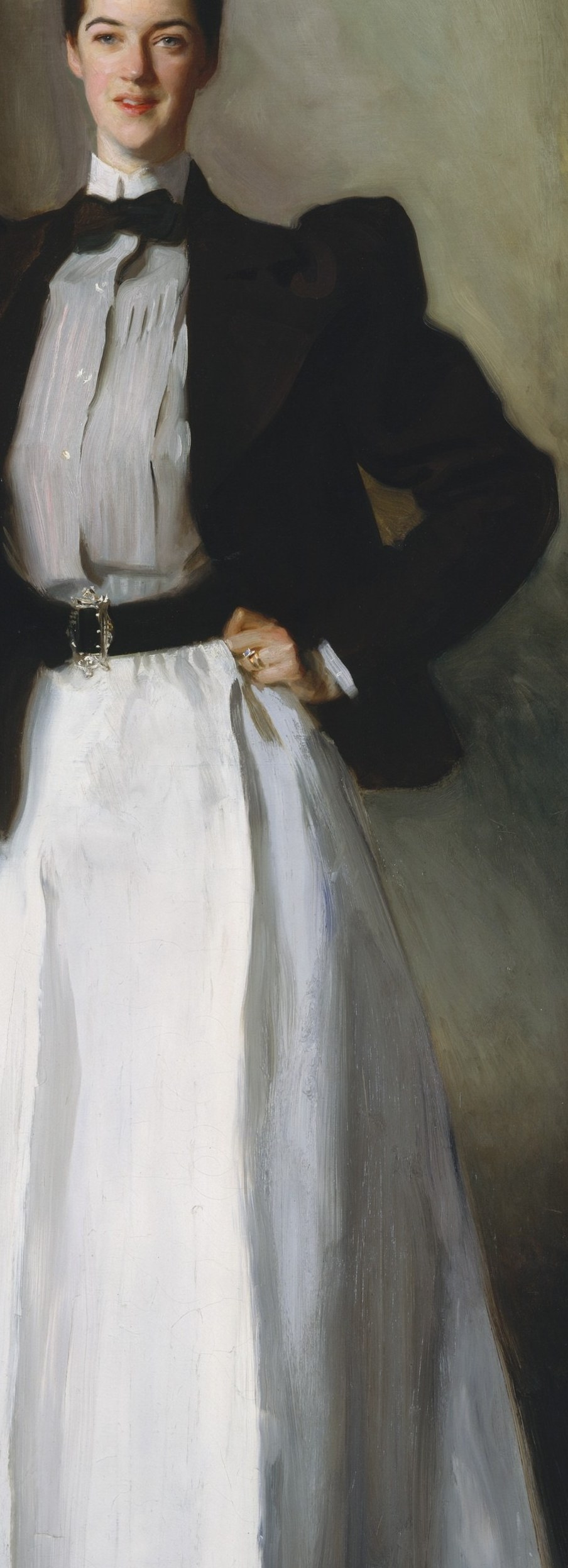
Everything Sargent does with paint backs Edith. Her white skirt is the painting's dominant light mass, broad, loose brushwork that shows off the alla prima technique that made his name. Her face carries the psychological charge: direct, confident, almost challenging. Isaac stands behind her, his face in shadow, his dark suit merging into the background like a column. He is compositional support.
Edith Stokes was not new to being a symbol. Before this portrait, she had modeled for Daniel Chester French's Statue of the Republic, the colossal figure that presided over the 1893 World's Columbian Exposition in Chicago. Sargent gave her a different kind of monument, intimate, informal, but in its own way just as commanding. The straw hat she holds was the pivot: the moment the plan switched from evening formality to day-lit confidence.
A wedding portrait where the groom recedes into the void and the bride holds the whole painting with her eyes. I wonder if Isaac ever regretted canceling the dog.
Details
Transcript
It was supposed to be a portrait of her alone. Then they added a Great Dane. The dog canceled. So her husband stepped in. Where the dog was meant to stand. Look at his face. Shadowed. Behind her. Receding. And her stare. Direct. Challenging. She holds the whole frame. A wedding gift that turned the husband into a supporting actor.