The Holy Family on the Steps by Nicolas Poussin
Nicolas Poussin's "The Holy Family on the Steps" (1648, The Cleveland Museum of Art) centers on a moment of profound, quiet anticipation. The painting captures a scene of tender interaction between the Virgin Mary, the infant Jesus, and Saint Joseph, framed by classical architecture. It's a prime example of Poussin's mature style, known for its clarity, order, and intellectual rigor in depicting religious subjects.
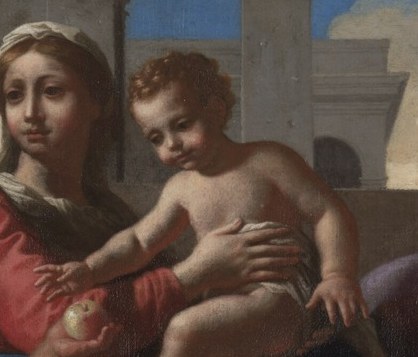
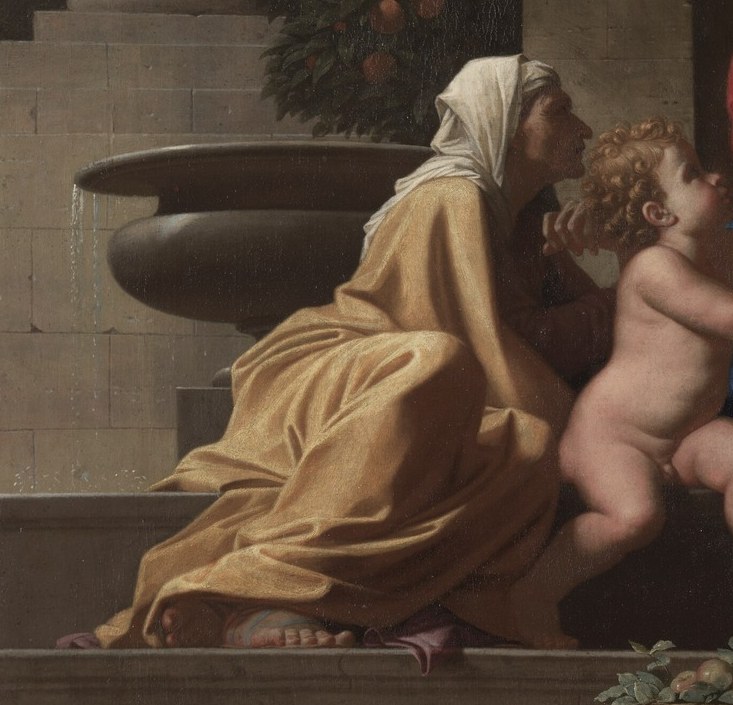
Observe the subtle exchange: Mary offers Jesus an apple, a symbol of temptation and redemption, and his infant hand reaches out. Saint Joseph gazes thoughtfully at this divine interaction, his expression conveying a protector's quiet understanding. To the left, a woman in a yellow robe kneels in humble devotion, drawing the viewer into the sacred atmosphere.
Poussin painted this masterpiece during a period when he was renowned for his classical approach to religious and mythological themes. Working primarily in Rome, his art emphasized line, logic, and balanced composition, heavily influenced by Renaissance masters like Raphael. This painting showcases his ability to imbue a scene with both intimate emotion and timeless gravitas.
It's a powerful depiction of a mother's love and a guardian's watchful presence, unfolding on timeless stone steps.
Details
Transcript
This is the Holy Family. Mary offers Jesus an apple. His infant hand reaches for it. Joseph watches this moment unfold. He looks with quiet understanding. She kneels in humble devotion. The scene unfolds on grand stone steps. Poussin painted this in 1648.