Madonna of Humility, The Blessing Christ, Two Angels, and a Donor [obverse] by Andrea di Bartolo
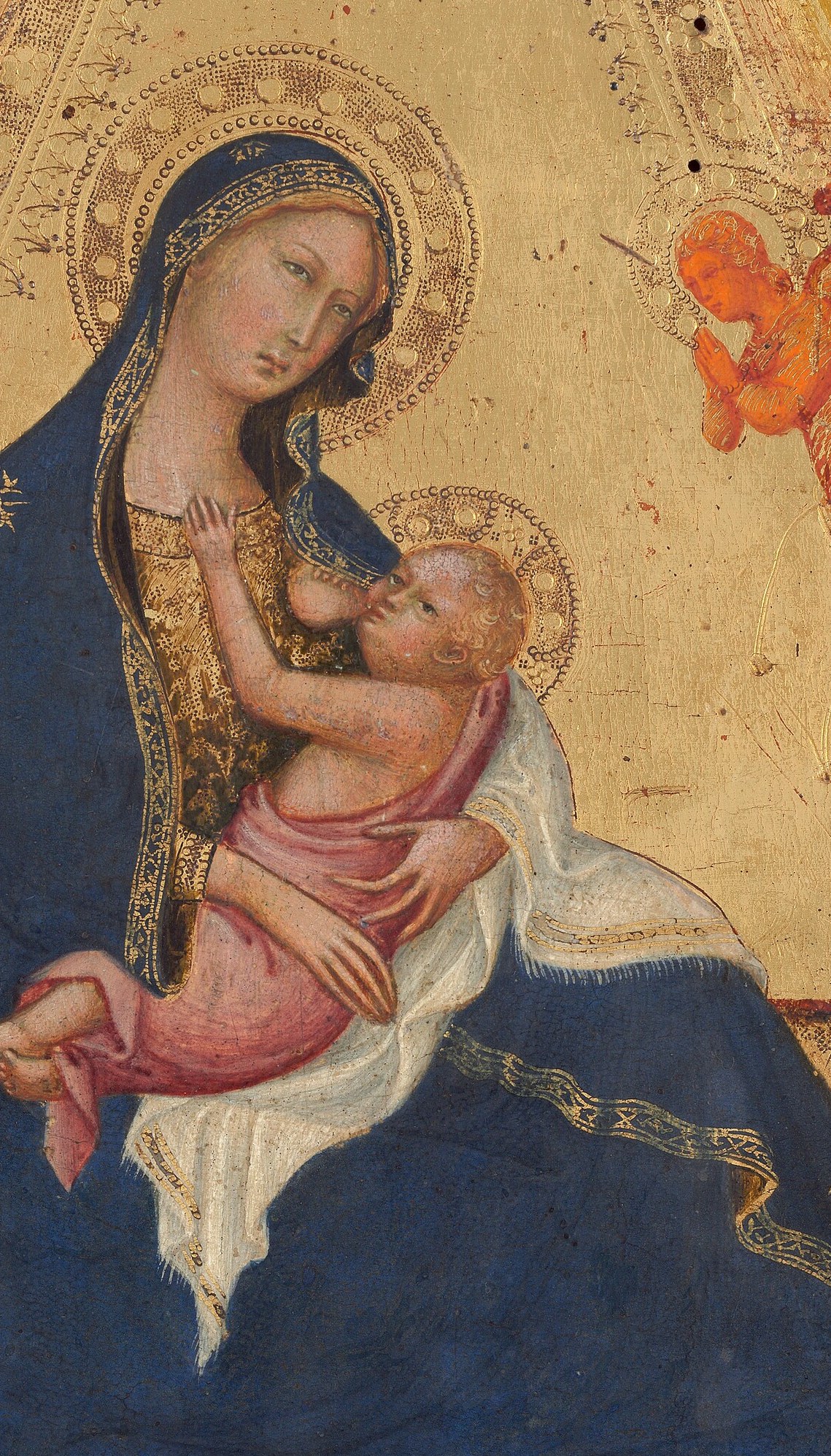
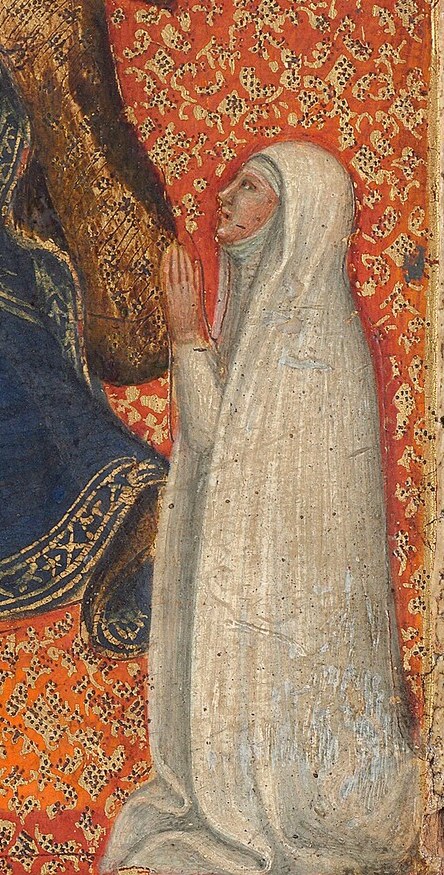
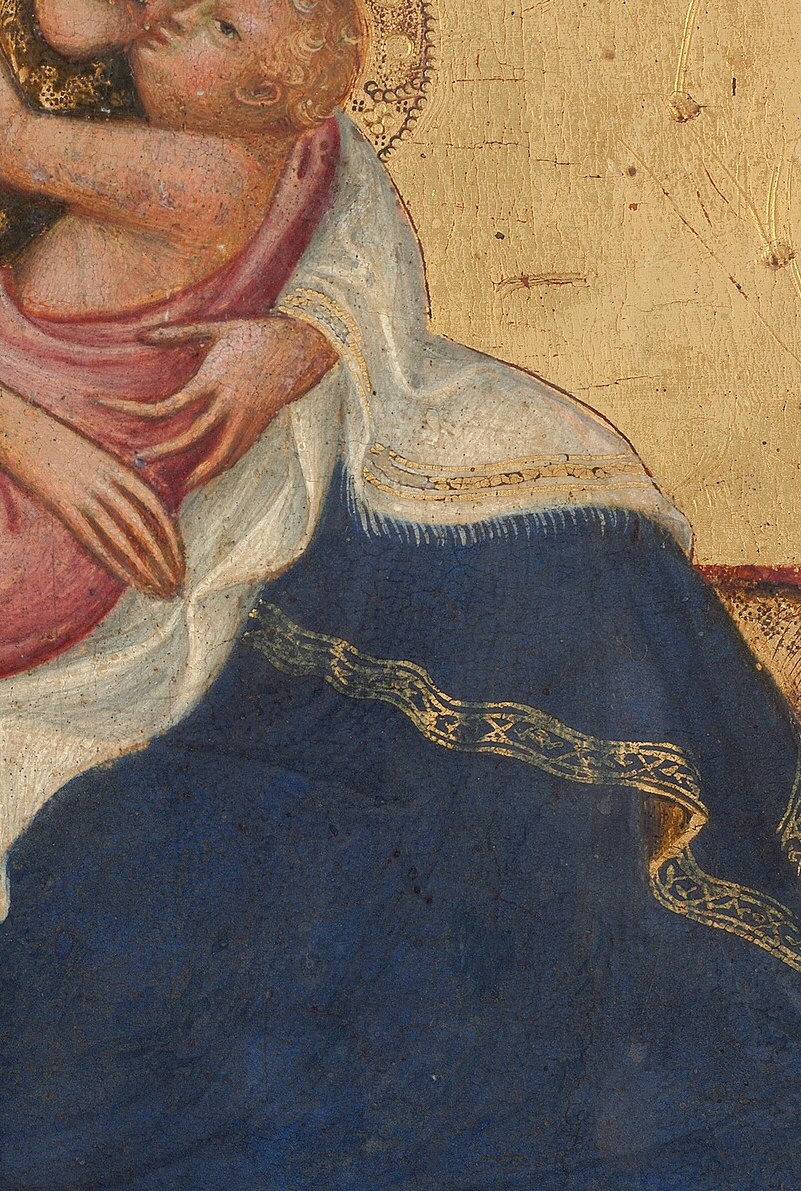
Andrea di Bartolo's Madonna of Humility, The Blessing Christ, Two Angels, and a Donor (c. 1385) offers a window into Sienese devotional practices. The painting showcases the "Madonna of Humility" type, where Mary is shown seated on the ground or a simple throne, emphasizing her human and approachable nature, yet still divine. The presence of the patron figure is a key element, highlighting the personal connection and patronage involved in creating such religious art. The rich details, from the fabric to the gold background, speak to the patron's status and piety.
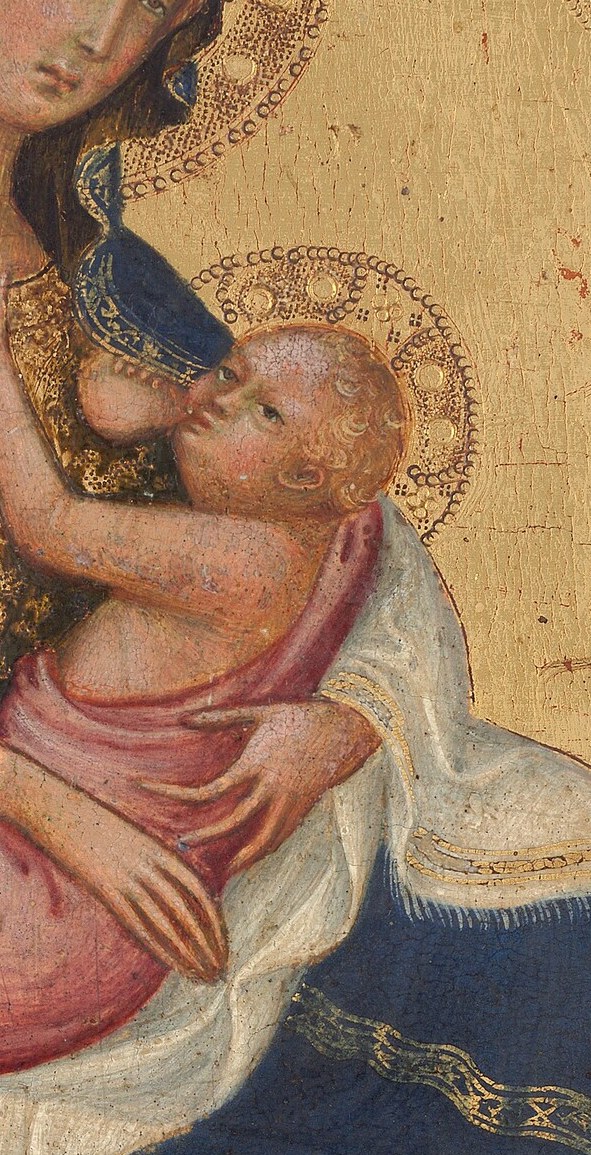
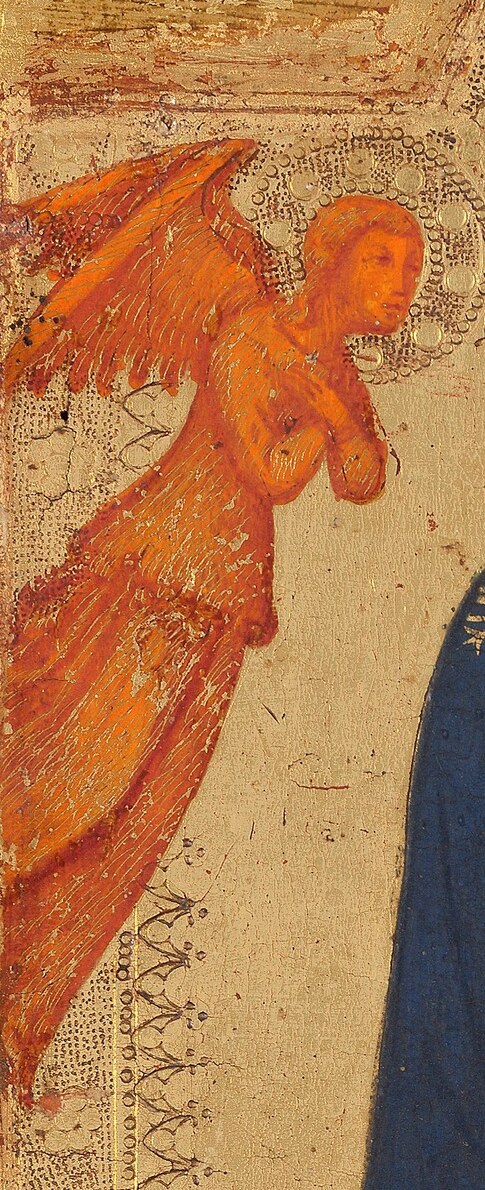
Observe the Virgin Mary at the center, cradling the infant Christ. Notice how her son reaches upwards, guided by the figure of the Blessing Christ above him, creating a layered depiction of divine authority. The kneeling donor figure, veiled and humble, is positioned in the lower corner, her gaze directed towards the holy scene, symbolizing her intercessory role.
Created in Siena around 1385, this tempera panel reflects the artistic traditions of the region, known for its luminous colors and decorative elements. The use of a gold background was typical for religious works, signifying the heavenly realm and separating the sacred figures from the earthly viewer. Such paintings served as focal points for prayer and meditation for their patrons.
This work exemplifies the blend of artistic skill and religious devotion characteristic of the late medieval period.
Details
Transcript
She sits in humility, holding her child. Her son reaches for a higher blessing. Angels attend the holy mother and child. This painter worked in Siena around 1385. She kneels in prayer as the patron. Her gilded robe signifies her wealth. The gold background means this is sacred.