Landscape in the Adirondacks by Alexander Helwig Wyant
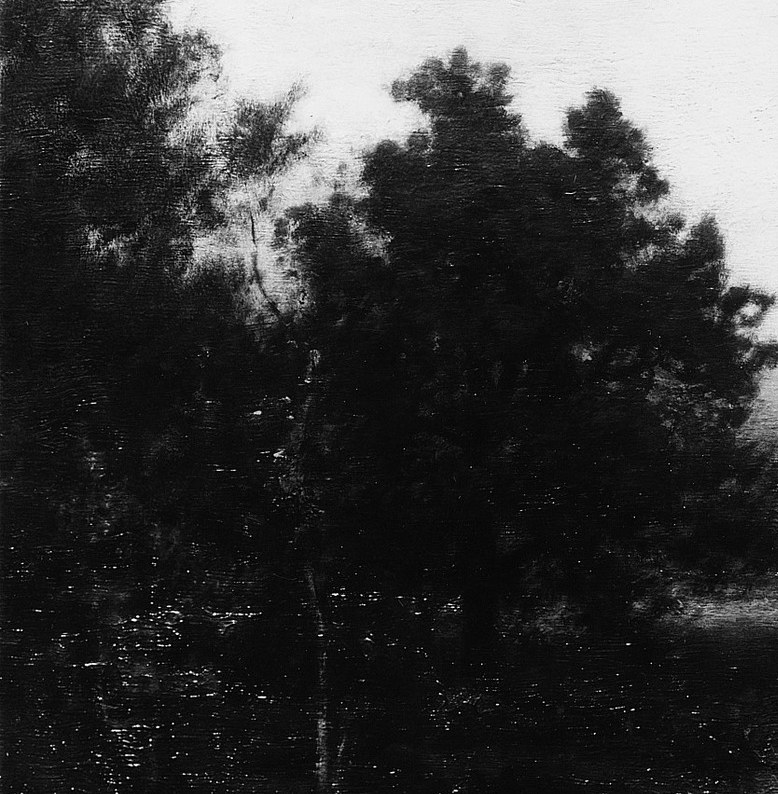
Alexander Helwig Wyant's Landscape in the Adirondacks (1893), oil on canvas, from The Metropolitan Museum of Art. This painting shows a solitary tree, a motif from his Tonalist phase. It was painted after a debilitating stroke forced him to learn to paint with his left hand.
Look at the dark, solitary tree on the left, its dense foliage anchoring the composition. Notice the hazy, distant hills and the subtle gradient of the sky, creating a mood of quiet contemplation. The rough brushwork in the foreground bushes conveys a tactile quality.
Wyant's artistic journey saw him shift from the narrative Hudson River School to the atmospheric Tonalism. This later style, emphasizing mood and subjective experience, was less commercially successful than his earlier, more realistic works. Painting with his left hand after a stroke, Wyant found a new artistic voice, prioritizing emotional resonance over topographical accuracy.
This piece represents a profound personal and artistic transition, proving that true artistic vision can flourish even after significant adversity.
Details


Transcript
A solitary tree dominates the canvas. Wyant painted this in 1893. The painter suffered a stroke in 1889. His right arm was paralyzed. He taught himself to paint left-handed. Look at the textured bark of this trunk. This is Tonalism, not Hudson River realism. His early work sold better.