A Couple in an Interior with a Gypsy Fortune-Teller by Jacob Duck
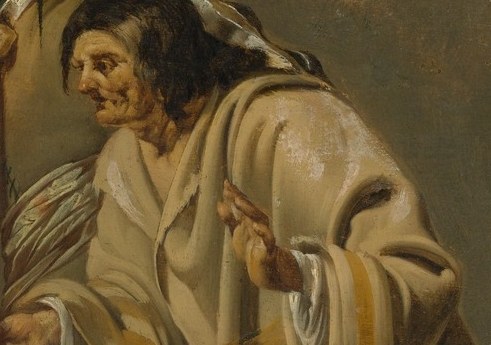
This is Jacob Duck's 'A Couple in an Interior with a Gypsy Fortune-Teller,' painted around 1632 and now in the collection of the Hermitage Museum. The painting catches a well-off Dutch couple at a private moment of intense vulnerability, leaning across a table toward a fortune-teller, hoping to glimpse the shape of their own lives. The gentleman's hands, open and reaching, give the whole thing away: he wants to believe, and his wanting is visible.
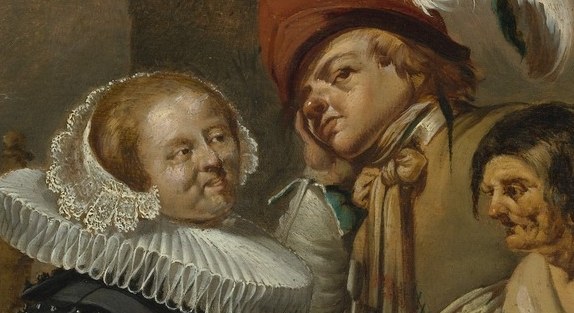
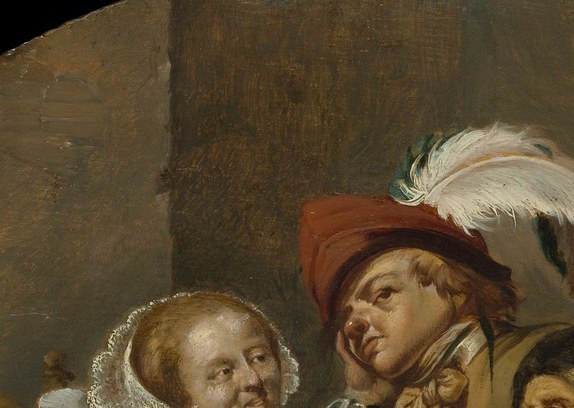
Look at the small object passing between the fortune-teller's fingers and the gentleman's outstretched hand. Duck deliberately keeps it ambiguous, it could be a ring, a coin, or a talisman, so the scene is never fully legible. That illegibility is the point. The transaction is charged partly because we cannot decode it. The red feather in the fortune-teller's hat is the other visual anchor: in 17th-century Dutch genre painting, red and feathers marked a figure as exotic, marginal, possibly transgressive. She is the outsider who enters a respectable interior and changes the atmosphere by simply being there.
Jacob Duck trained first as a goldsmith in Utrecht before studying drawing, and you can feel a goldsmith's attention to the weight of a small, precious object in the way he centers the token. He worked across Utrecht, Haarlem, and The Hague, painting soldiers and everyday scenes, and died in 1667. This painting belongs to a long Dutch tradition of moralized genre scenes, but Duck is less interested in scolding the couple for their credulity than in recording the moment of leaning forward, the held breath before the fortune is spoken.
The gentleman never got to know his future. But we get to see him, suspended in wanting it, four hundred years later.
Details

Transcript
They look like prosperous 17th-century burghers out for an evening. She wears a golden-yellow dress. He wears an elaborate ruff. But tonight they are not sitting for a portrait. They are leaning in to hear their future. The fortune-teller extends a small object toward the gentleman's open hand. A ring, a token, a talisman, Duck leaves it deliberately unreadable. The red hat with its white feather marks her as an outsider, a 'gypsy' to the Dutch viewer. The gentleman's hands reach toward her. He wants so badly to know.