The Triumph of the Church by http://www.wikidata.org/.well-known/genid/a584e6593dbf5cc679bc3f968670c956
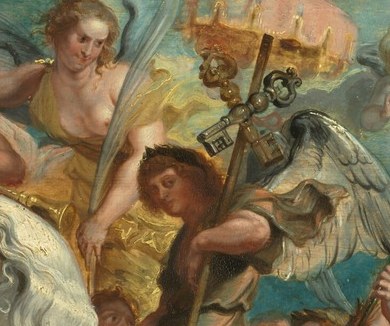
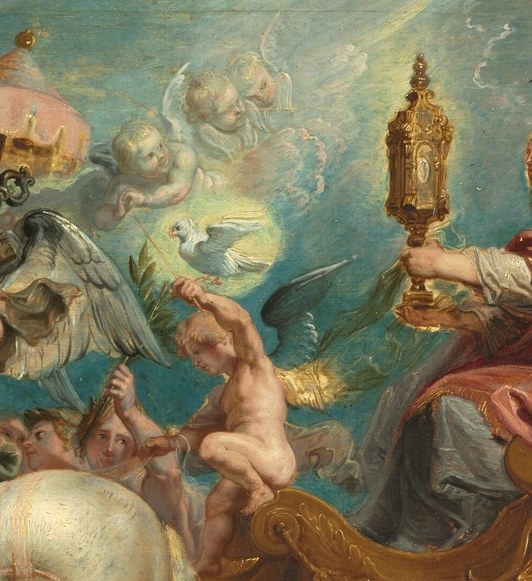
Peter Paul Rubens's "The Triumph of the Church" (c. 1628) presents a dynamic allegory. The painting visualizes the victory of the Church. Look at the central figure, personifying the Church, holding a monstrance, a symbol of the Eucharist. A cherub offers a laurel wreath, signifying victory, while a putto carries a dove, representing the Holy Spirit. The trumpeting angel announces divine glory above. Painted in 1628, this work embodies the Church's ascendancy through powerful symbolism and energetic composition. What does this triumph represent in the context of the 17th century?
Details
Transcript
She holds the monstrance, a symbol of divine presence. The cherub offers a laurel wreath. Victory is here. A putto carries a dove, the Holy Spirit's sign. The trumpeting angel announces divine glory. The Church personified rides in triumph. This triumph was painted in 1628.