Palique y trago by José Benlliure y Gil
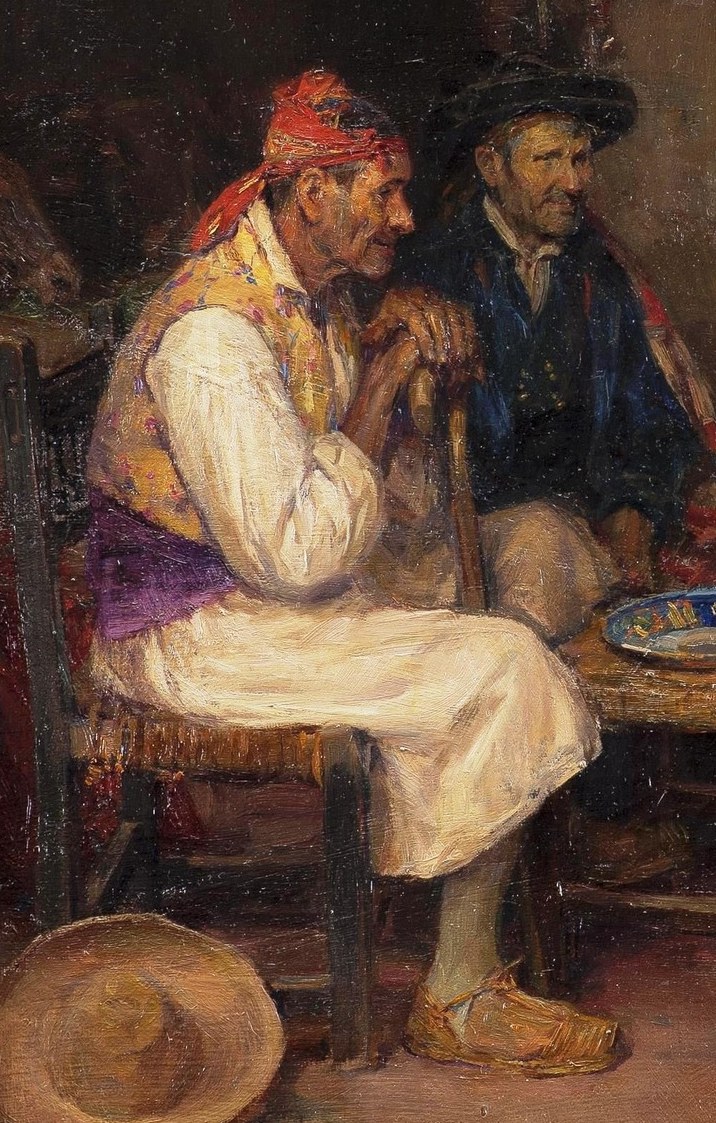
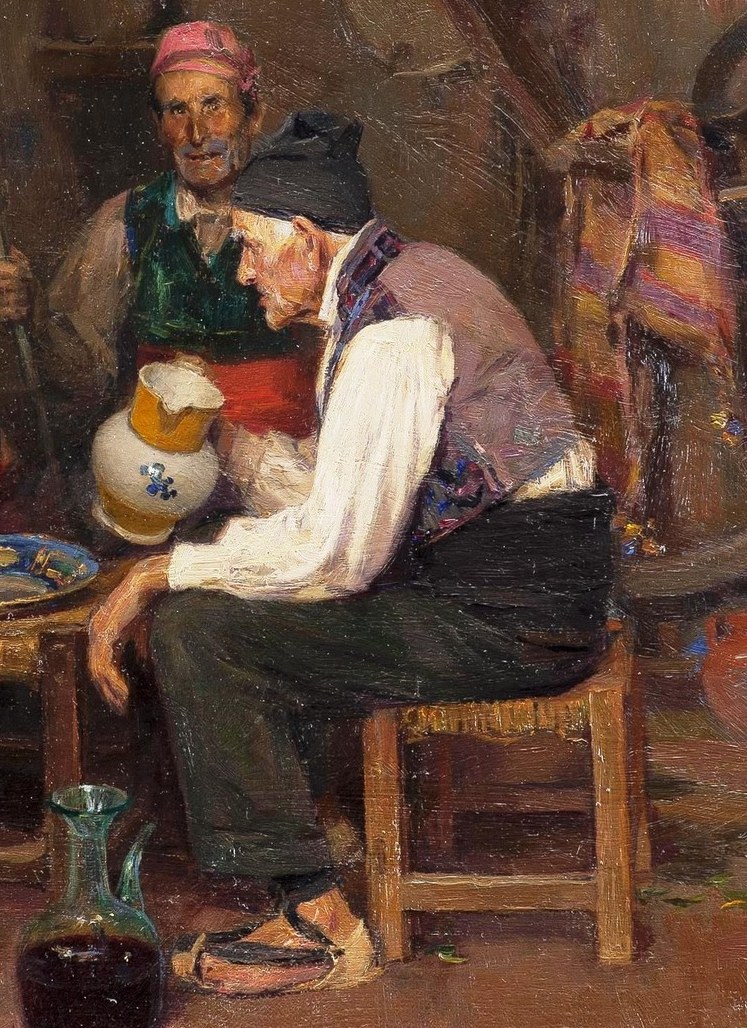
José Benlliure y Gil's "Palique y trago" (1890) captures a warm, everyday scene of Spanish life, now housed at the Museo del Prado. The title, meaning 'Chat and a Drink,' perfectly describes the relaxed gathering of four men sharing wine from a traditional porrón pitcher.
Look closely at the figures and their expressions; their weathered faces and simple clothing suggest a moment of shared repose and camaraderie. The porrón, a unique Spanish wine pitcher, is central to the composition, symbolizing conviviality and the ritual of communal drinking.
Benlliure y Gil was known for documenting contemporary Spanish life. He masterfully uses chiaroscuro, a technique of strong contrasts between light and dark, to illuminate the men and the porrón, creating a rustic and inviting atmosphere. The painting offers a glimpse into the cultural practices and social customs of late 19th-century Spain.
This painting invites us to consider the simple pleasures of shared moments and the traditions that bring people together. What details do you notice that enhance this sense of warmth and connection?
Details
Transcript
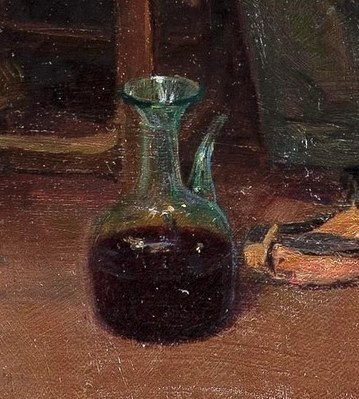
This painting, 'Palique y trago,' depicts a moment of Spanish conviviality. Four men in regional attire share a drink and conversation. Central to the scene is this porrón pitcher, a Spanish tradition. The porrón is designed for communal drinking, passing from hand to hand. The artist, José Benlliure y Gil, captured everyday Spanish life. He used light and shadow to create a rustic, warm atmosphere.