The Brierwood Pipe by Winslow Homer (American, 1836–1910)
Winslow Homer painted The Brierwood Pipe in 1864, the same year as the Wilderness Campaign and the Siege of Petersburg. The death toll was staggering, and most Civil War imagery of the time focused on generals and battlefields. Homer went another way.
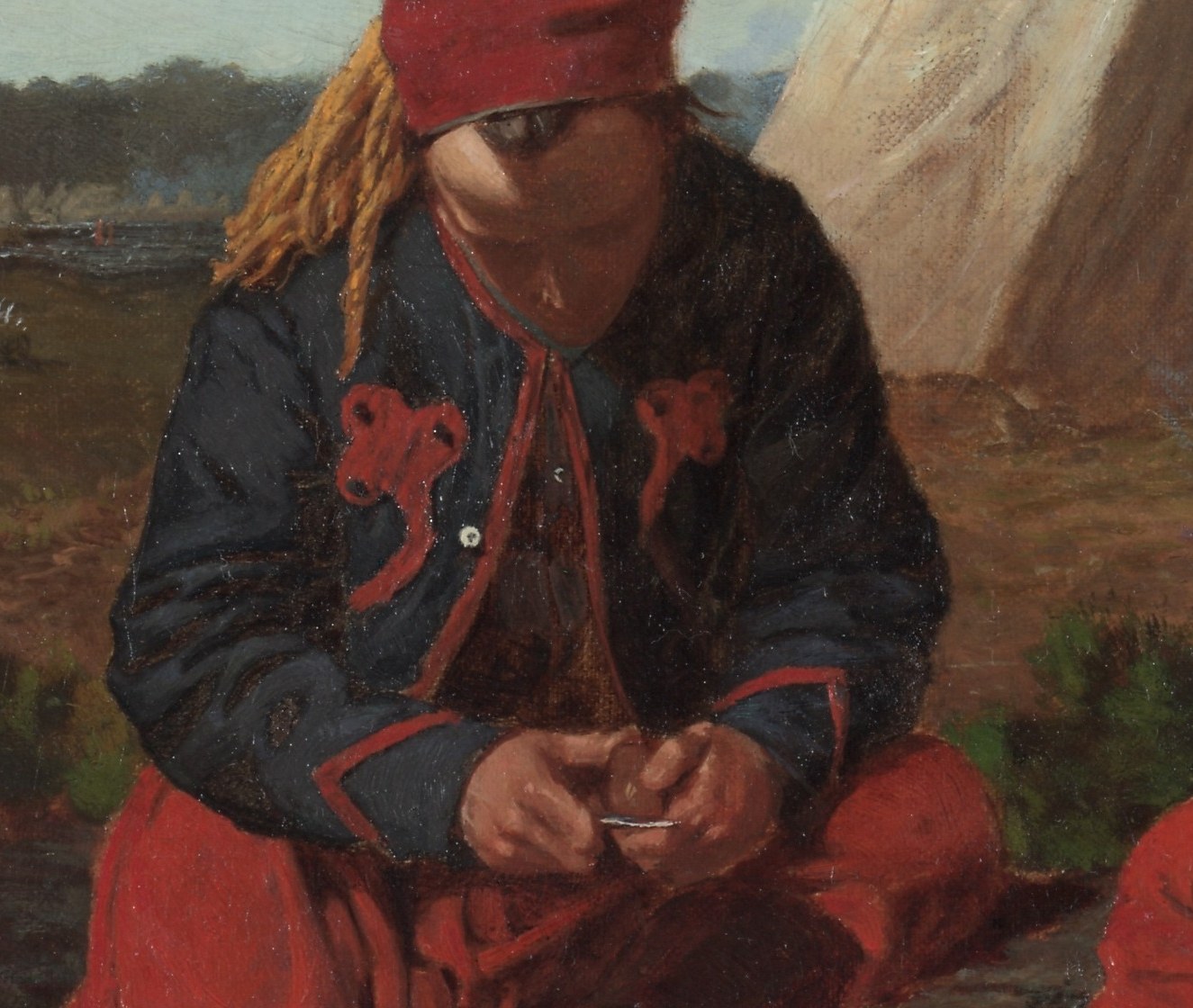
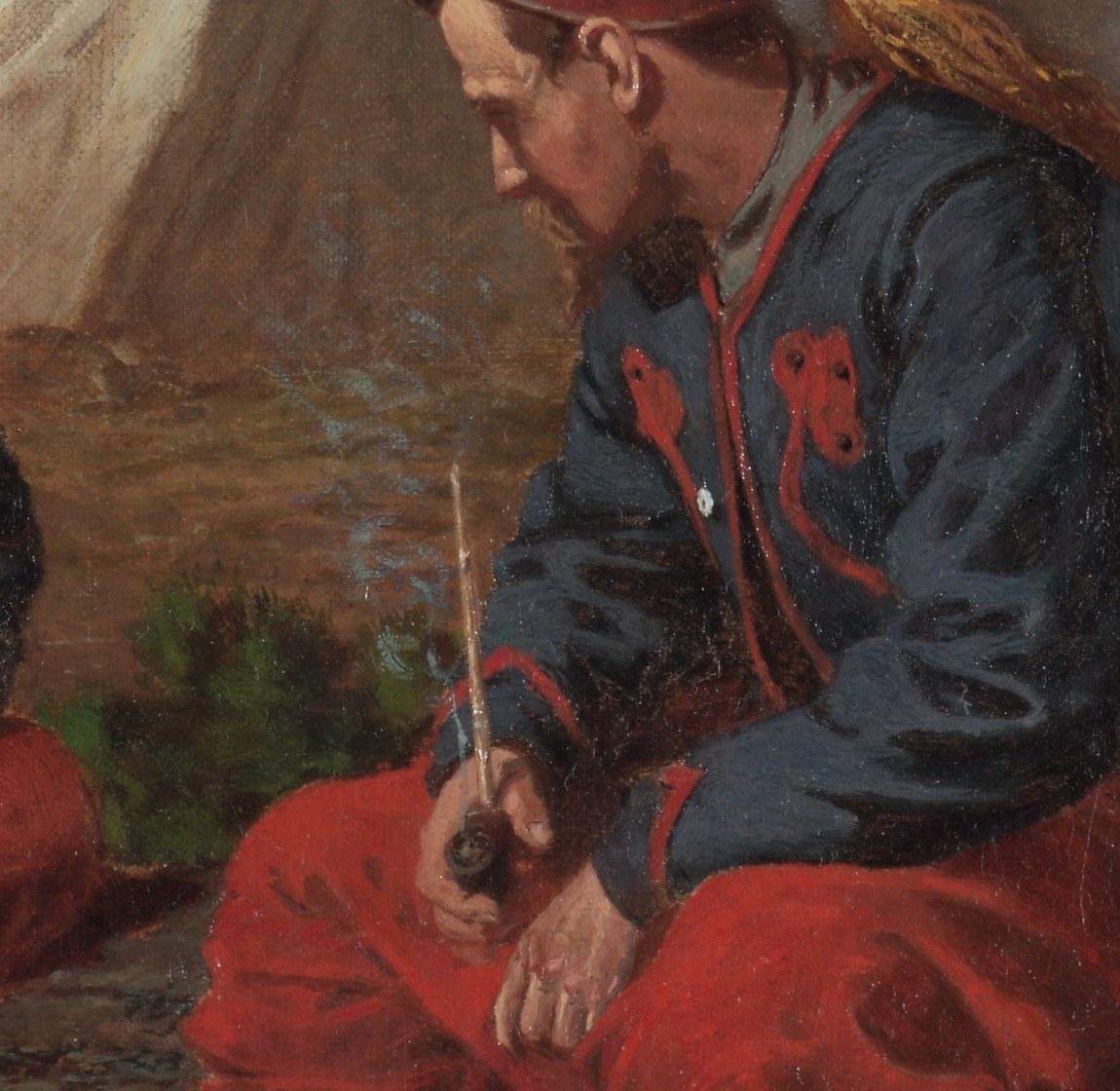
Look at the hands first. The soldier on the left grips a small brierwood pipe and a knife, carving with a concentration that shuts out the world. Across from him, his companion's hands rest open on his knee. The stillness between them is its own kind of loyalty. The painting's emotional center is not the famous red caps or the billowing Zouave trousers, but this tiny shared industry.
The men are Duryée Zouaves, from the 5th New York Volunteer Infantry. Their North African-style uniforms marked them as elite, flamboyant, and highly visible. Homer gave them neither glory nor tragedy. He gave them a moment of ordinary attention, the kind that keeps a person human through a long war.
The painting belongs to the Cleveland Museum of Art and is on view at the Smithsonian American Art Museum. If you sit with it, the quiet becomes the point.
Details
Transcript
1864. The Civil War had never been bloodier. Winslow Homer shows us not a battle, but a pause. They were the 5th New York Zouaves. Elite volunteers. One carves a pipe. His whole mind is inside his hands. The other watches, patient and still. He is there with him. Homer painted what war actually costs: ordinary hours, held close. Between them, the wide Virginia plain. The war waits outside.