Still Life with Dead Game by Aelst, Willem van
Willem van Aelst painted Still Life with Dead Game in 1661, and for over 350 years this canvas has been safe. No documented theft, no knife attack, no forgery scandal. It sits quietly in a collection, its drama contained entirely within the frame.
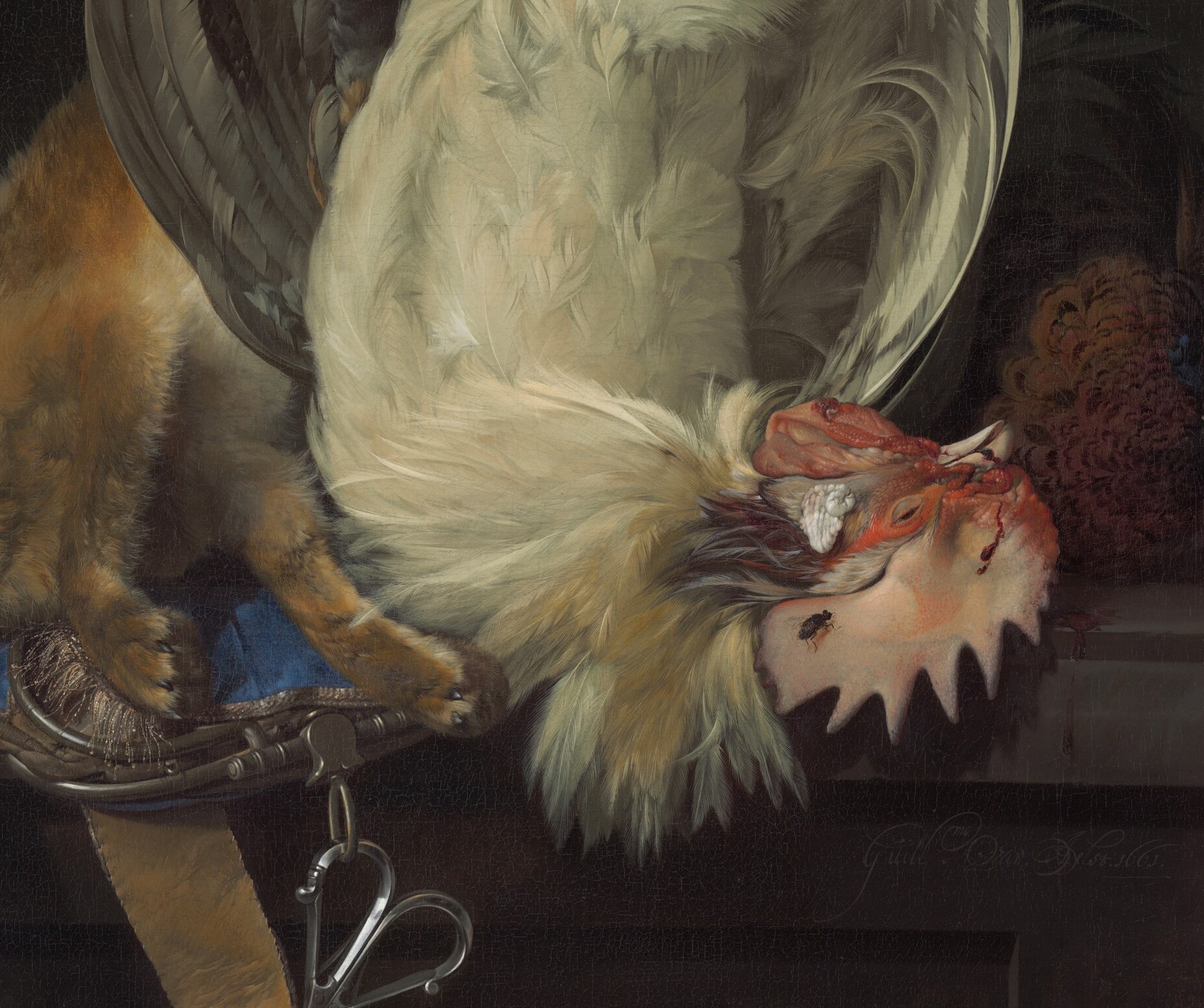
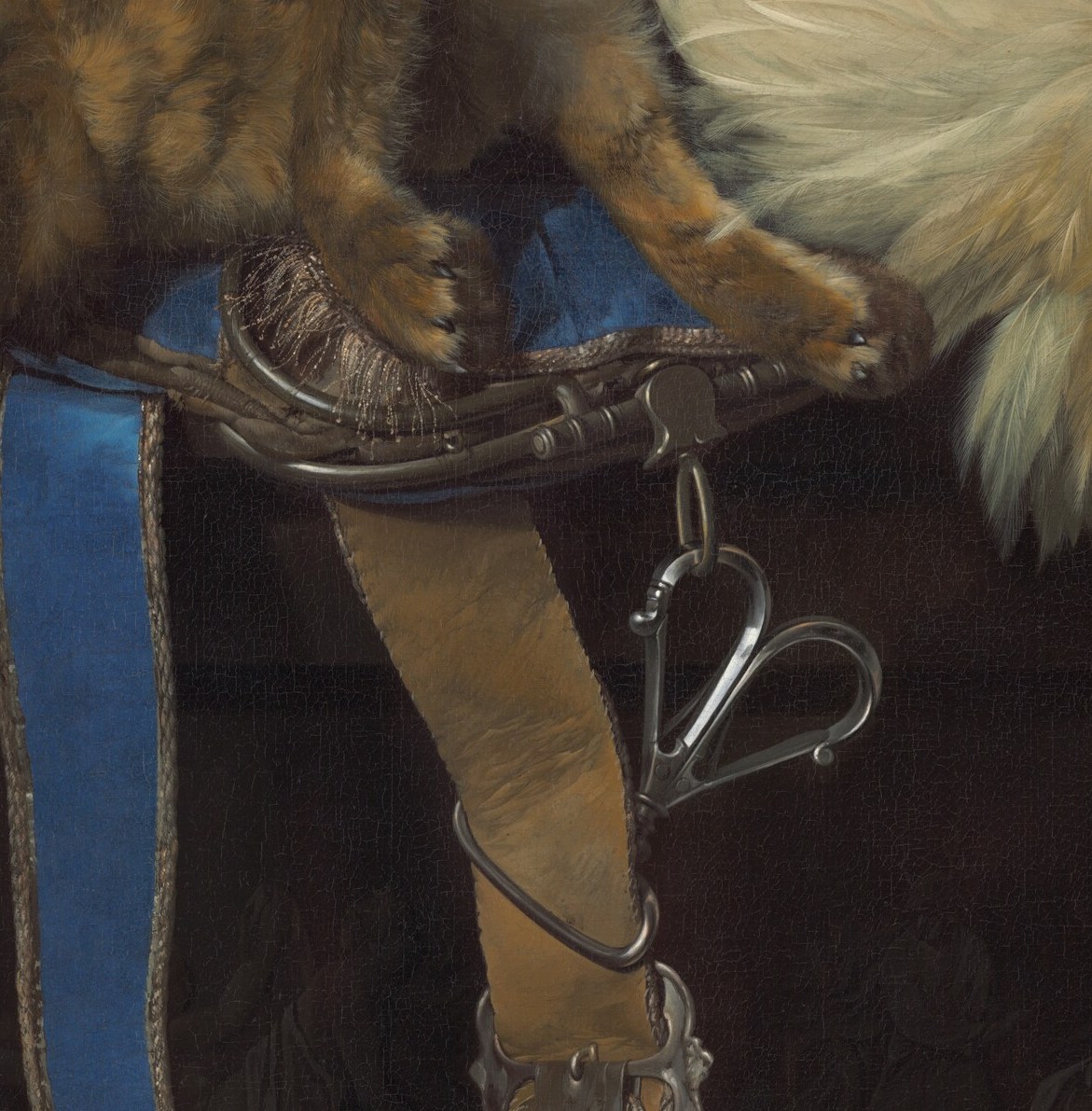
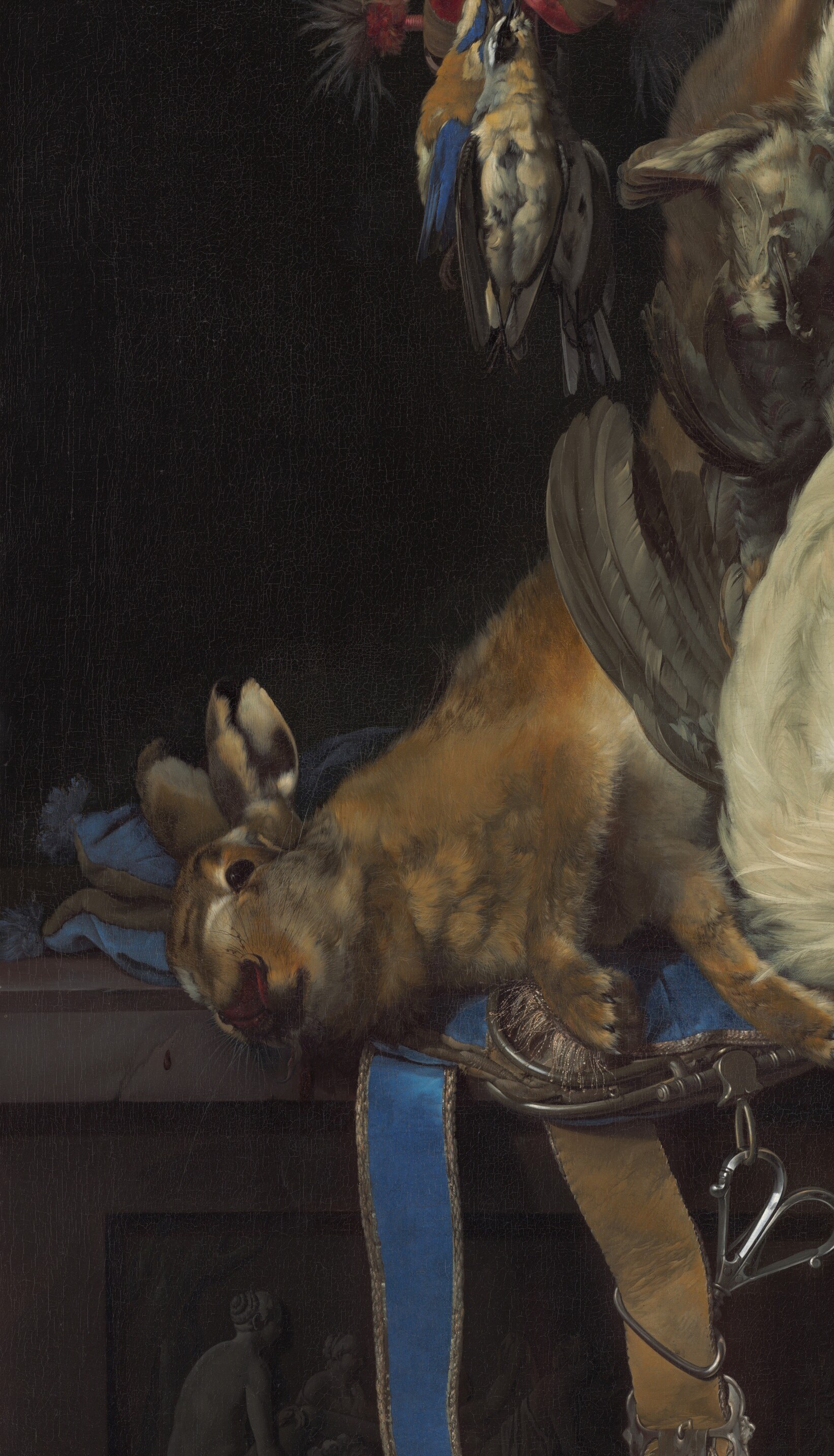
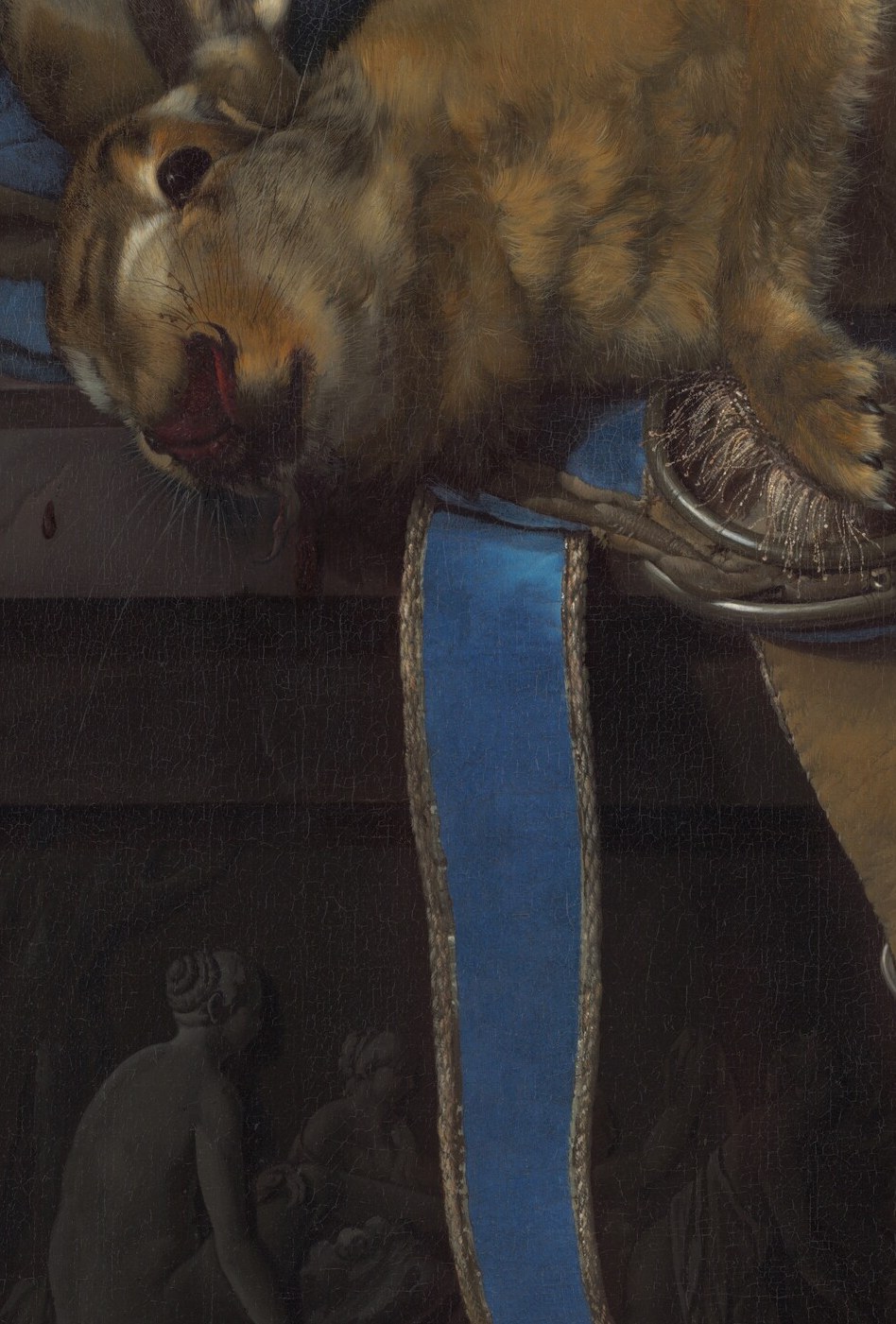
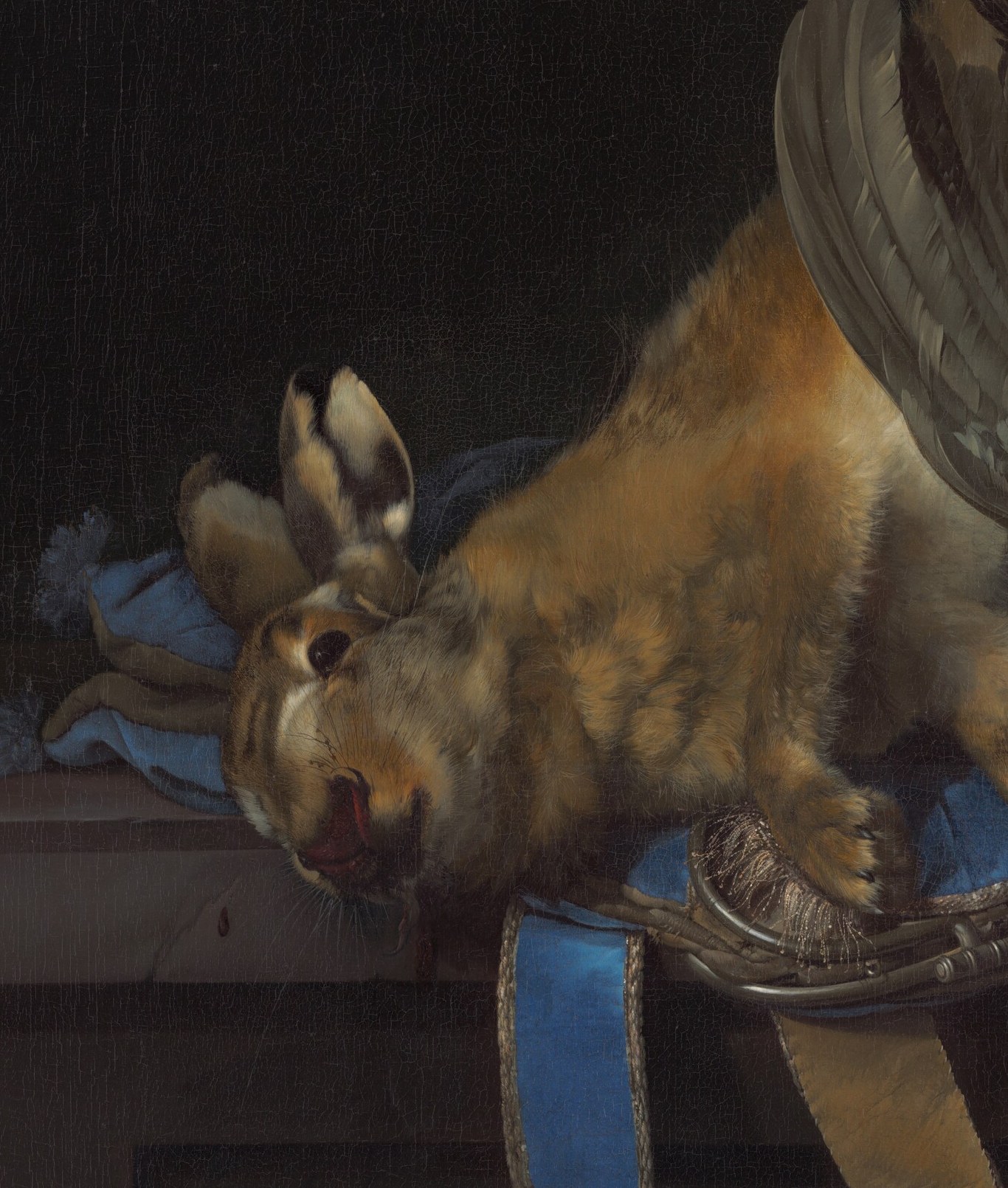
Look at what the artist asks you to see. The white rooster fills the right half of the canvas, wings still outspread from its final fall. Against the dark background, the red comb glows like a small, urgent flame. A blue silk ribbon loops among the feathers, and the hare's long ears droop straight down, heavier than everything else in the picture.
Van Aelst made his name on exactly this kind of surface. Fur that looks warm to the touch, a satin ribbon with a convincing sheen, the stiff translucence of flight feathers. In 1660s Amsterdam, a painter who could deliver those textures could name his price, and he did.
The painting is a trophy display, but also a moment held still. The animals are recently dead, carefully arranged, lit by a single raking light. In the Dutch still life tradition, the hunted hare and rooster were understood as abundance and as mortality in the same frame.
What detail did your eye land on first, the white wing, the blue ribbon, or that deep red comb?
Details
Transcript
1661. Willem van Aelst finishes a hunting trophy. Look at the white rooster, wings still spread. The red comb is the only warm color down here. Van Aelst was paid fortunes for textures like this. Soft hare fur, glossy silk, translucent feather. The drooping ears say what the painting leaves silent.