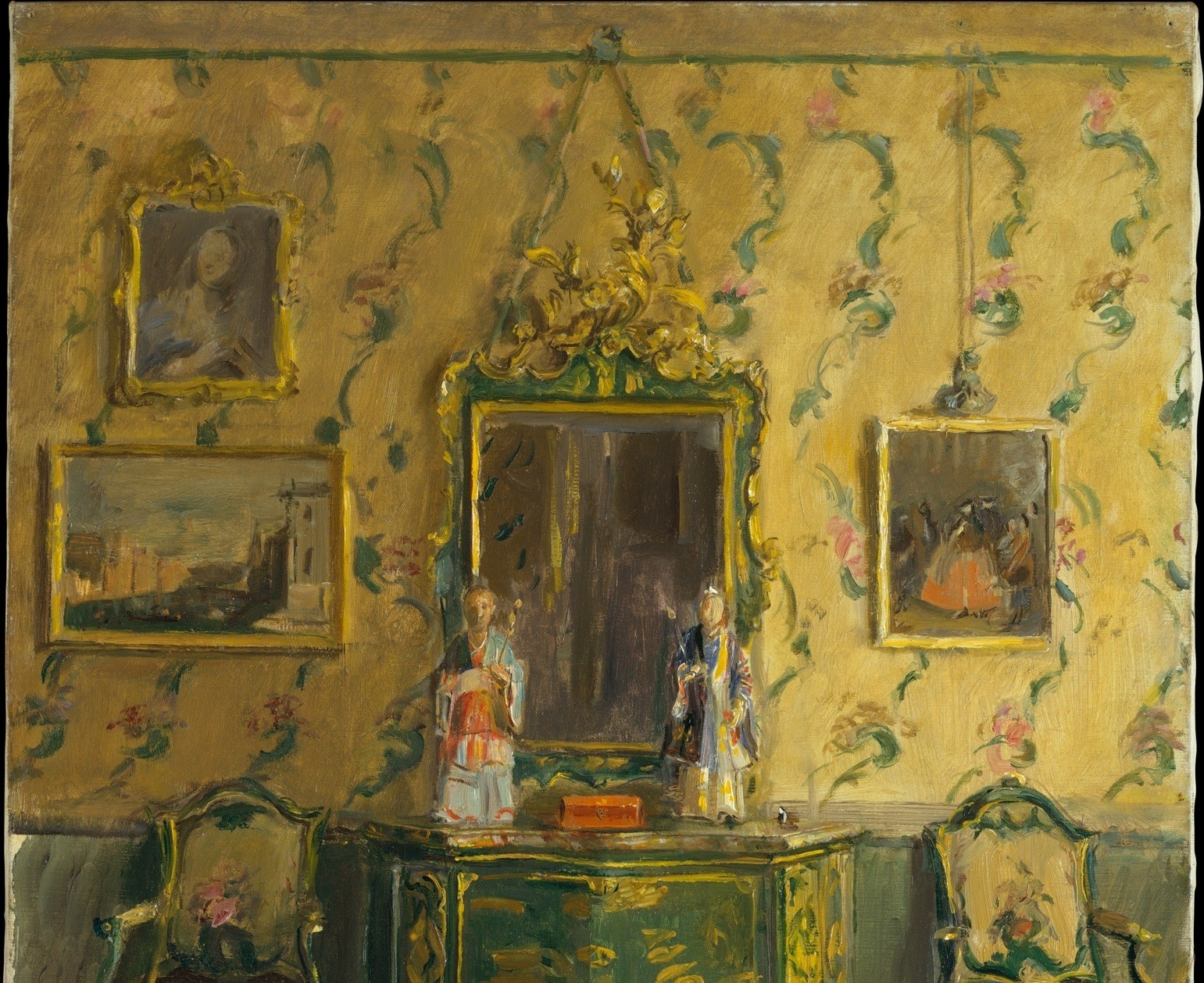
The Green Lacquer Room, Museo Correr, Venice by Walter Gay
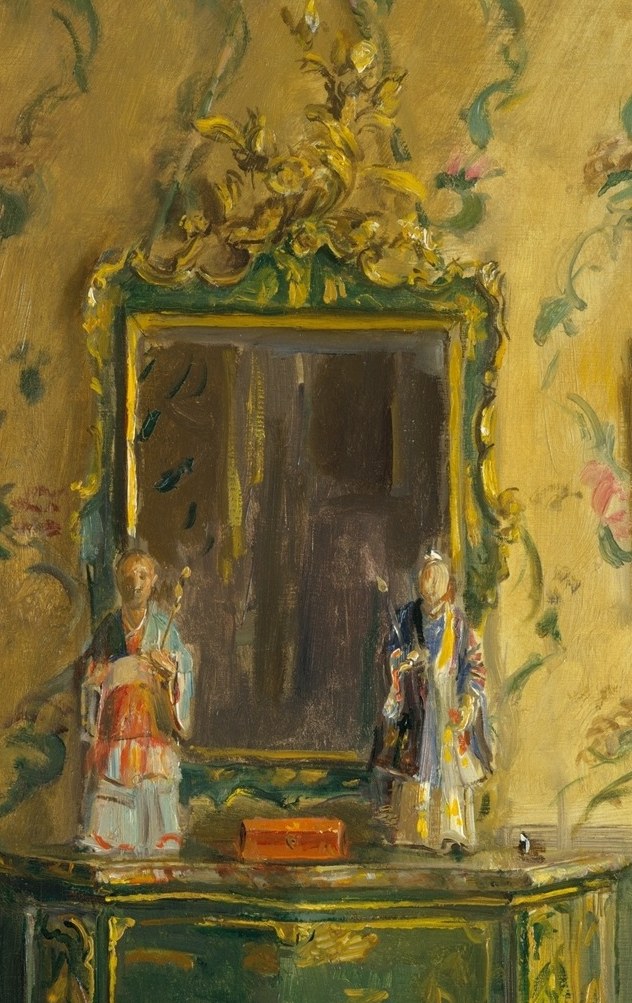
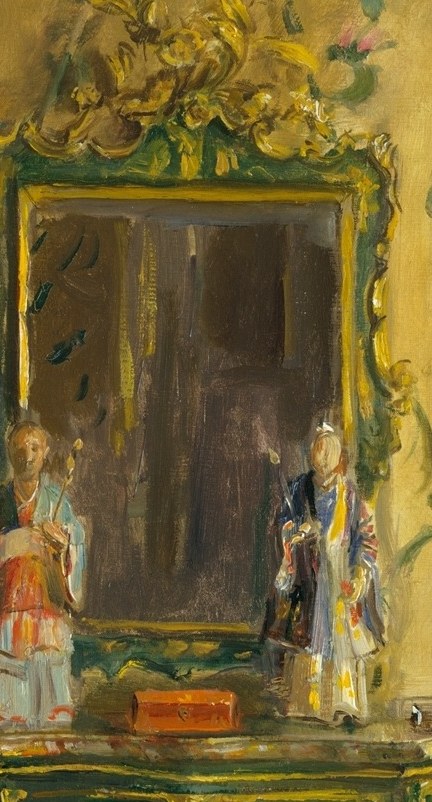
Walter Gay's 'The Green Lacquer Room, Museo Correr, Venice' (1912) freezes a moment inside an ornate Venetian interior. But look closely into the central mirror. Two indistinct figures stand where the room should logically be empty.
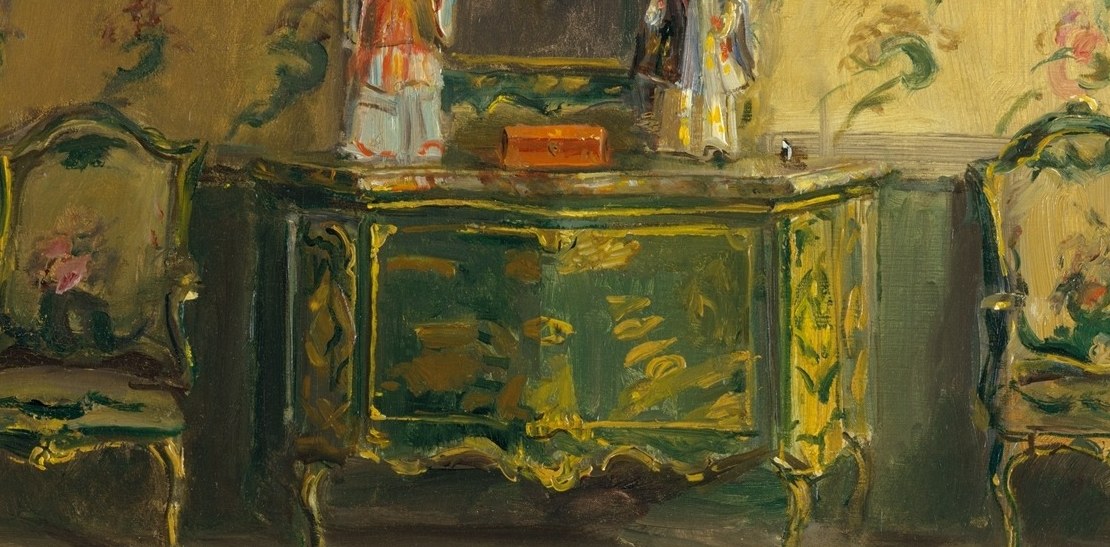
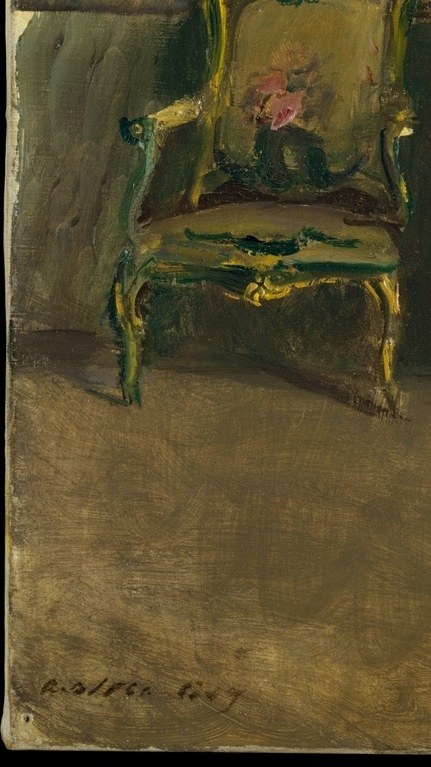
The painting is built from thick, urgent oil strokes. Gay applied paint with a vigor that, up close, dissolves into abstract marks. The floral wallpaper flickers rather than repeats, and the green lacquered console table shimmers with gold accents. Every surface breathes.
Gay was an American expatriate who became known for painting the interiors of French châteaux and European museums. This work captures a specific room in Venice's Museo Correr. Rather than a crisp architectural record, he gives us the sensation of standing in a quiet, opulent space.
Look again at those mirrored figures. They feel like a half-remembered presence. That blurred impressionism is not a mistake; it is the entire point. How does a smear of grey paint become a person?
Details
Transcript
It looks like a photograph of an empty, perfect room. But step closer. The mirror holds two figures. They are barely there, a smear of paint, a suggestion. Walter Gay painted this in 1912, in a Venetian museum. He built the whole room with quick, rough strokes. But the mirror is the loudest trick: reality is just urgent paint.