The Westwood Children by Johnson, Joshua
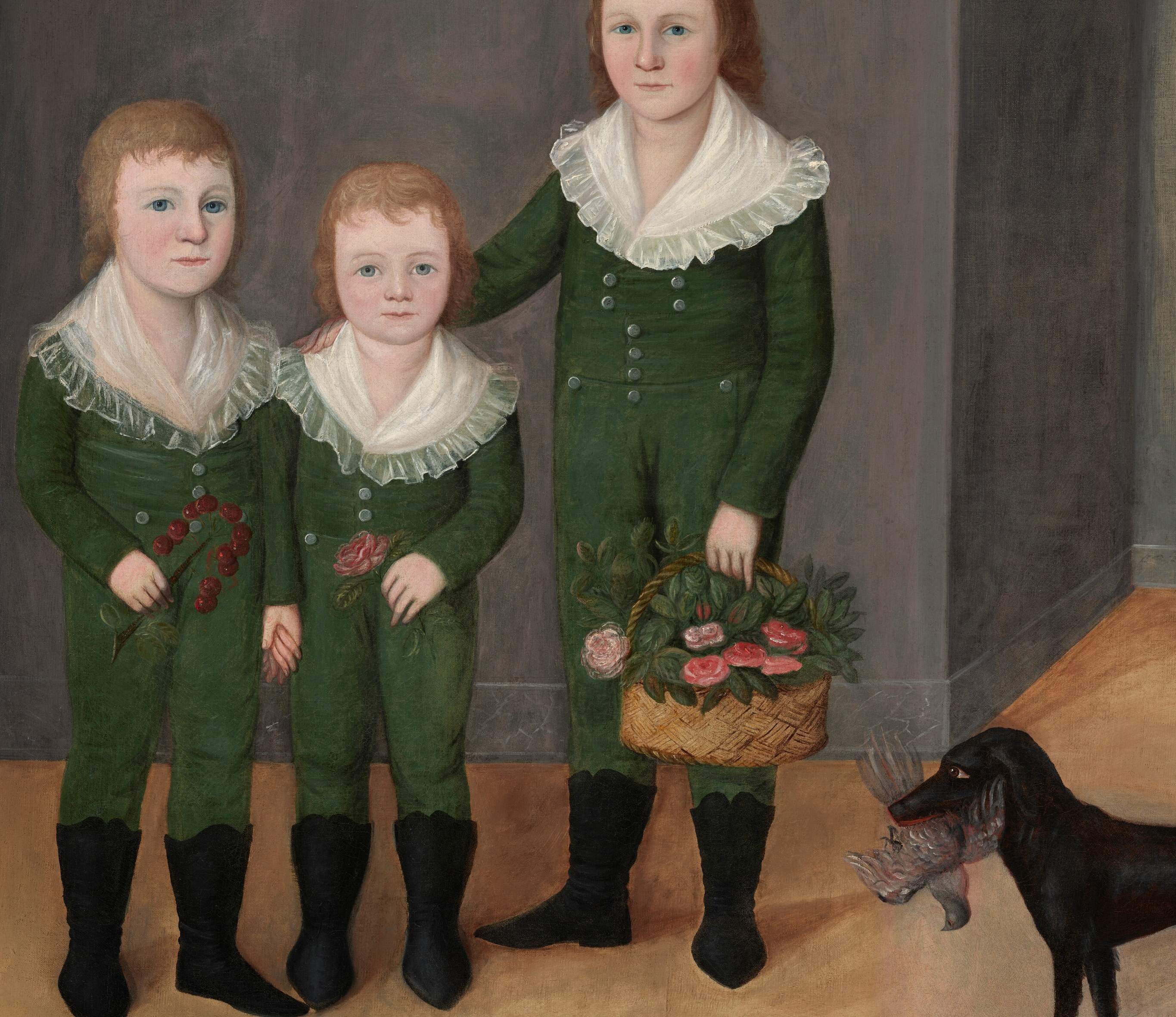
Joshua Johnson's "The Westwood Children," painted around 1807, offers a poignant glimpse into early American childhood portraiture. This oil on canvas, housed in a prominent collection, captures three siblings with remarkable formality and subtle emotion.
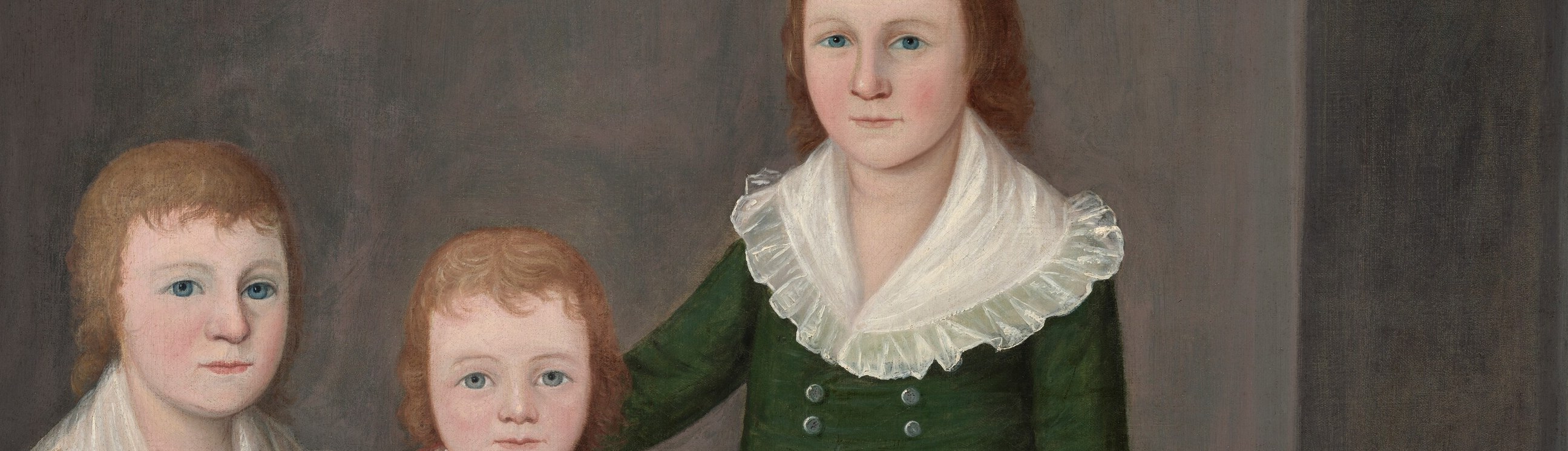
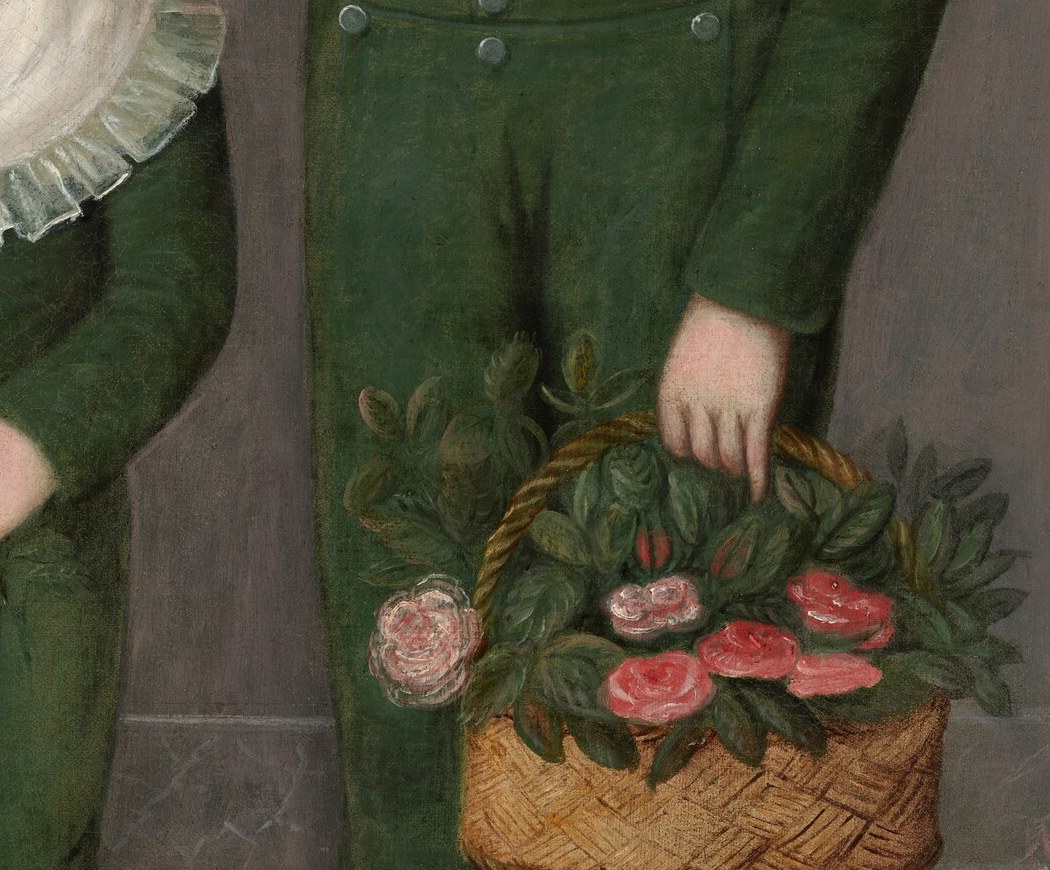
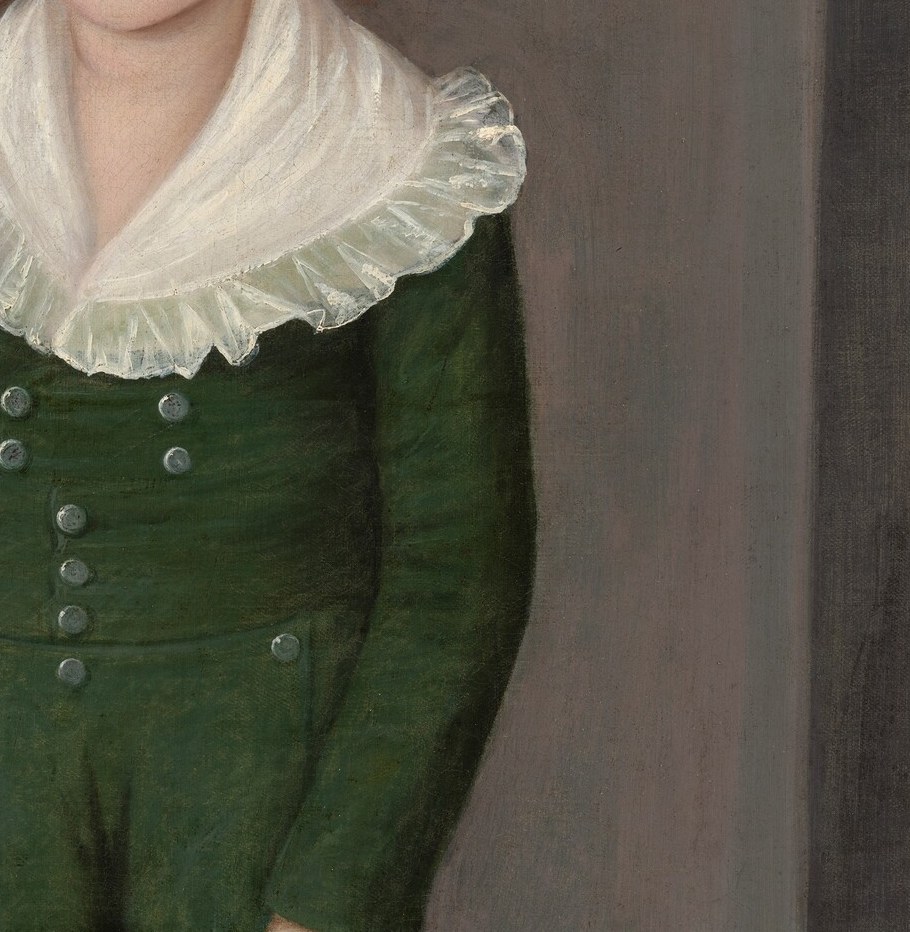
Observe their identical green velvet suits and elaborate lace collars, a deliberate choice by the family to present the children as a unified entity, transcending gender distinctions. The youngest child holds a delicate basket of pink roses, a classical symbol of youthful innocence.
Johnson, a self-taught artist, imbued each child with a serious, direct gaze, a common stylistic element of the era. The eldest child's arm draped protectively around a younger sibling offers the painting's only gesture of physical warmth, adding a tender, human touch to the otherwise stiff composition. It's a testament to the artist's ability to convey both social standing and individual personality.
What do you notice first about their expressions?
Details
Transcript
In 1807, a self-taught artist painted this family. Look at their matching green suits and lace collars. These clothes erased gender, presenting them as a unit. The youngest child holds a spray of pink roses. Roses were a classical symbol of innocence. The eldest child's arm is a protective embrace. This is the only physical warmth in a formal portrait. The artist gave each child a serious, formal gaze.