Allegory of Music by Laurent de La Hyre
View the artwork: Allegory of Music →
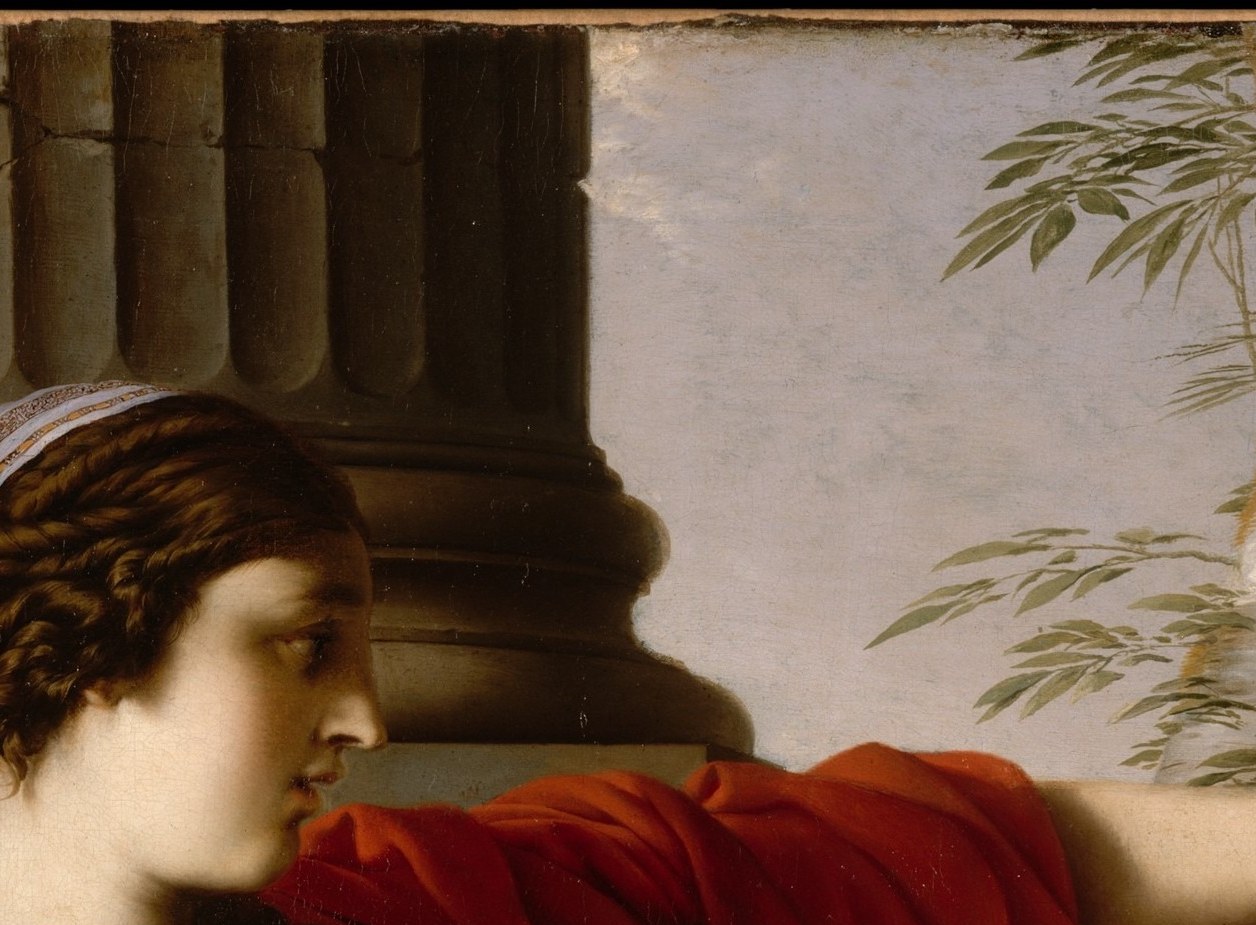
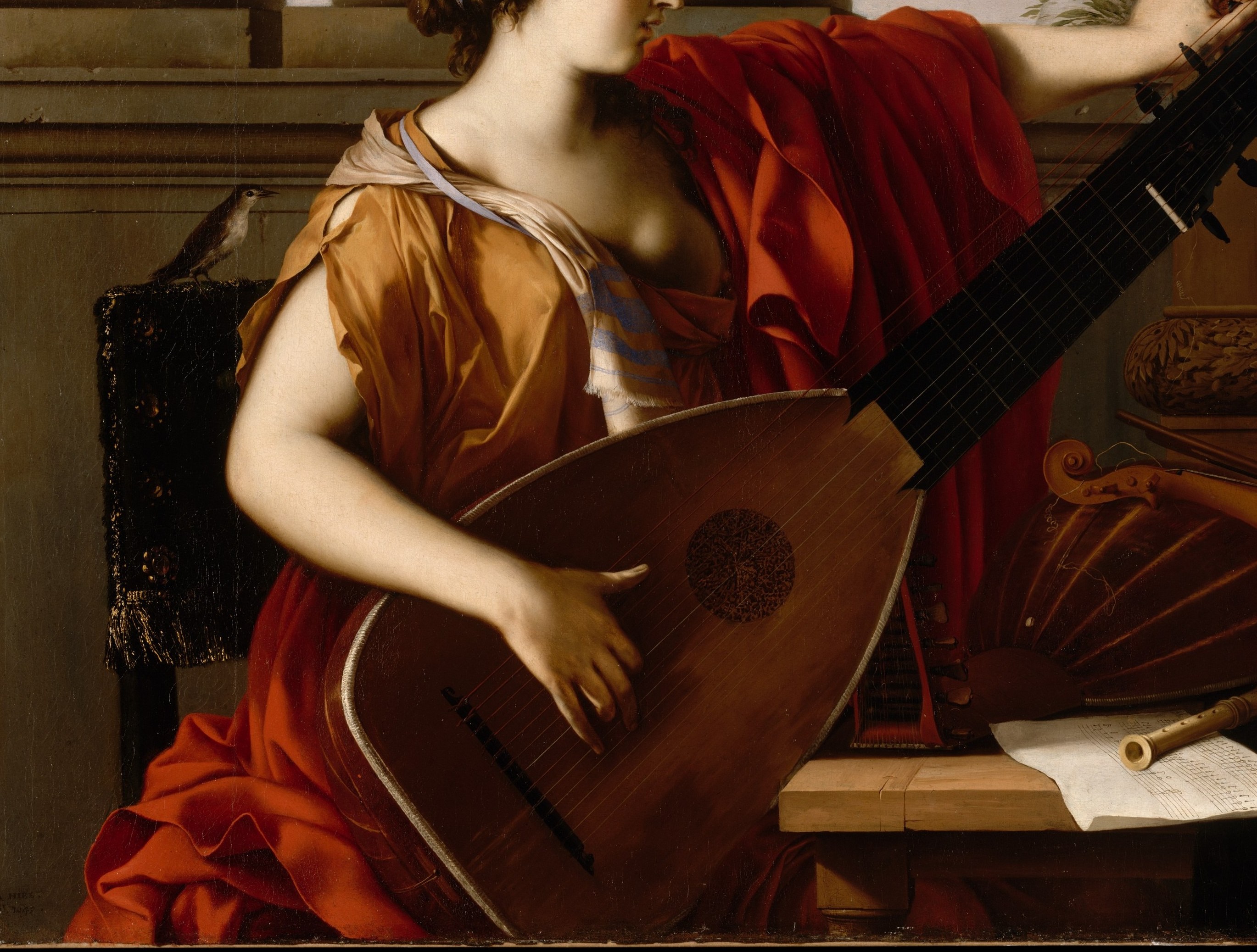
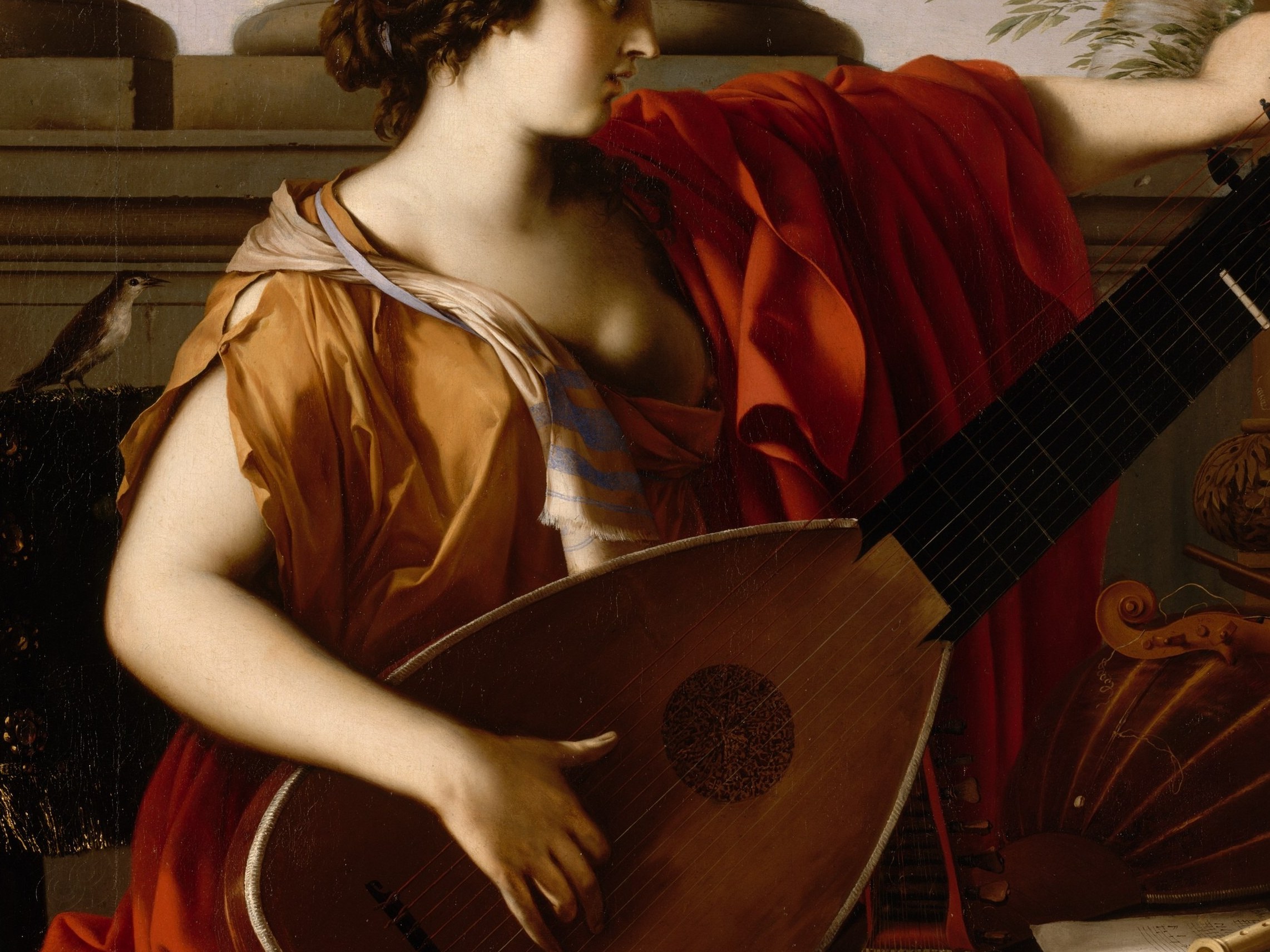
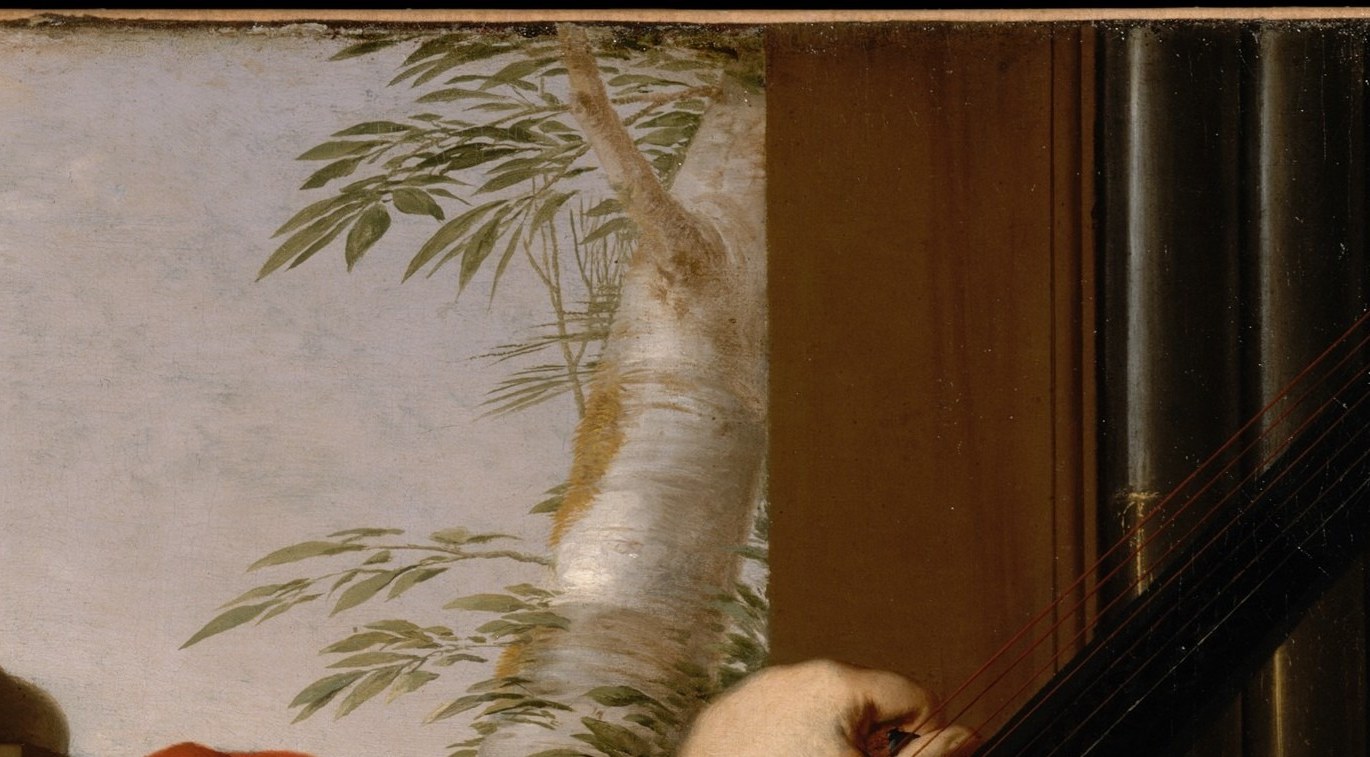
This is Laurent de La Hyre's 'Allegory of Music,' painted in 1649 and now in a private collection. It's a French Baroque allegory on the surface, but it doubles as a remarkably precise piece of musicological evidence. The instrument isn't a generic lute; it's identifiable as a theorbo, a prestige instrument of the Parisian court, and its depiction here has been used by scholars to trace the instrument's form in the mid-17th century.
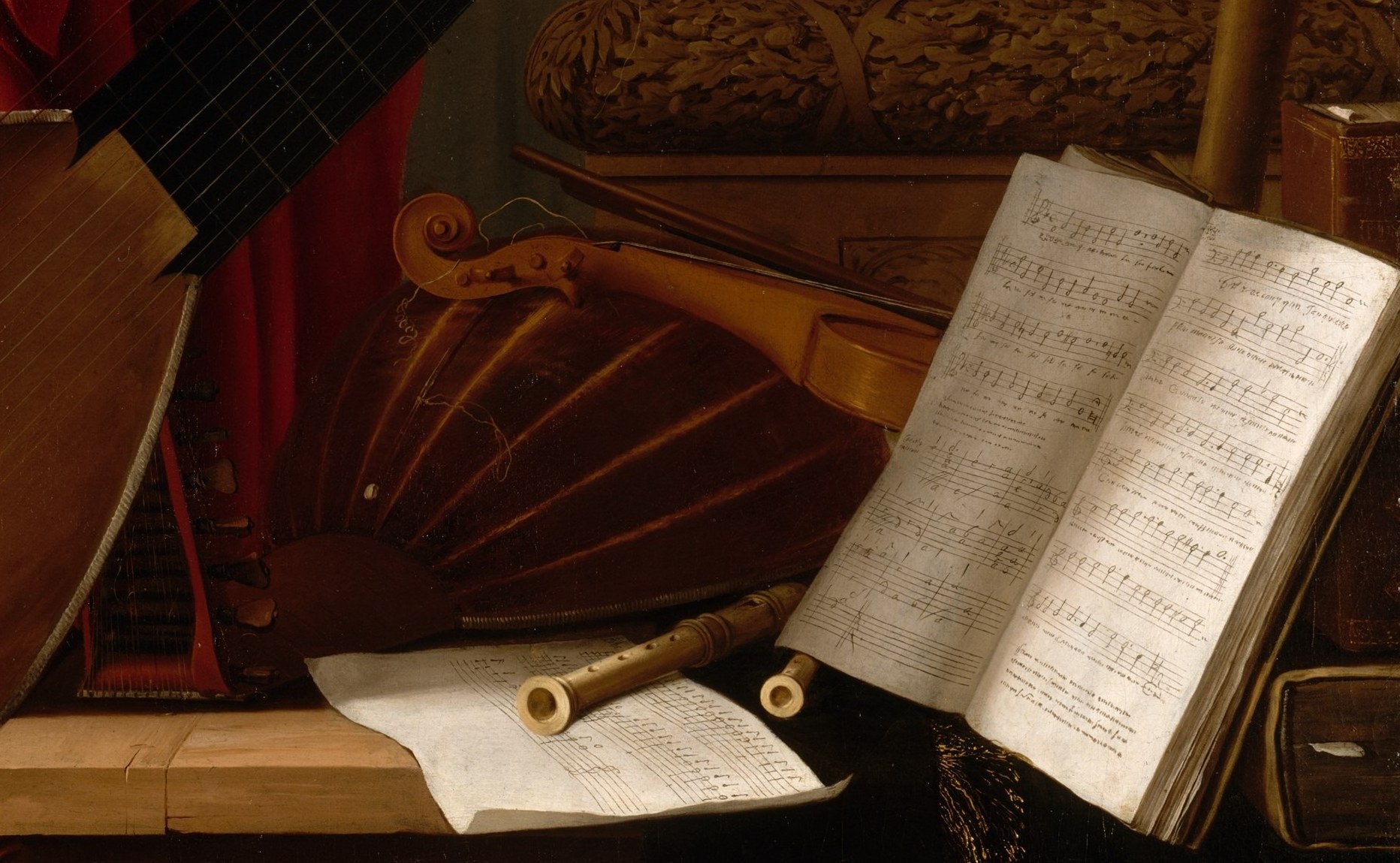
After you take in the face and the red drapery, look at the hands. Her left hand grips the neck with real fingering, not a symbolic gesture. Then examine the open sheet music on the stone ledge. La Hyre didn't paint suggestion marks. He copied actual musical notation. Under close inspection, clef markings and staves are visible, likely representing polyphony of the period. A musician painted this for people who read music.
The painting dates from 1649, the height of La Hyre's career, only seven years before his death. He was a leading figure in Parisian Atticism, a movement that prized neoclassical restraint, intellectual clarity, and balance over the drama of the Italian Baroque. That academic severity is visible in the books of music theory on the shelf, the classical column, and the cold stone ledge contrasting with warm living flesh.
The painting is an act of serious cultural argument, not just decoration. It insists that Music belongs among the liberal arts, equal to philosophy and rhetoric. And because the artist cared enough to copy real music, it keeps speaking to specialists four centuries later.
#arthistory #frenchbaroque #baroqueart
Details
Transcript
She wasn't just an allegory. She was evidence. 1649. The French Academy demanded clarity and intellectual rigor. Laurent de La Hyre gave them this: Music as a learned discipline. Look at her left hand on the neck. That's not a pose. That's a player. The instrument is a theorbo. Musicologists used this painting to date the model. Then someone looked closer at the open sheet music. It wasn't printed. La Hyre copied real polyphony. You can still read the staves. A painting so precise, you could almost play what she's playing.