A Washerwoman at Éragny by Camille Pissarro
View the artwork: A Washerwoman at Éragny →
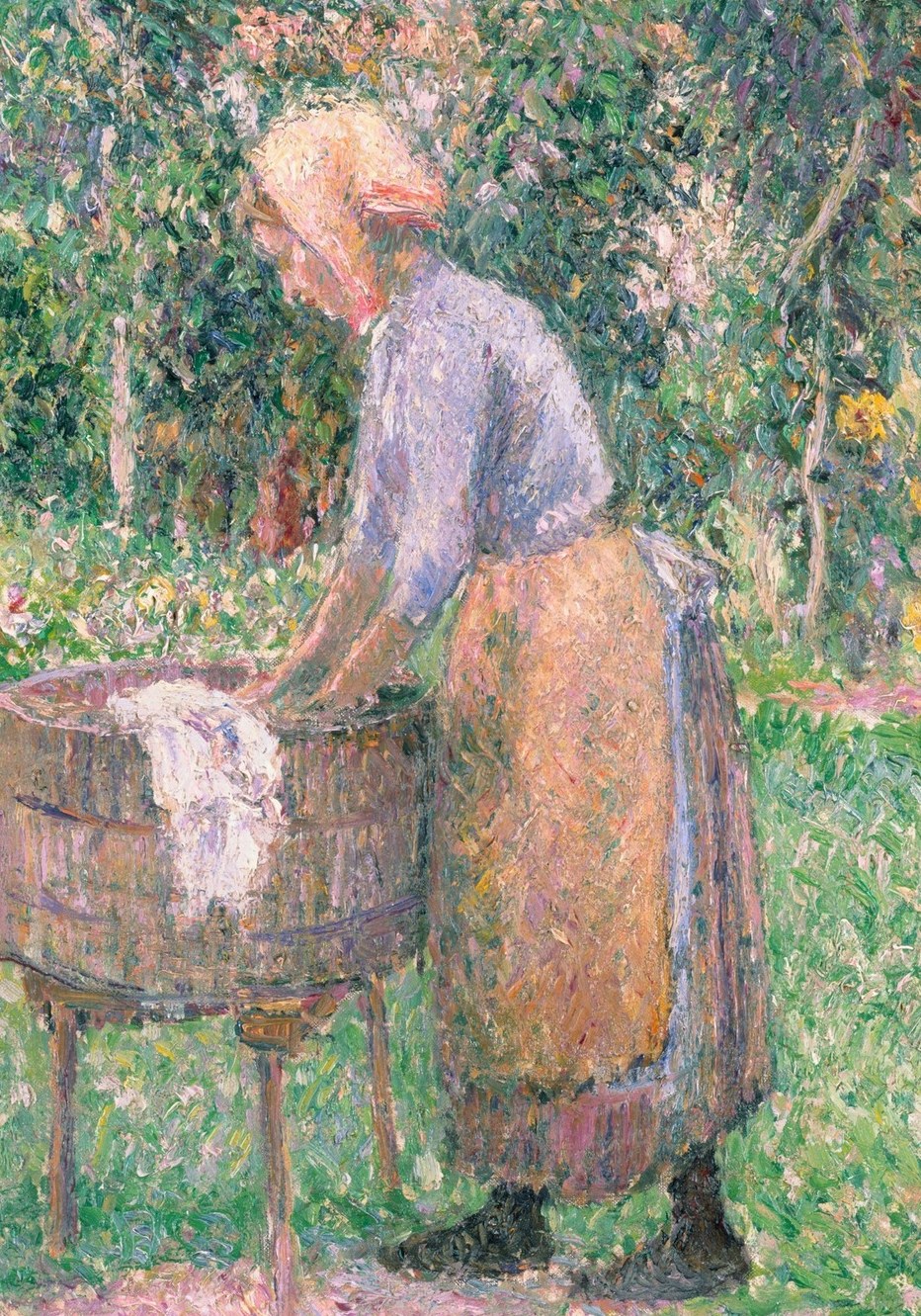
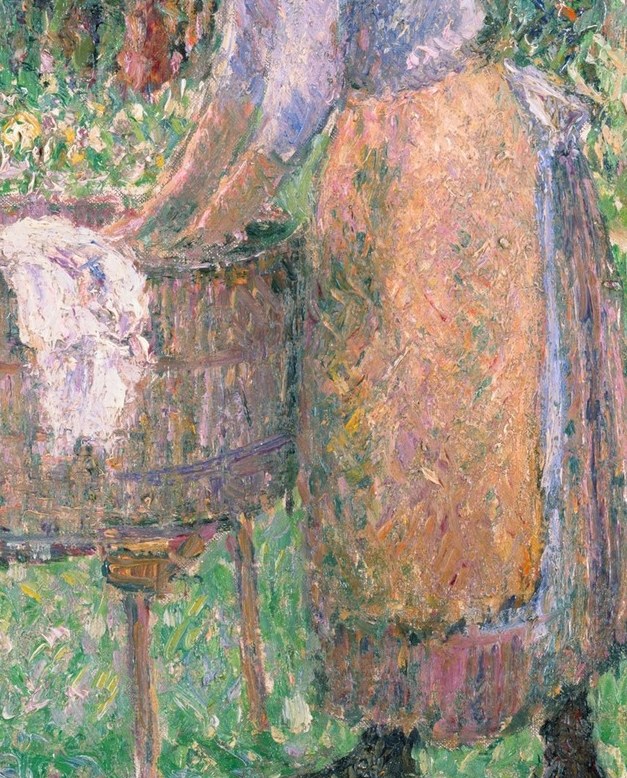
Camille Pissarro painted A Washerwoman at Éragny in 1893, and he chose to erase her face.
The painting hangs in a private collection, but its visual argument is public and clear. Pissarro bends her head down into the tub so completely that we never meet her eyes. The choice is not a cold one. It universalizes her. She is not a portrait of a specific neighbor. She is every woman who has ever done this work, her back curving under the weight of a task that will be dirty again tomorrow.
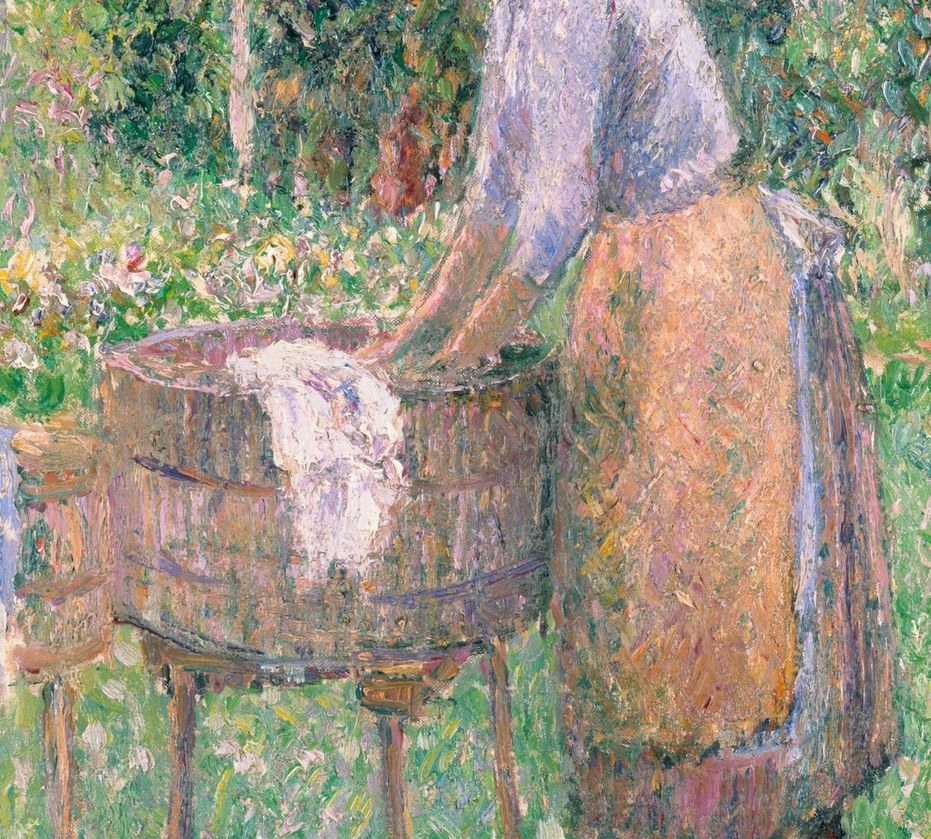
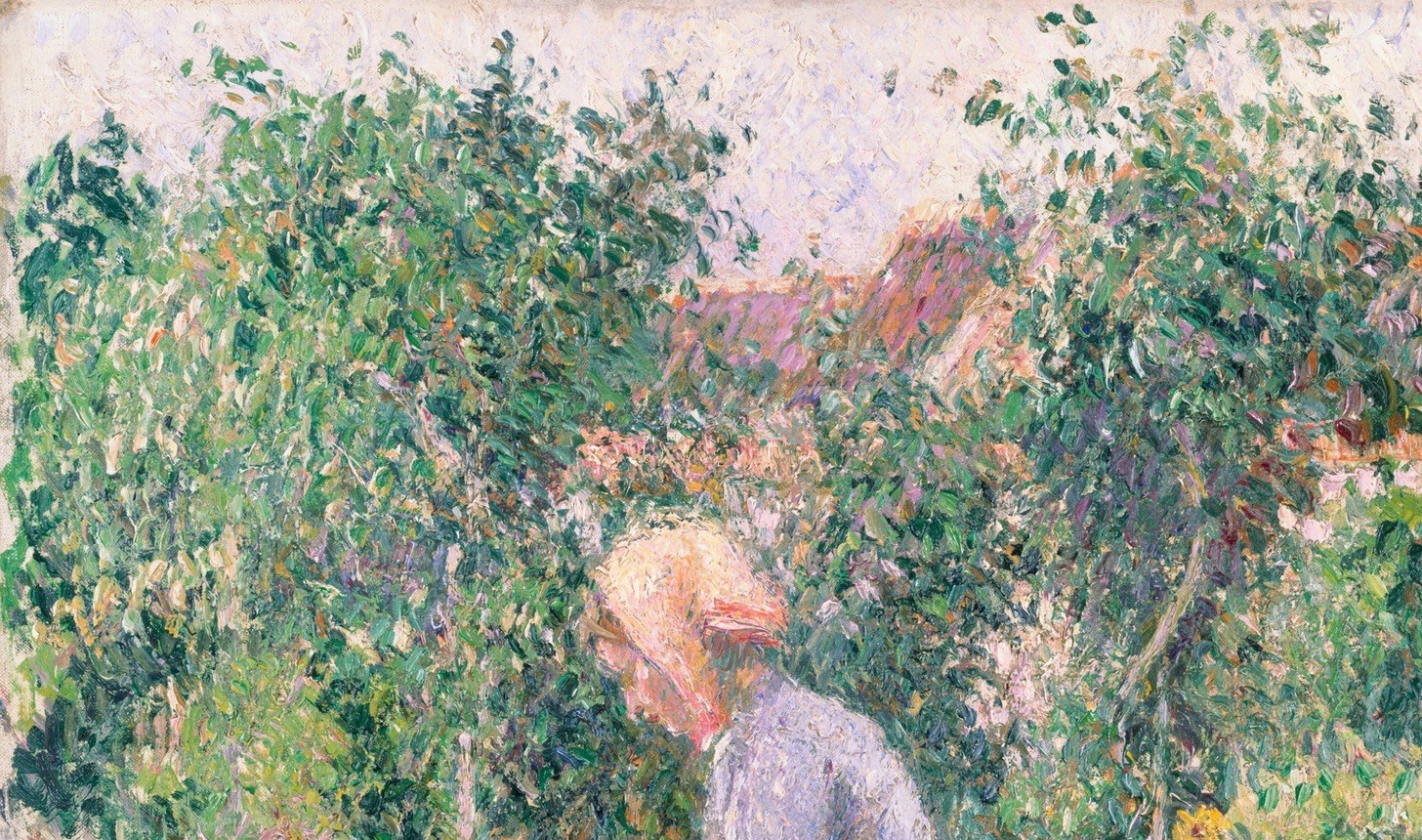
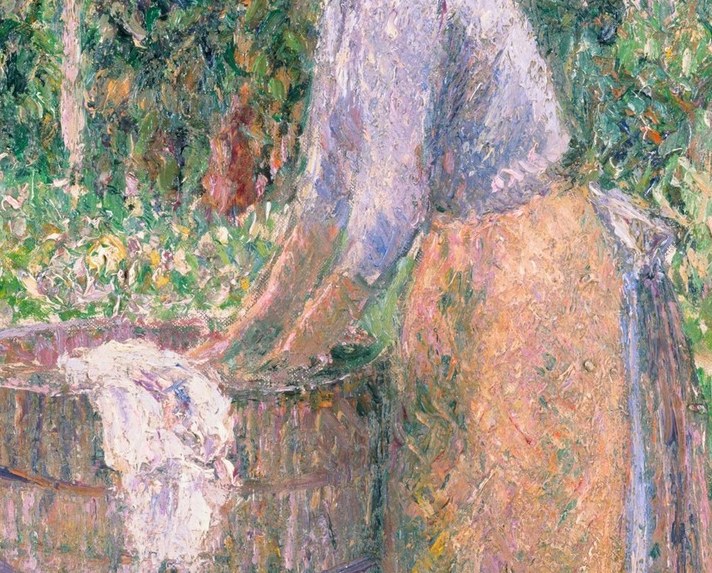
Look at the anatomy of the labor. Her golden-yellow apron is a warm anchor against the cool, shimmering garden. The bright white linen draped over the wooden tub is the painting's lightest passage, a luminous focal point that rewards you for pausing on a simple, wet sheet. In the background, a red rooftop barely visible through the orchard places her in a real village, a real kitchen garden. The dense foliage is built from thousands of individual dabs of green, yellow, and white. Pissarro was 63, working in a Neo-Impressionist style he had only adopted at age 54, applying paint with the patience this woman applies to the cloth.
Pissarro was called the dean of the Impressionists, the glue that held the group together. Cézanne said he was "a father for me." Renoir called his portrayals of the common man revolutionary. He insisted on painting individuals in natural settings without condescension. This washerwoman, faceless and absorbed, is the result of that insistence. She receives the same broken brushwork, the same vibrating color, as any haystack or cathedral.
That bowed head carries an entire life. What invisible labor do you hope someone will finally see?
#arthistory #camillepissarro #impressionism
Details
Transcript
She has no face. Pissarro hides it so she isn't one woman. She is every woman. Look at her back. That curve is a lifetime. He painted this at Éragny, the village he loved and never left. A quiet dignity he insisted on for every peasant he ever painted. Cézanne called him a father. A man to consult, and a little like the good Lord. The light hits the wet linen. That's all the reward there is.