Artwork
A Washerwoman at Éragny
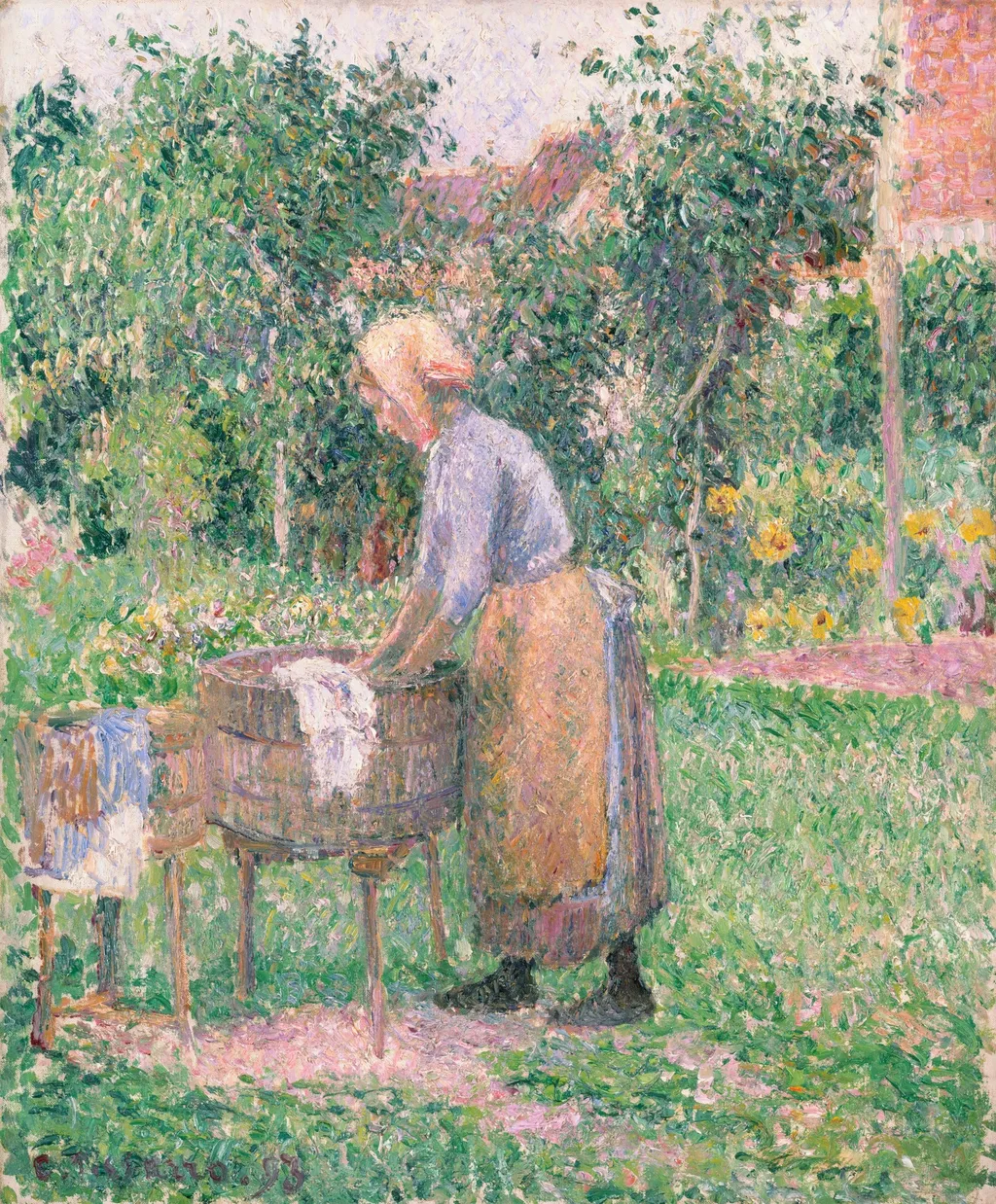
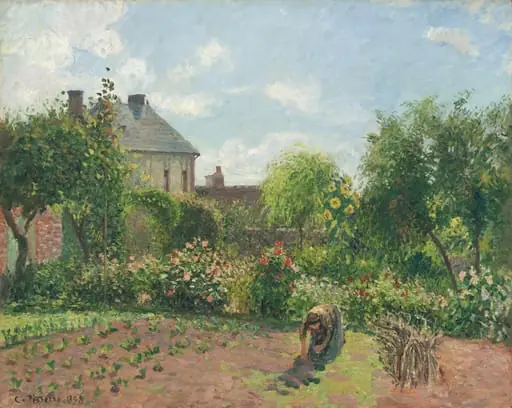
A Washerwoman at Éragny is an oil painting by the Post-Impressionist artist Camille Pissarro. It dates from 1897 and is held in the collection of the Metropolitan Museum of Art.
About this work
Subject & Meaning
The detailed rendering of her work clothes, the washing activity, and the surrounding foliage constitute the iconography of rural domestic labor.
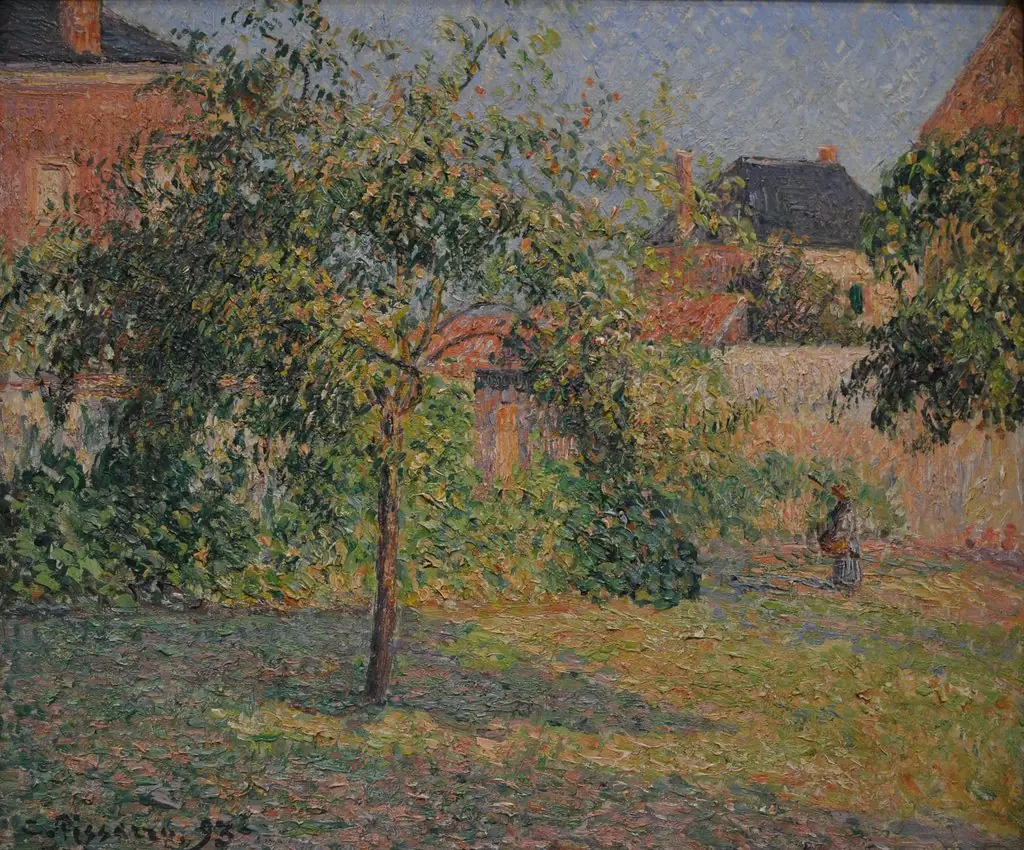
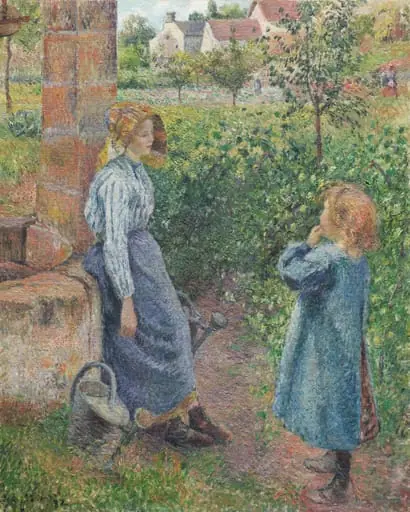
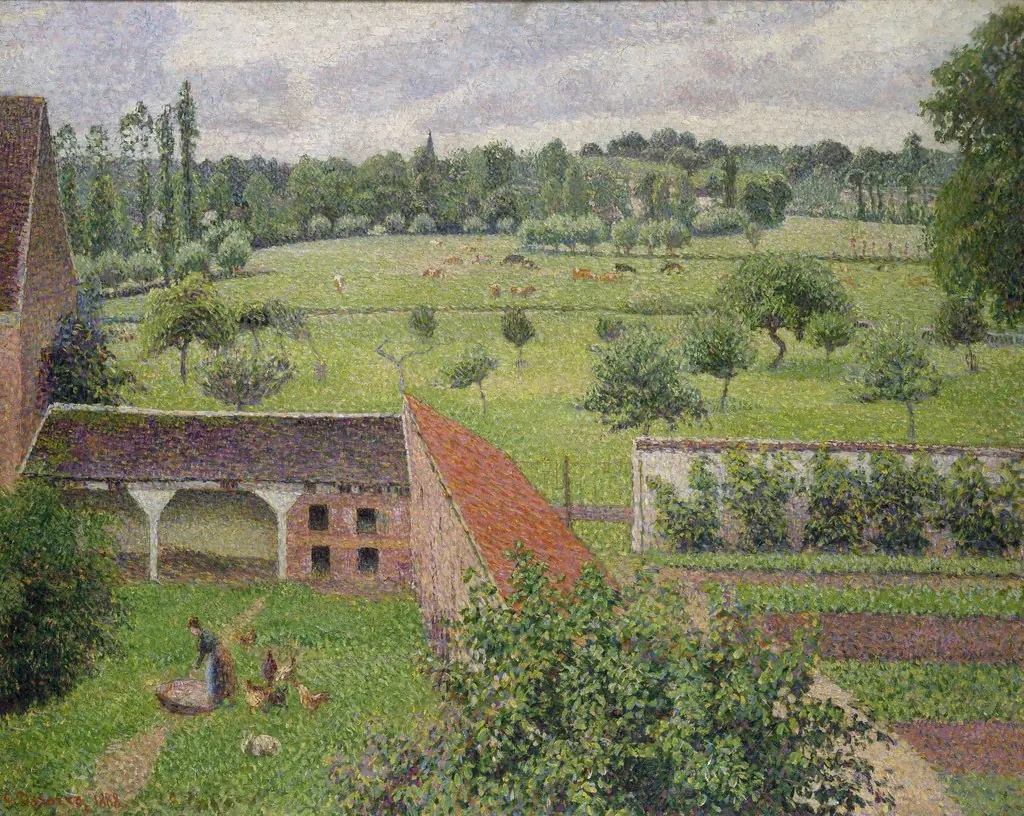
The painting portrays a washerwoman at Éragny, shown in an apron and cap, standing beside a tub of laundry amid a garden setting. The detailed rendering of her work clothes, the washing activity, and the surrounding foliage constitute the iconography of rural domestic labor. As a genre scene, the work elevates this everyday task to a subject of artistic attention, reflecting Pissarro’s interest in the dignity and quiet vitality of peasant life. The garden backdrop links the labor to the landscape, suggesting a harmony between human work and nature.
Technique & Style
Executed in 1893, A Washerwoman at Éragny is an oil painting on canvas by Camille Pissarro. The work measures 45.7 by 38.1 centimeters and depicts a genre scene of a woman engaged in laundry duties within a garden setting. The figure is rendered wearing an apron and cap, surrounded by elements of domestic labor.
As an Impressionist work, the piece utilizes oil paint to capture the effects of light and atmosphere on the subject matter, characteristic of Pissarro's approach to rural and peasant life during this period. The composition focuses on the solitary figure at work, integrating the human element with the natural environment of Éragny.
History & Provenance
Painted in 1893, A Washerwoman at Éragny depicts a solitary figure engaged in laundry work within a garden setting. The work is recorded as an oil on canvas measuring 45.7 cm by 38.1 cm. By 2024 it was held by the Metropolitan Museum of Art, New York, where it remains in the permanent collection. No documented commission or preparatory materials have been published, and the painting’s creation history consists solely of its date of execution in 1893.
Legacy
The 1893 canvas by Camille Pissarro depicting a washerwoman was acquired by the Metropolitan Museum of Art, a placement that signals its sustained scholarly attention and elevated status within Pissarro’s oeuvre; its inclusion in a premier institutional collection has reinforced the work’s reputation as a representative example of late‑Impressionist genre scenes, contributing to ongoing assessments of Pissarro’s influence on rural labor subjects and informing contemporary exhibitions that revisit his social narratives.
Overview
This oil painting, titled A Washerwoman at Éragny, captures a woman engaged in domestic labor within a garden setting. The artist employs a vibrant palette and distinct brushwork to render an ordinary moment with a sense of immediacy. The scene emphasizes the figure's concentration on her task, presenting a quiet observation of daily life.
Own this work as a print
Artist & collection