Nayas Village at Night by Catlin, George
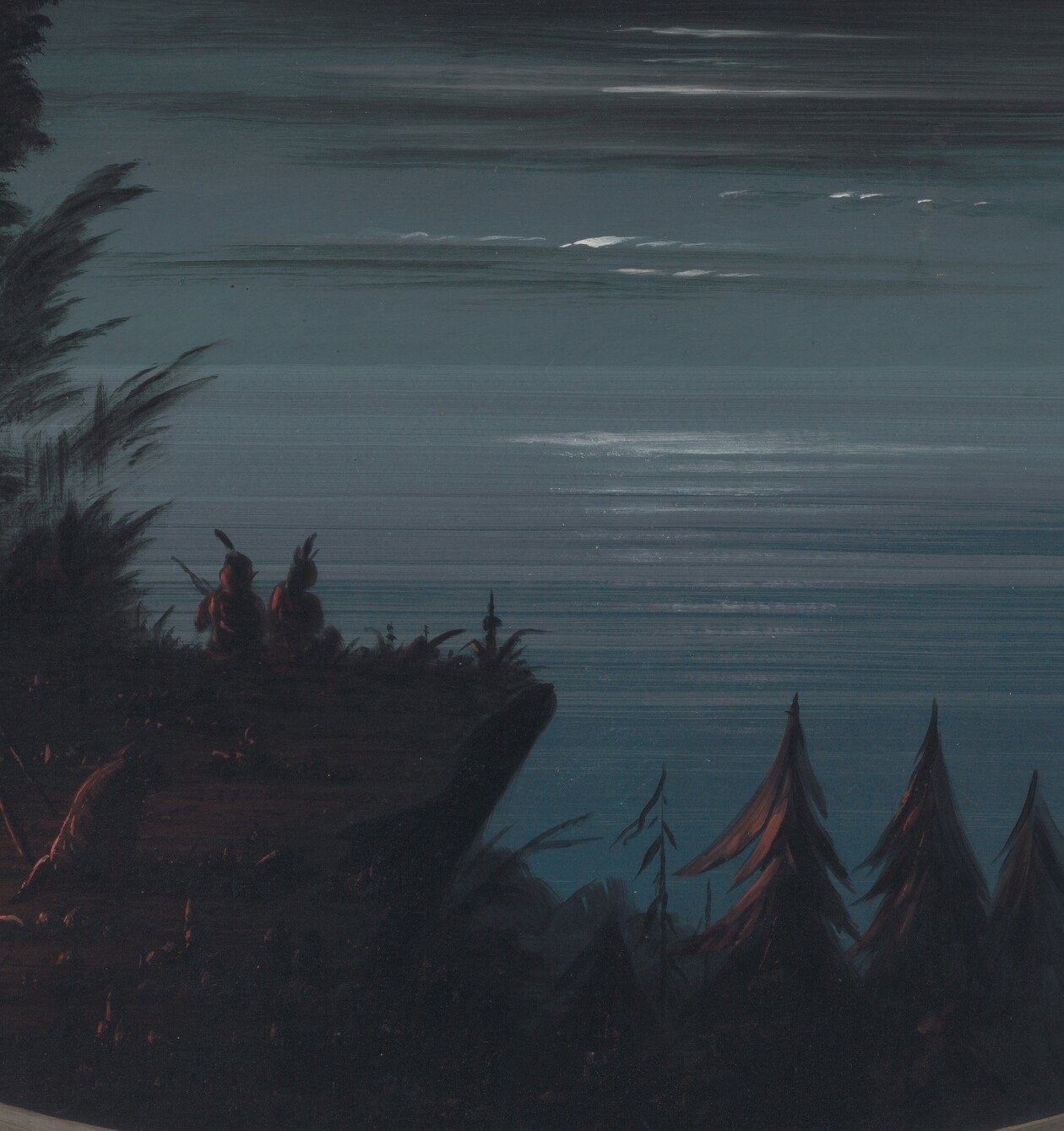
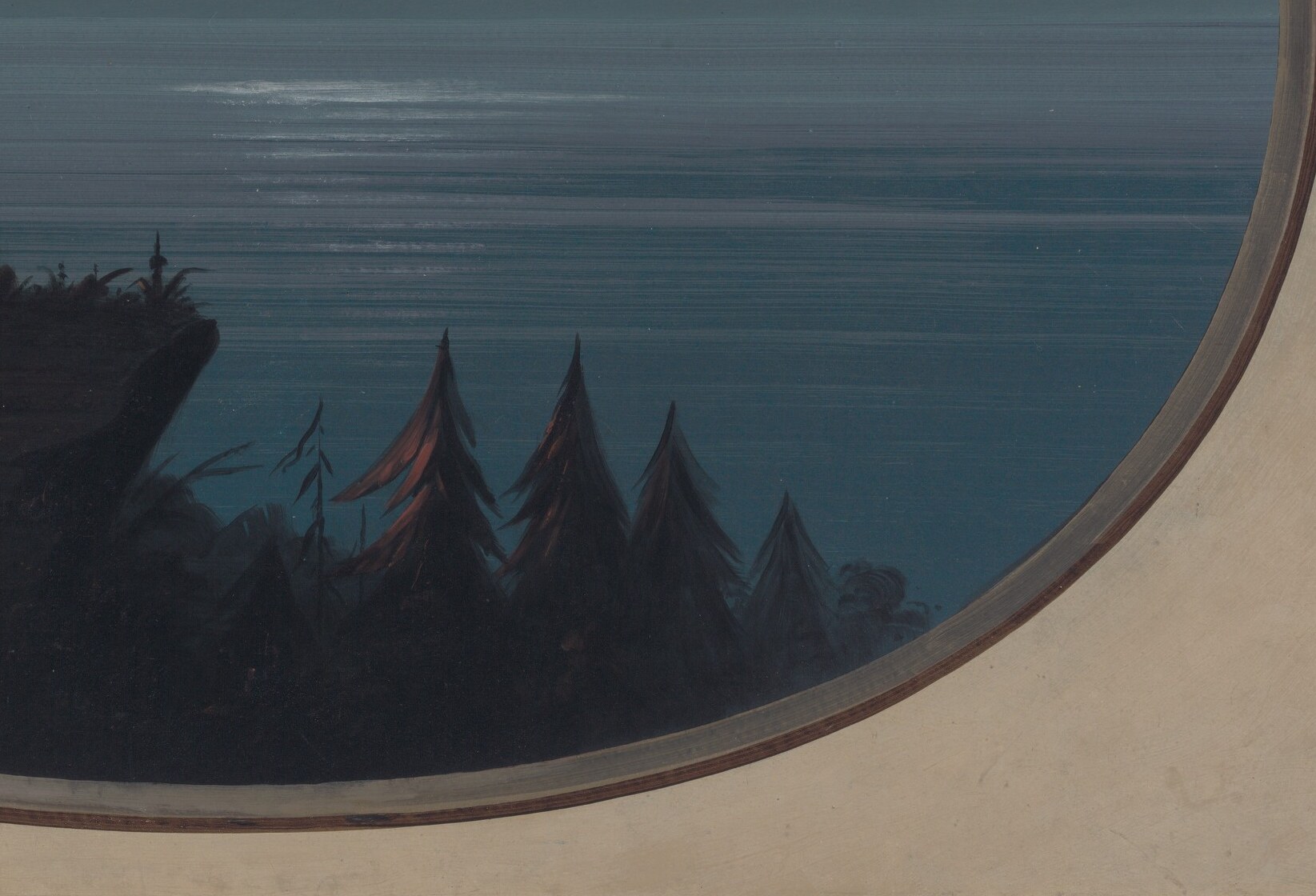
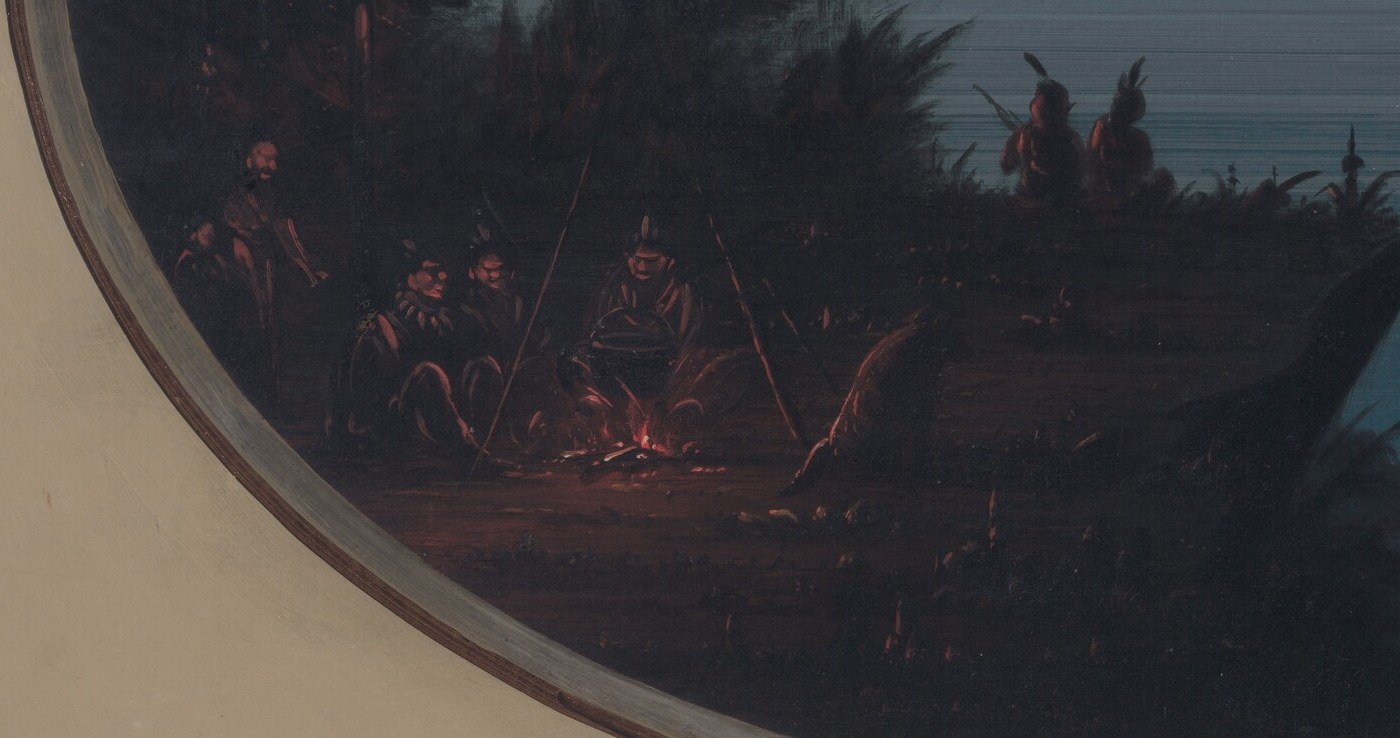
George Catlin's "Nayas Village at Night" (1855/1869) at the National Gallery of Art, offers a quiet glimpse into a community at rest, a departure from his usual ethnographic works.
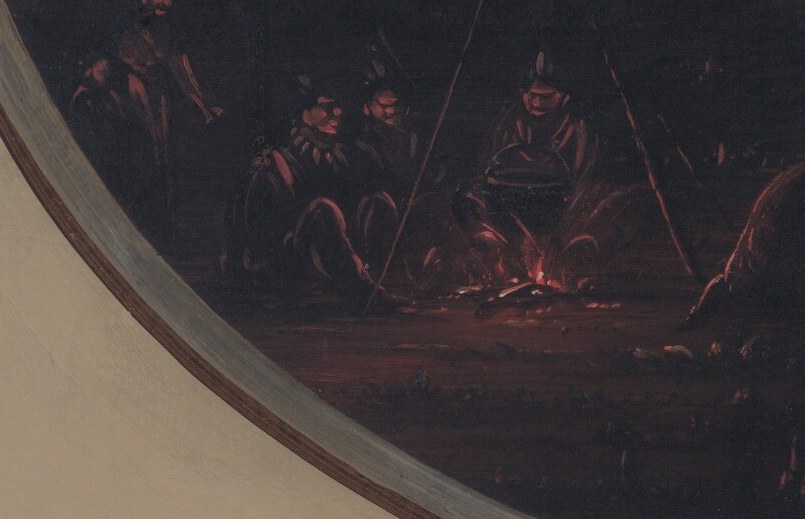
In this tranquil nocturnal landscape, look closely at the figures gathered around a campfire. The subtle glow suggests human presence and activity, hinting at a communal moment against the vastness of nature.
Catlin, an American lawyer and painter, is primarily known for documenting Native American life in the American frontier. However, this oil on card work, associated with the Hudson River School, showcases his engagement with landscape painting, celebrating the American wilderness through idealized scenes.
What do you notice first in this serene night scene?
Details
Transcript
This painter is known for documenting American Indigenous life. But here, he shows a quiet, unobserved moment in nature. The flickering light of a campfire draws the eye to figures. These small details suggest a communal gathering under the night sky. His work often celebrated the American wilderness through idealized scenes. The painting emphasizes stillness and solitude, a community at rest.