Kaïn en Abel by Willem de Zwart
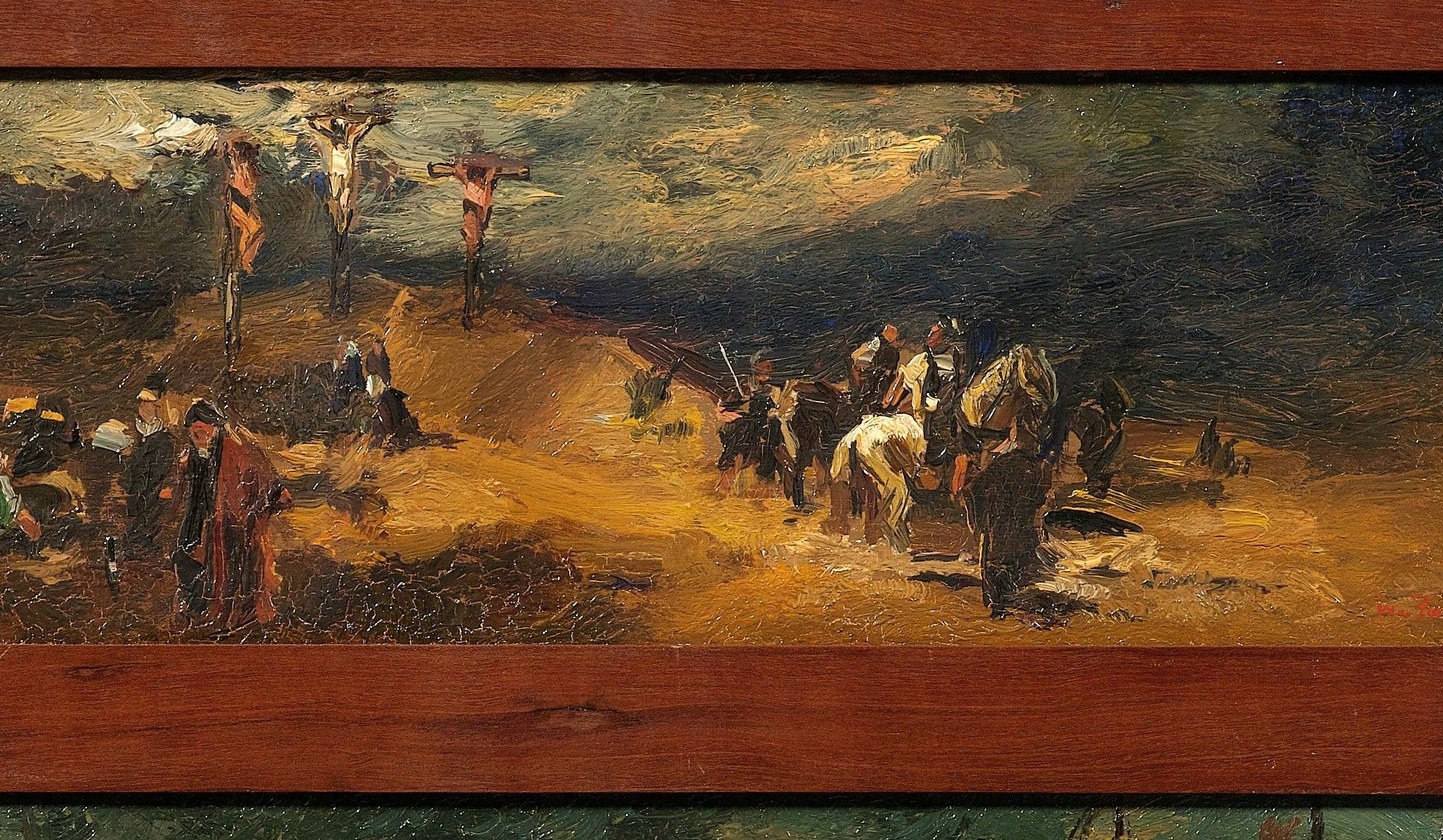
Kaïn en Abel by Willem de Zwart (1915, Rijksmuseum) tells the story of the first murder without ever showing Cain or Abel on the canvas. The brothers appear only as absence: a divided composition, a lone wanderer, a barren moonlit world.
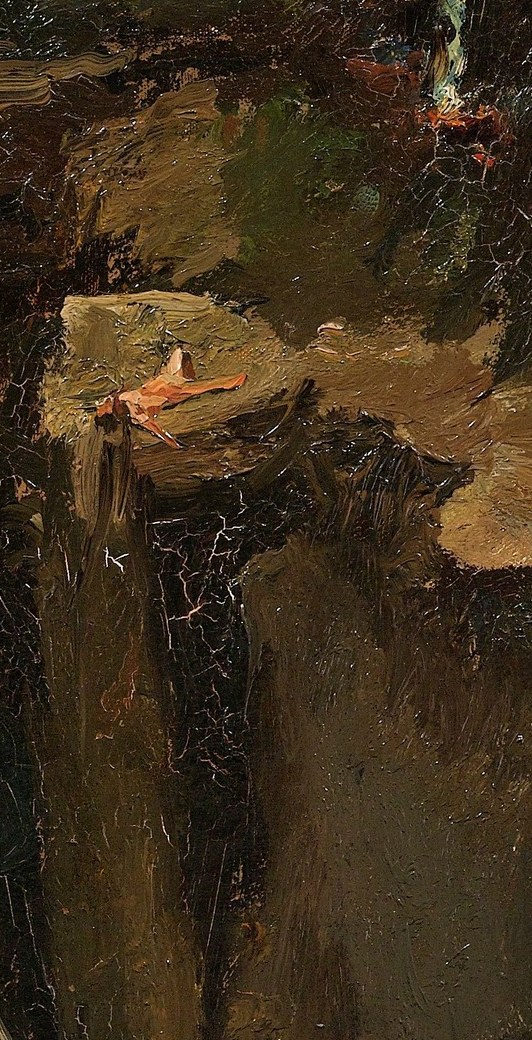
De Zwart splits the painting in two. The upper half is airy and communal: figures walk together in pale daylight. The lower half is thick with heavy impasto, a rough landscape where one figure walks alone into black trees. The contrast in the paint itself carries the emotional weight of the story.
Painted during the First World War, the work entered the Rijksmuseum's collection in the early twentieth century. De Zwart, trained as an engraver and watercolorist, moved from the realist Hague School toward the looser, light-focused Amsterdam Impressionists. Here he synthesizes narrative genre painting with an emerging concern for texture and atmosphere.
A biblical story painted during a war that made killing a brother industrial. The divided canvas asks it quietly.
Details
Transcript
The painting is two different worlds. Above: figures walk together in daylight. Below: a moon hangs over bare land. De Zwart built this ground with thick, rough paint. One figure walks alone into the dark trees. Painted in 1915, while Europe was at war.