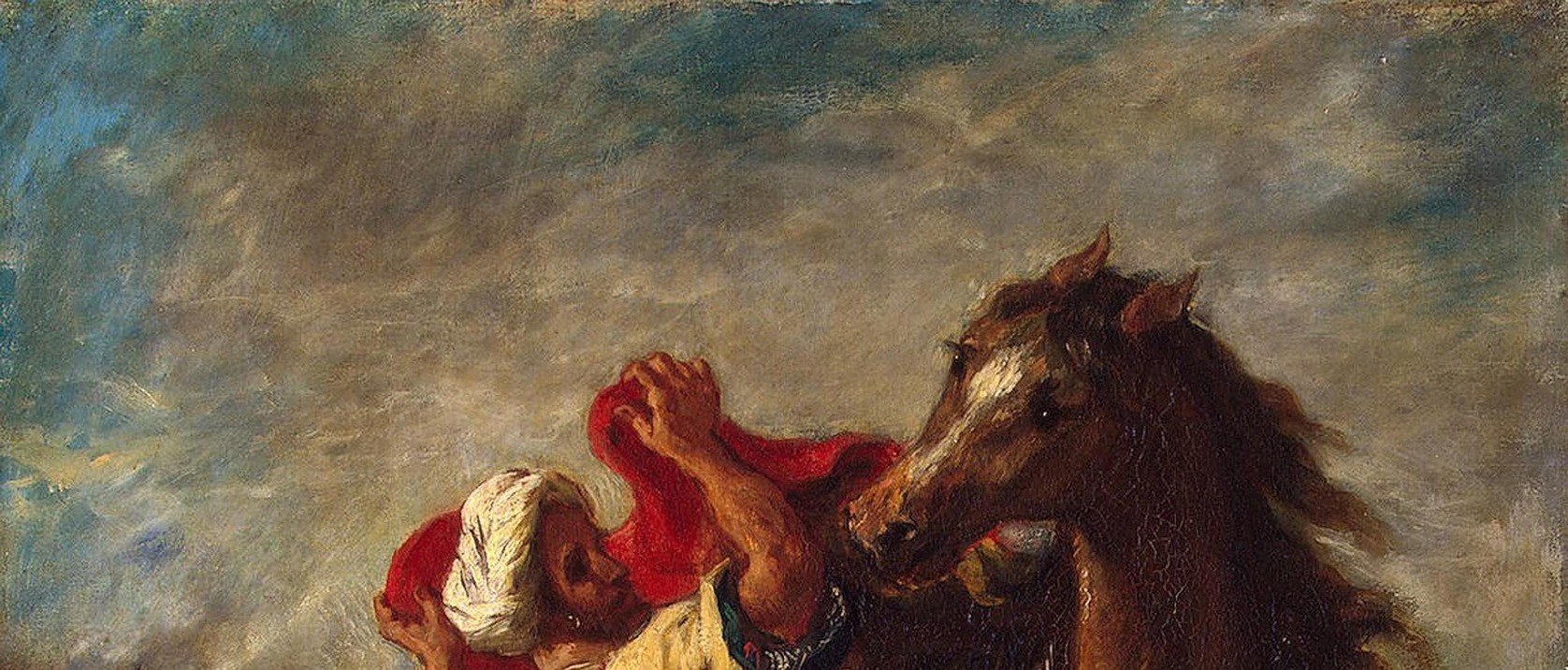
Arab Saddling his Horse by Eugène Delacroix
Eugène Delacroix's "Arab Saddling his Horse," painted in 1855, is a vibrant example of French Romanticism, now held at the State Hermitage Museum. Delacroix, a leading figure of his time, prioritized expressive color and dynamic movement over strict academic precision.
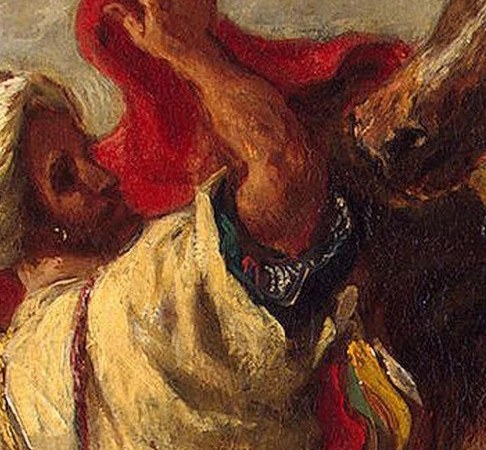
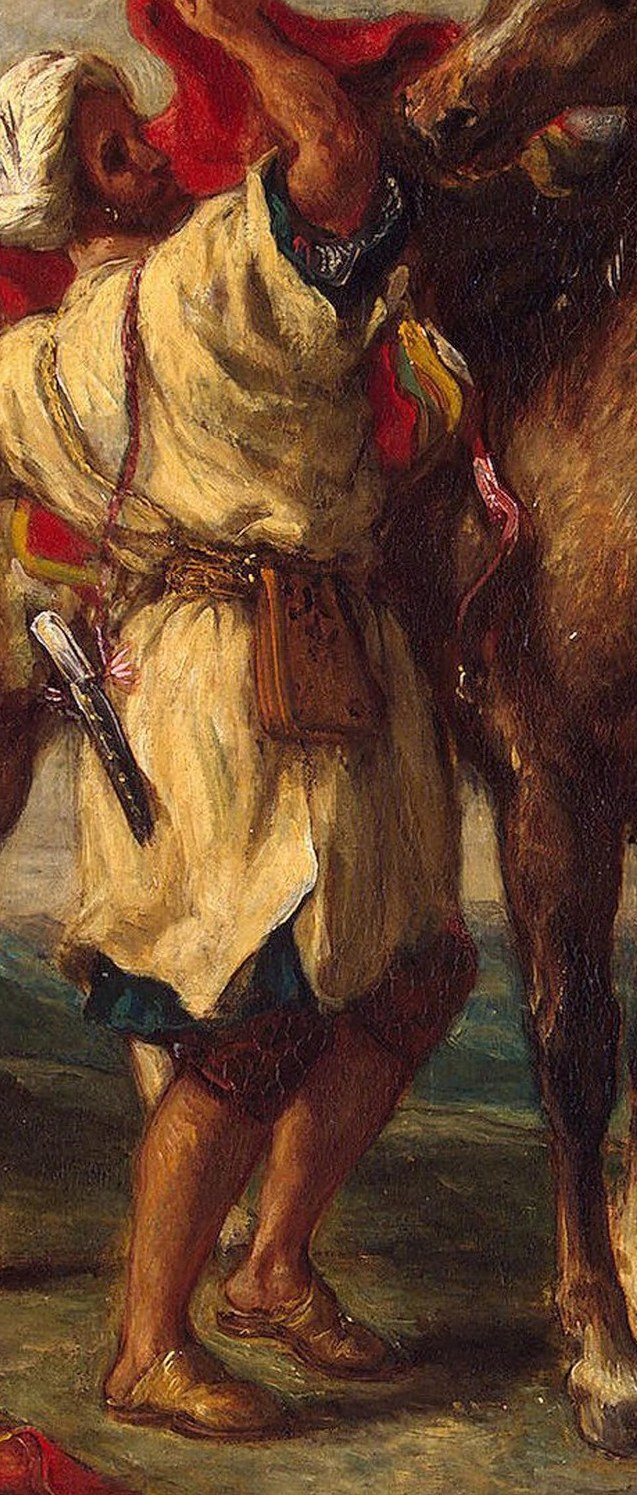
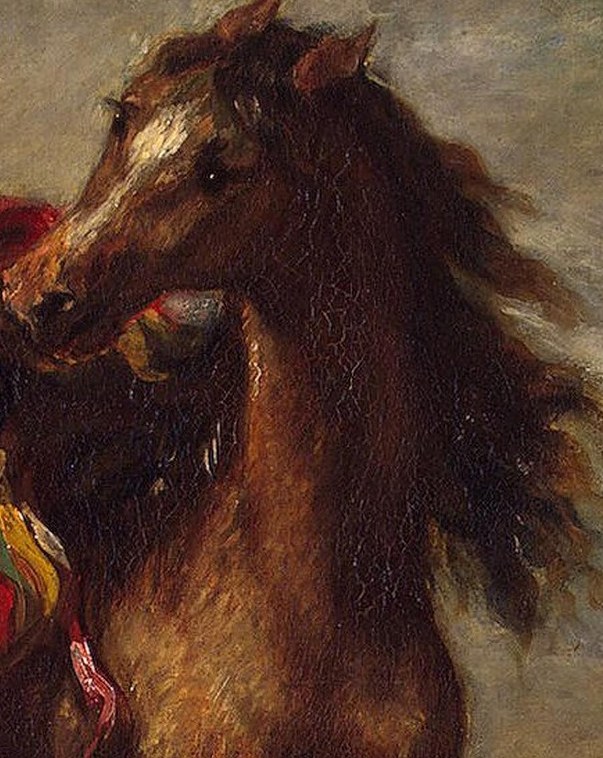
Notice the rich impasto technique, especially in the horse's powerful legs and the man's red turban, which convey a sense of texture and life. The dramatic, stormy sky further emphasizes the Romantic embrace of emotion and nature.
Delacroix drew inspiration from his travels to North Africa, contributing to the Orientalist movement prevalent in 19th-century European art. His admiration for masters like Rubens and the Venetian Renaissance is evident in his luminous palette and dramatic compositions.
This work continues to captivate viewers, securing its place among the most recognized paintings in art history. What details do you find most striking?
Details
Transcript
This painter was a leader of French Romanticism. He favored color and movement over classical precision. Look at the vibrant red of the saddle blanket. This artwork is housed in the State Hermitage Museum. The artist, Delacroix, traveled to North Africa for inspiration. His works are some of the most famous in art history. This painting ranks in the top 7600 most famous paintings.