Demidoff Altarpiece by Carlo Crivelli
This is a section of the Demidoff Altarpiece, painted in 1476 by Carlo Crivelli. The full work has been split across two museums: the nine panels you see here are in the National Gallery in London, while the central Pietà was removed and now lives in the Metropolitan Museum of Art in New York.
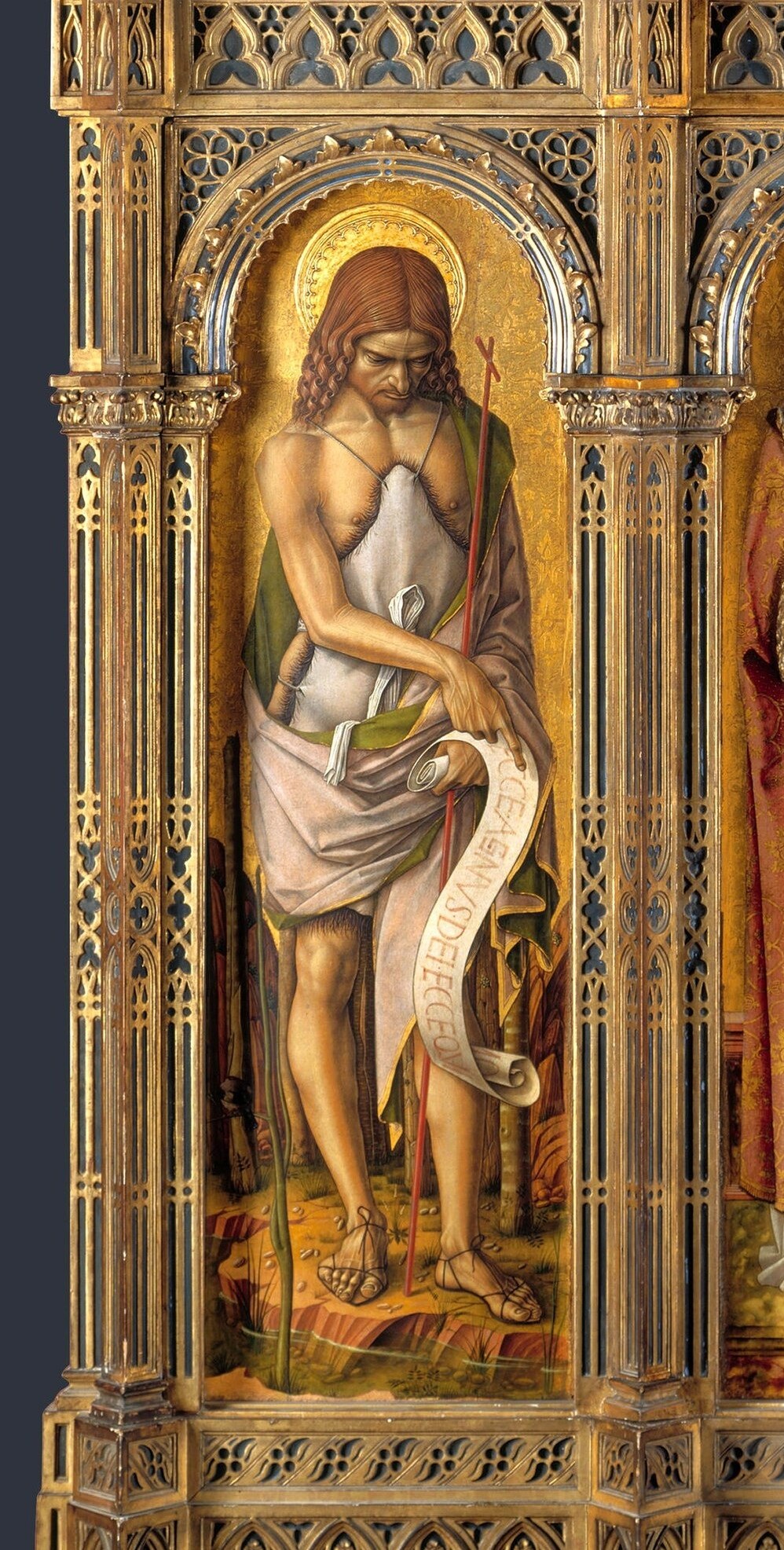
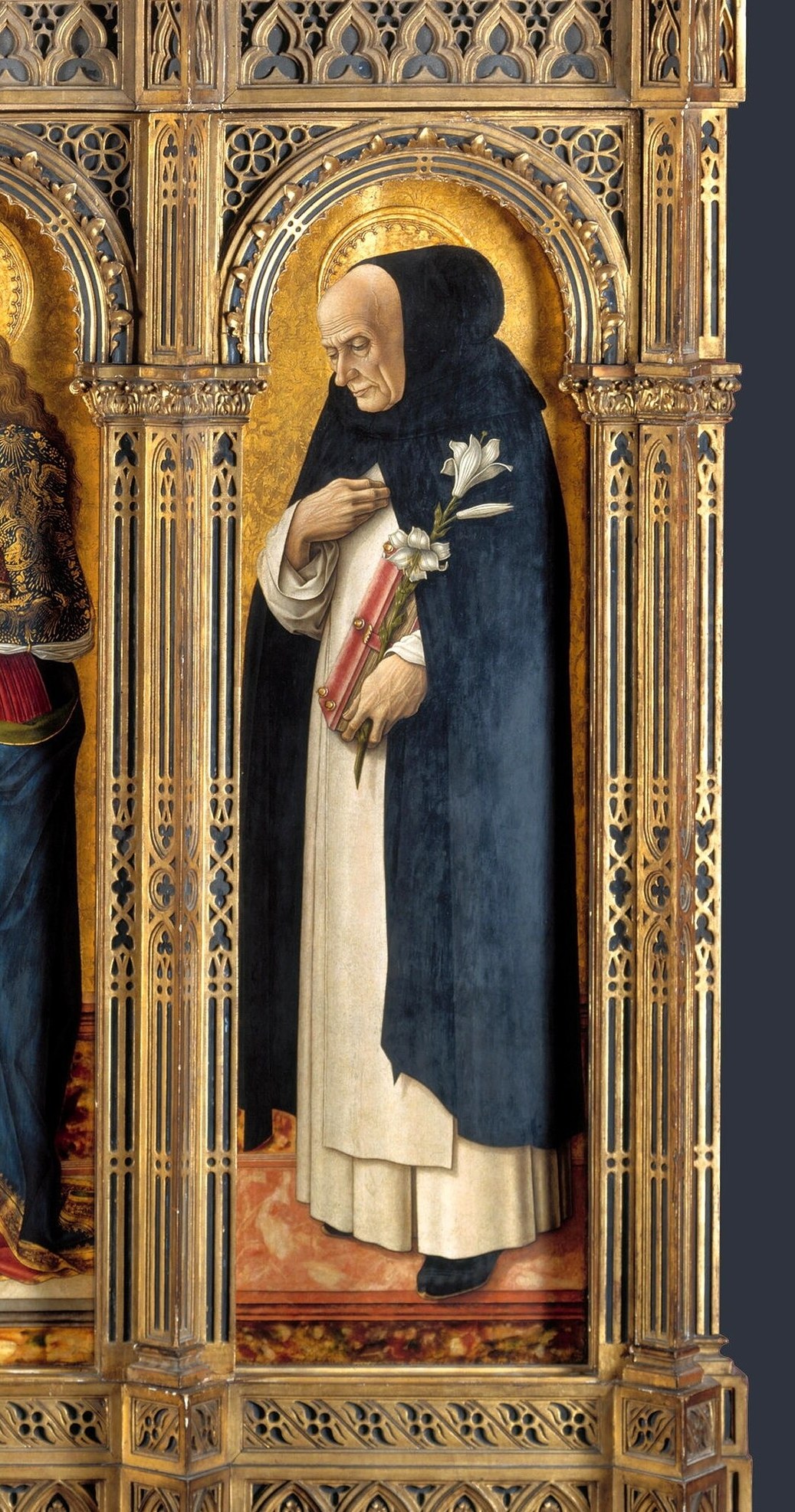
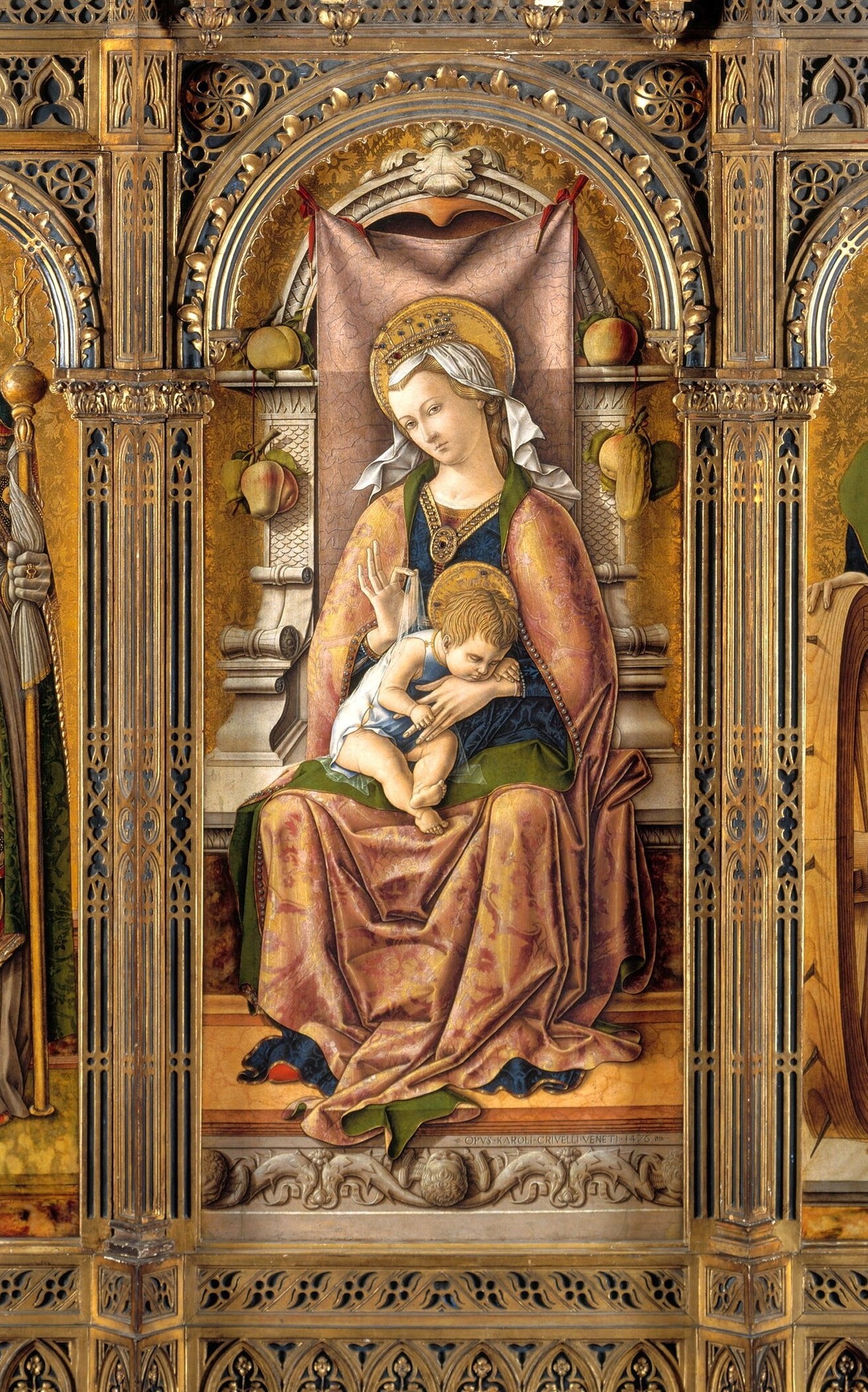
Crivelli built emotional range into the faces of his saints. On the far left, John the Baptist is bare-skinned in an animal pelt, a body worn by a life in the desert. On the far right, a Dominican nun, likely Saint Catherine of Siena, stands in a composed white habit, holding a lily, her eyes lowered in stillness. Between them, the Madonna and Child preside in gold. The altarpiece holds exposure and composure in a single frame.
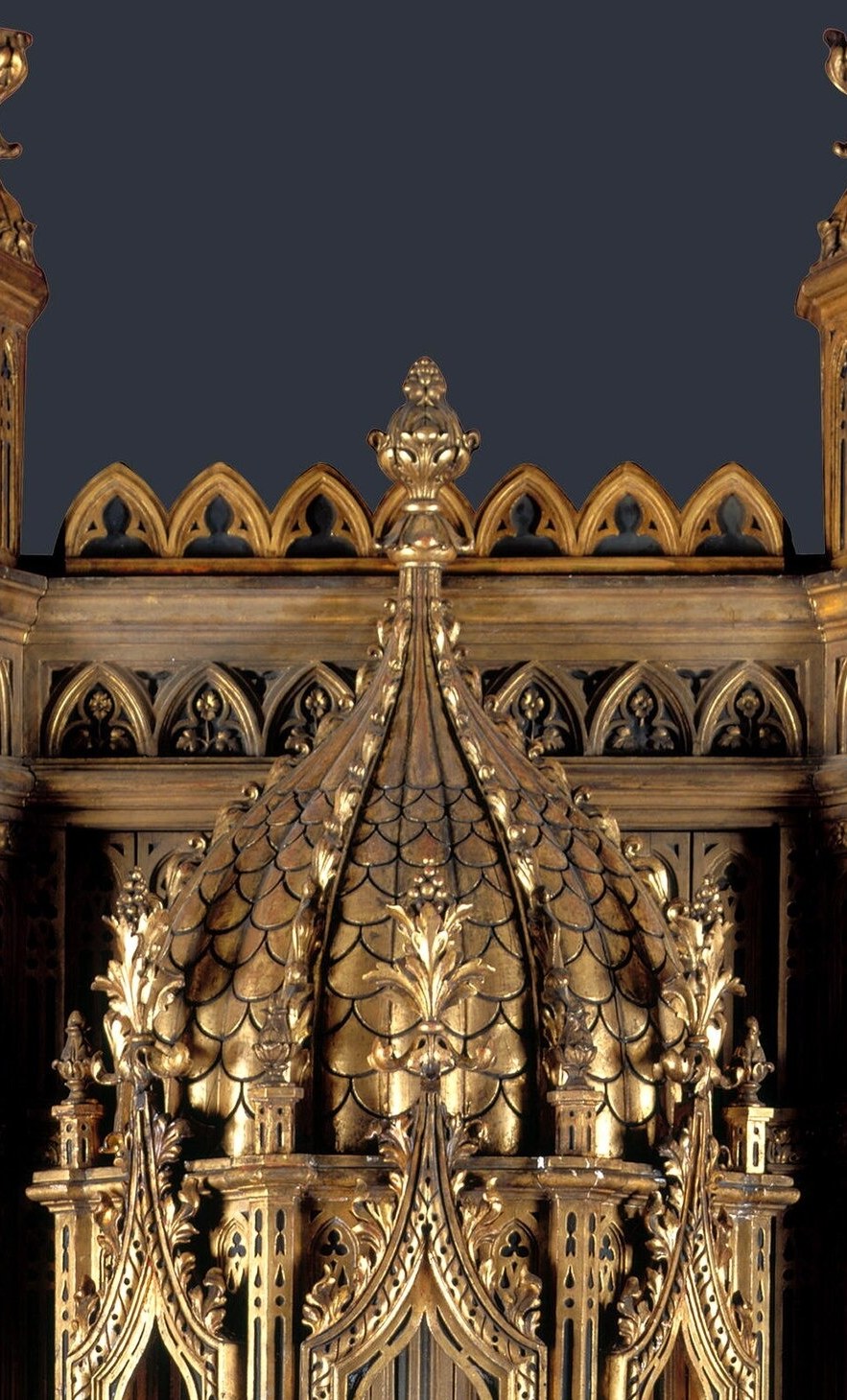
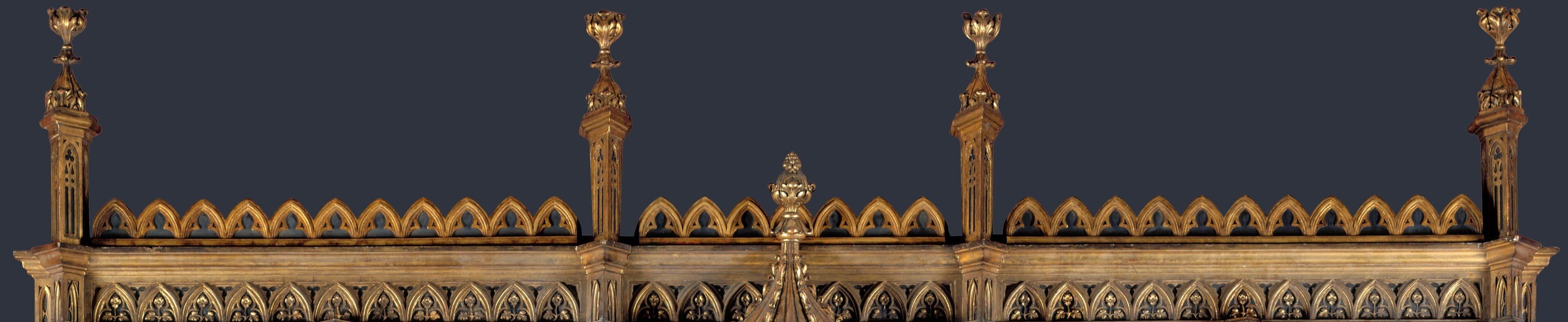
Crivelli worked in the Marche region of Italy, away from the main currents of Florence or Venice. His style is deliberately ornate: Gothic tracery, heavy gold leaf, and a near-obsessive fidelity to surface texture. Every thread of the bishop’s cope, every micro-scale crocket in the central spire, was laid down in egg tempera. His figures live inside a gilded architecture that treats the panel like a reliquary.
An altarpiece like this was made to be seen by candlelight. The gold would have flickered. The Baptist’s bare skin would have caught the warmth. And the nun’s quiet face, unchanged, would have held its peace.
Details
Transcript
Look at the man on the far left. He wears animal skin and almost nothing else. His body is exposed. A life stripped down in the desert. Now the woman on the far right. Her gaze is down, her hands still. She holds a lily. Raw exposure on one side. Quiet composure on the other. Carlo Crivelli painted this in 1476 for a church in Ascoli. The center panel, the Pietà, was cut away and now sits alone in New York.