Catherine A. May by Phillips, Ammi
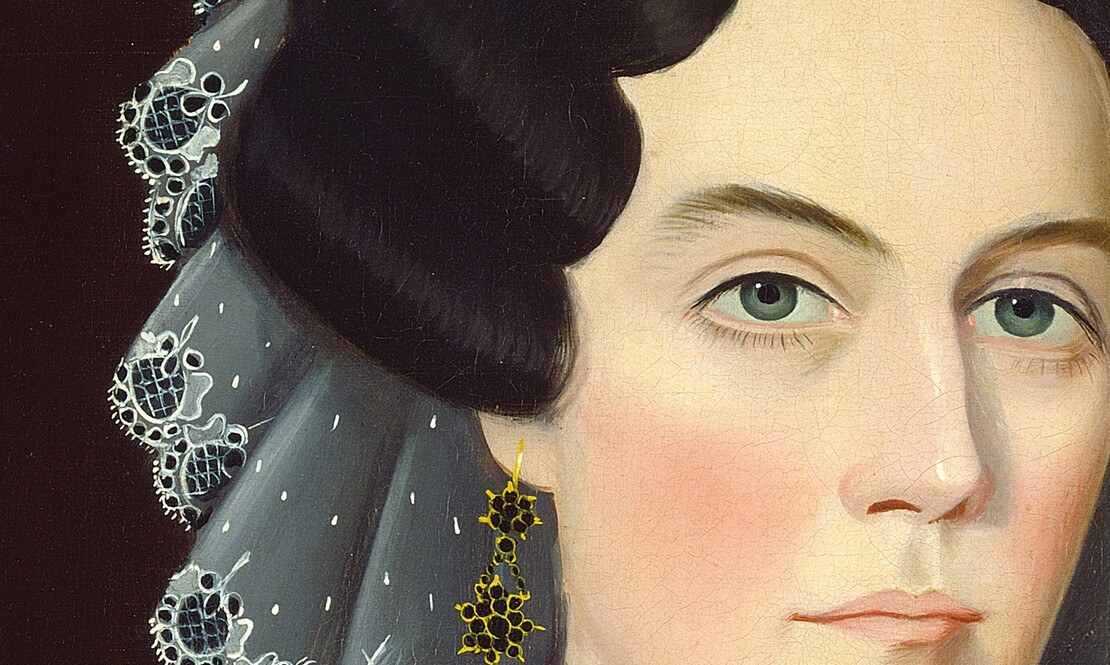
Ammi Phillips, a prominent figure in American folk art, painted this portrait of Catherine A. May around 1830. Phillips was known for his distinctive style, often featuring smooth, porcelain-like faces against dark backgrounds, giving his subjects a serene and almost iconic stillness.
While the portrait might seem straightforward at first glance, a hidden detail reveals a more personal touch. Look closely at Catherine May's right hand, resting on a bright red book, likely a Bible or devotional text. Near her wrist, a small, naturalistic bee is subtly perched.
In early 19th-century American folk iconography, bees were common symbols of industry, virtue, and domestic order. Its inclusion here is likely intentional, offering a quiet, personalized detail in an otherwise formal composition. This detail gives a glimpse into the values and subtle storytelling of the time.
This small, overlooked element invites us to look deeper into the stories paintings can tell.
Details




Transcript
This quiet portrait, from 1830, has a secret. The painter was known for smooth, mask-like faces. Look closely at her right hand, holding a book. A small bee is perched near her wrist. In this period, bees symbolized virtue and industry. A small, personal touch from a folk artist.