Portrait of a Lady in White by Moretto da Brescia
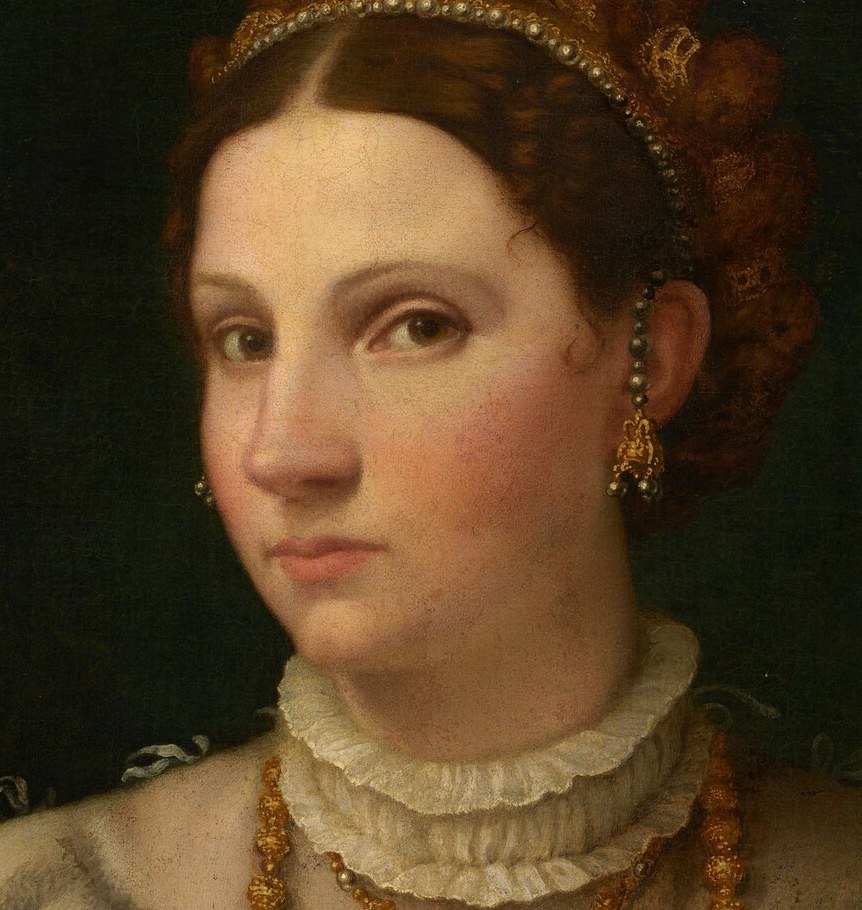
Moretto da Brescia, primarily known for his religious altarpieces, also created captivating secular portraits like *Portrait of a Lady in White*, around 1540. This oil on canvas painting, housed in the National Gallery of Art, offers a glimpse into the northern Italian aristocracy of the era.
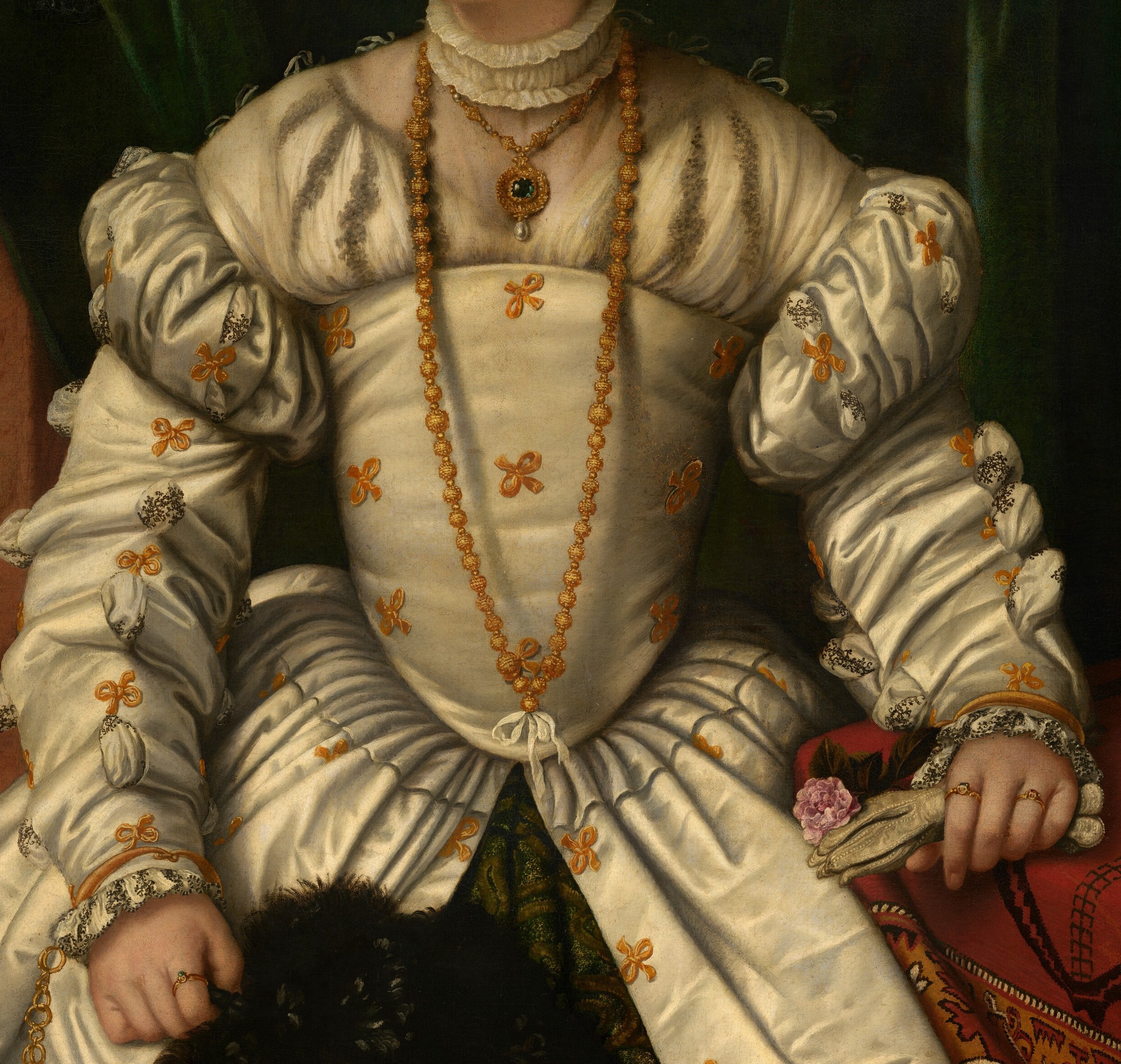
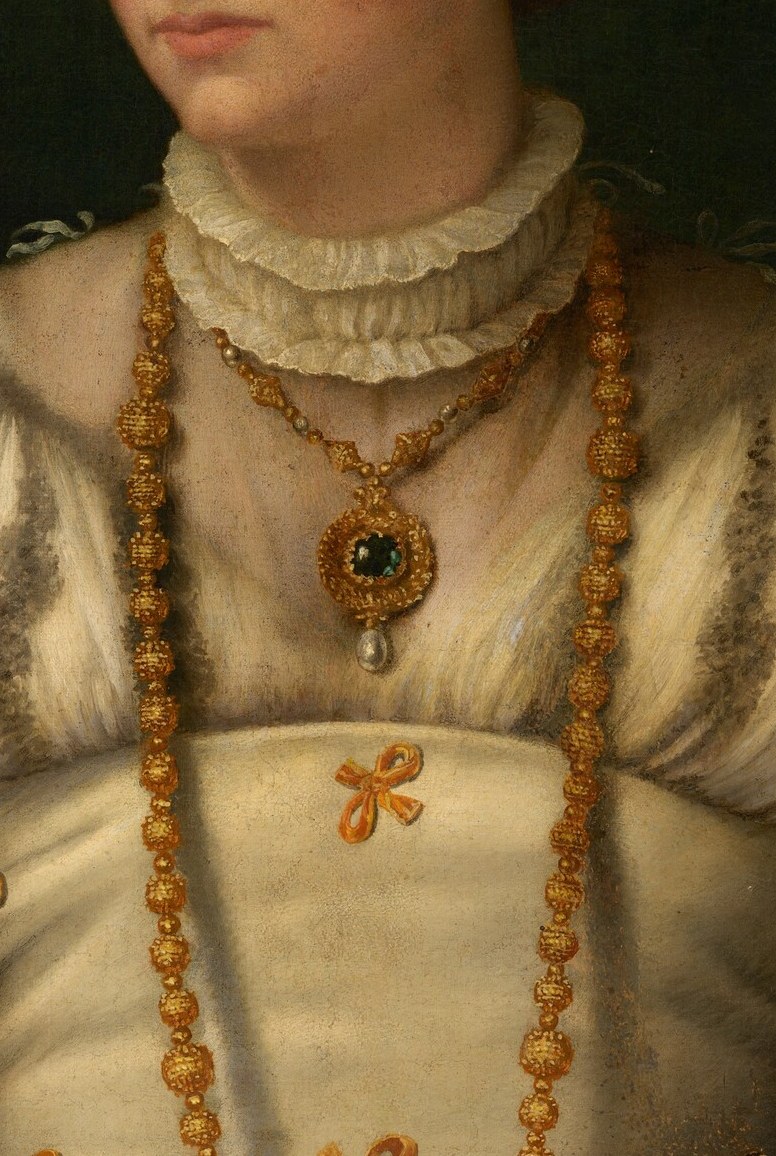
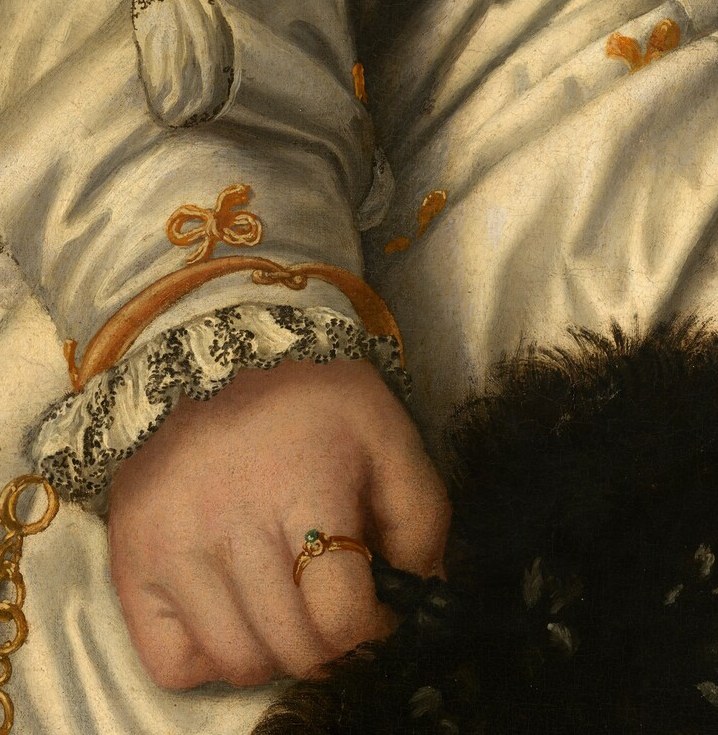
Observe the luxurious details that speak to the sitter's status: her voluminous white satin gown, intricately adorned with orange embroidery, and her elaborate gold necklace. Her hands, delicately rendered and adorned with rings, rest on a dark fur and a richly patterned cushion, further emphasizing her refined taste.
Moretto da Brescia, also known as Il Moretto, was a prominent painter in Brescia during the High Renaissance and early Mannerist periods. While many of his altarpieces remain in the churches for which they were painted, his portraits, though fewer in number, proved to be particularly influential for subsequent artists. They offer valuable insight into the wealth and fashion of 16th-century Italy.
What details in her attire catch your eye first?
Details
Transcript
Meet a lady of Brescia, around 1540. Her elaborate white gown is a symbol of opulence. Look closely at the detailed gold necklace and pendant. Her hands, adorned with rings, rest on rich textures. This painter was known for altarpieces, not portraits. But his portraits were more influential for later artists.