Saint George and the Dragon by Weyden, Rogier van der
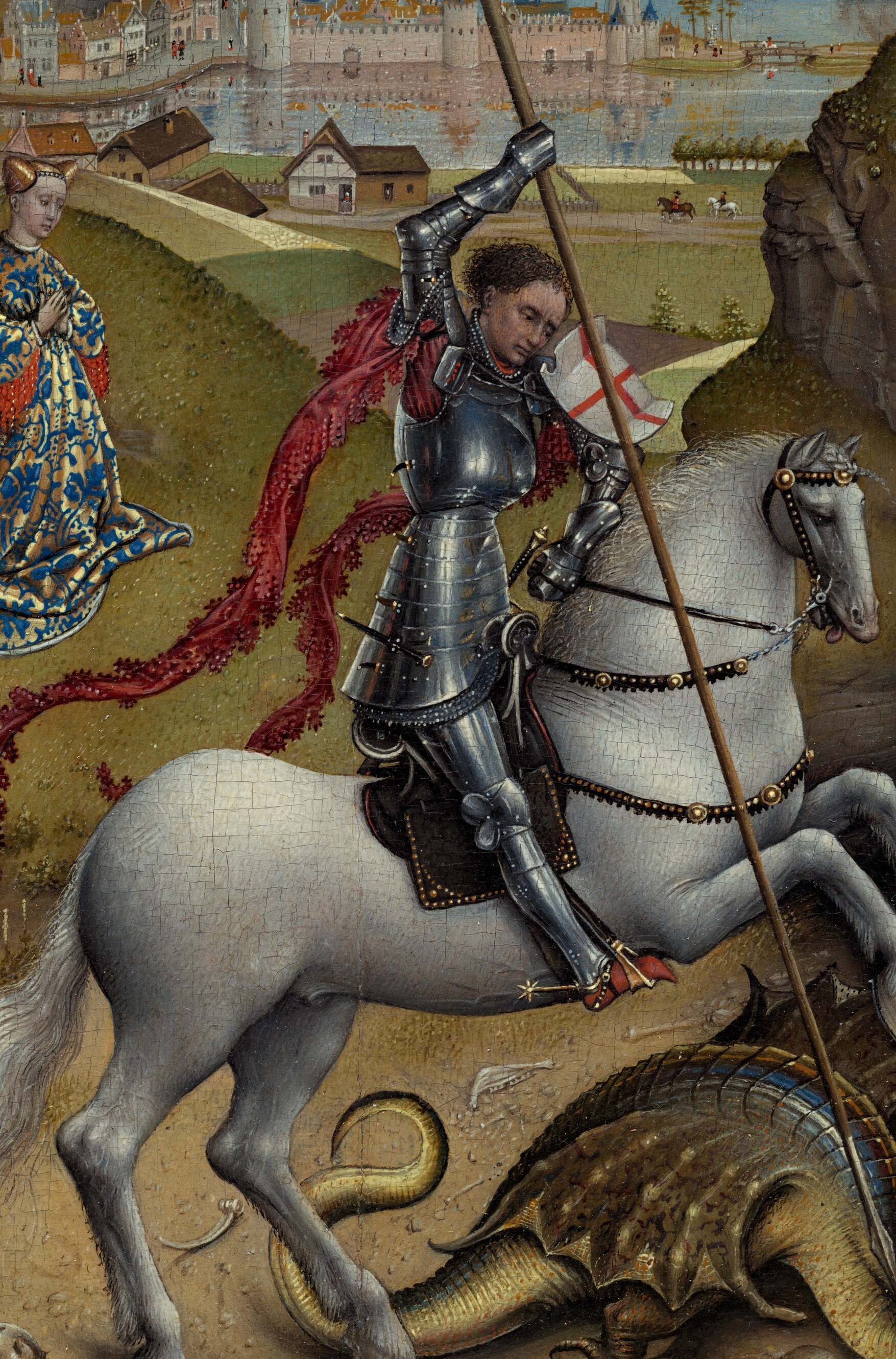
Rogier van der Weyden's Saint George and the Dragon, painted around 1432-35, is a small oil on panel now at the National Gallery of Art in Washington. To a 15th-century viewer, every detail was legible as a lesson in faith. The painting is not simply an adventure story; it is a compact theological statement painted with microscopic precision.
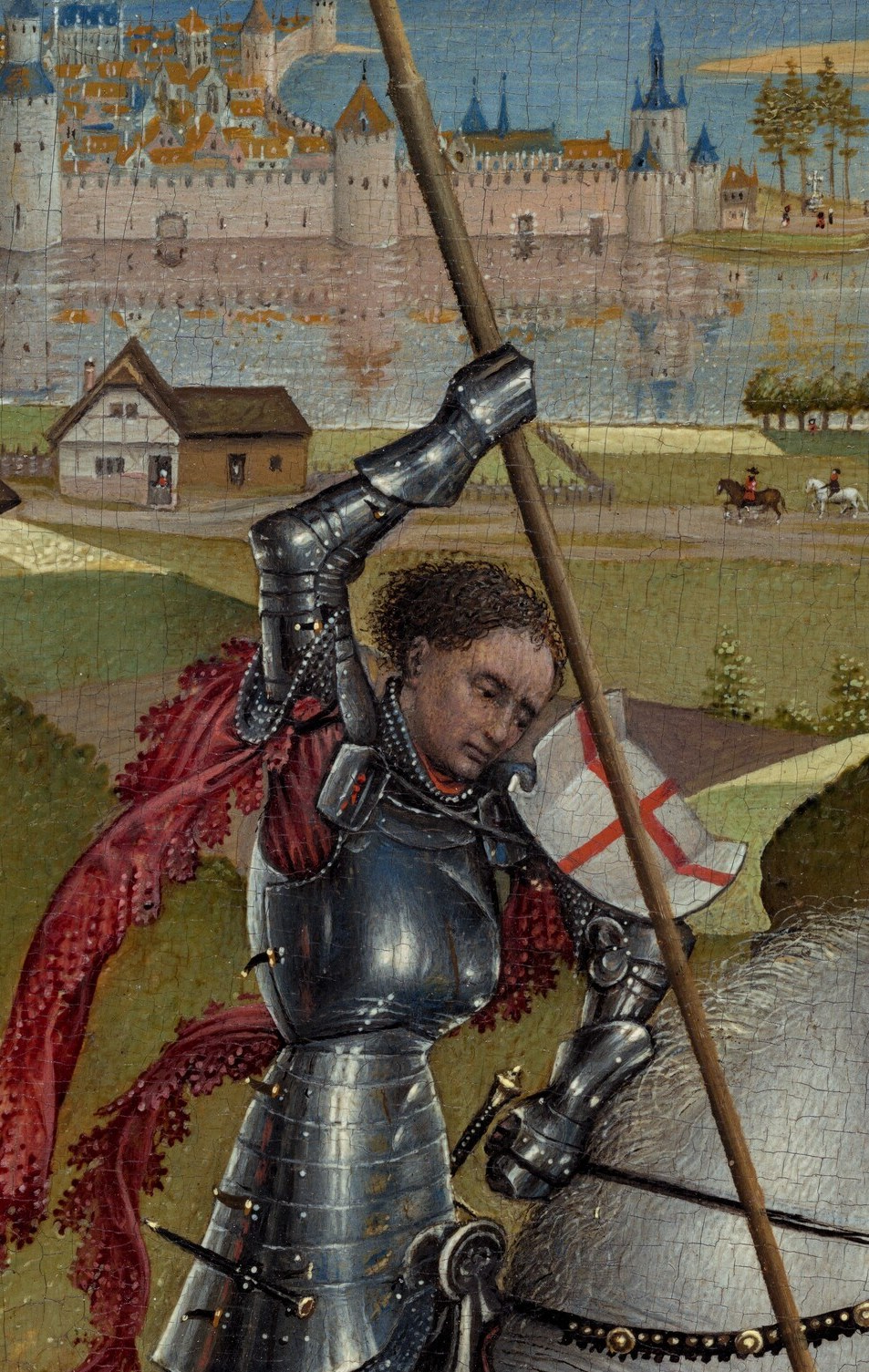
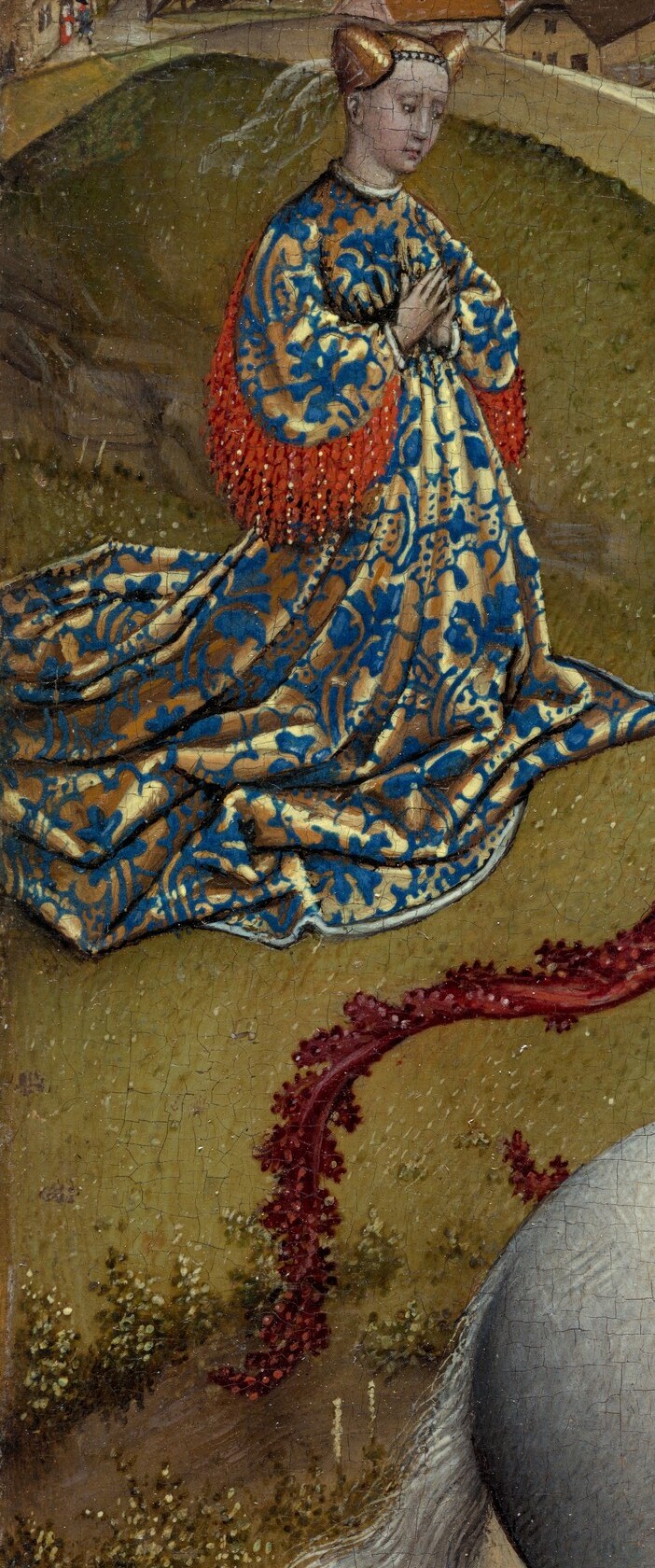
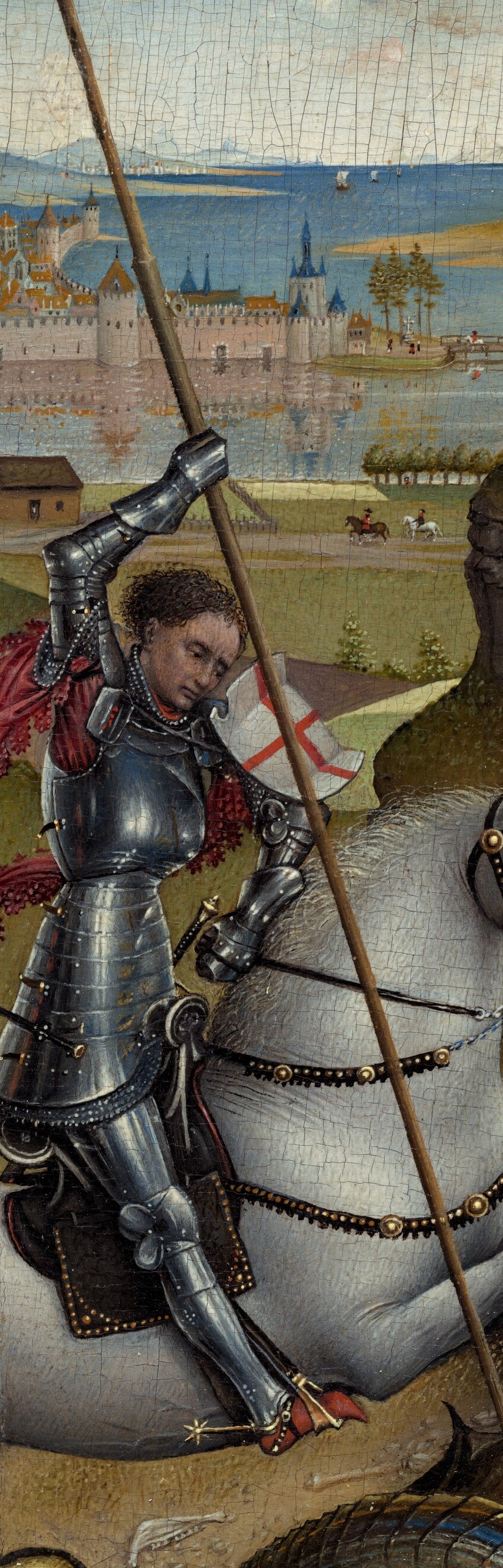
Look at George's polished black armor. It catches the light in a way that owes a direct debt to Jan van Eyck, who was exploring how curved mirrors and glossy surfaces could reflect miniature worlds. Here, the light on the armor reads as divine favor: virtue itself is luminous. Across the canvas, the princess kneels in a gown of impossibly intricate red and gold brocade. Her clasped hands and prayerful tilt make her the active intercessor, not a passive captive. She represents the Church or the imperiled Christian soul, her faith as real a weapon as George's lance.
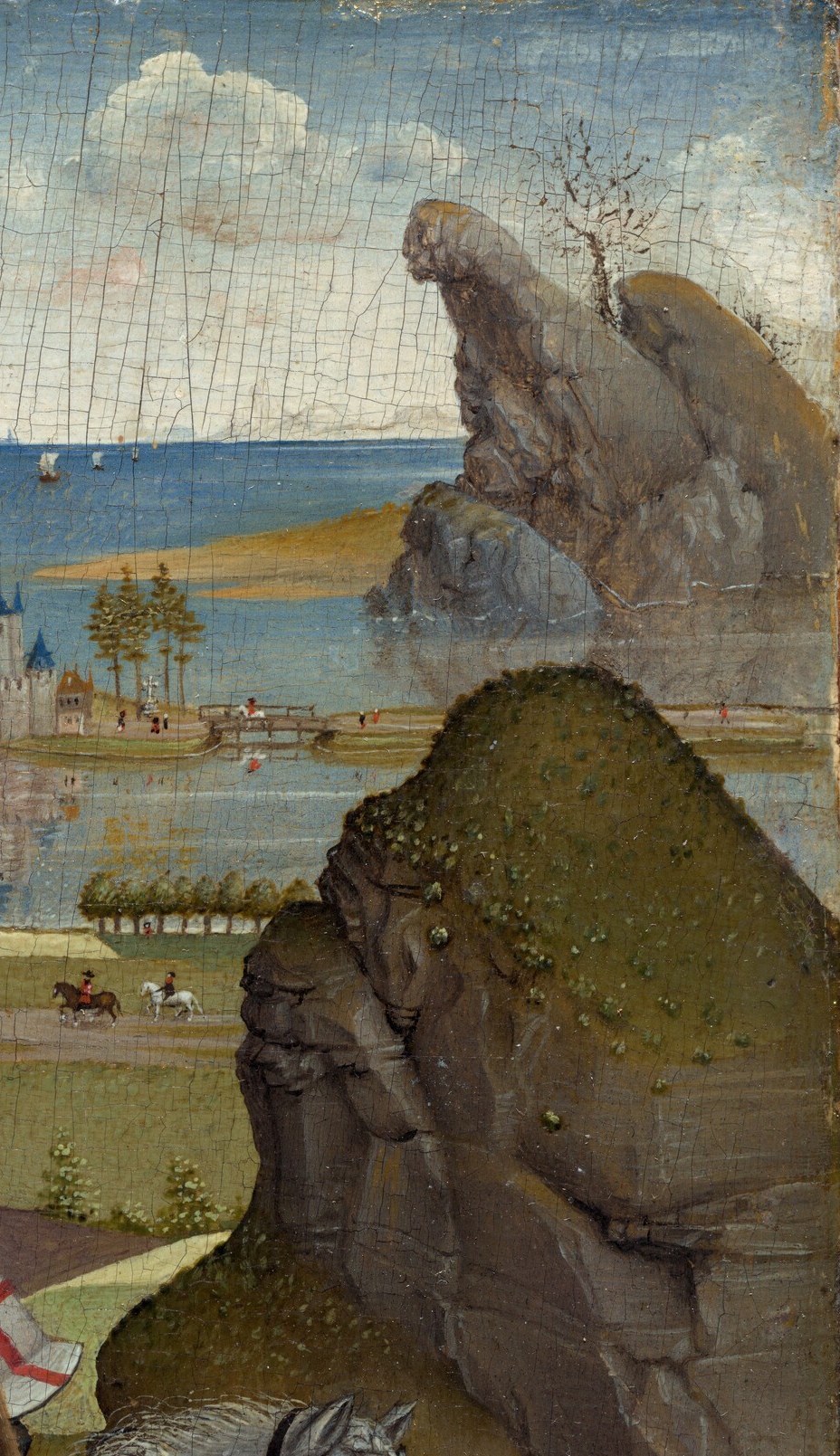
In the background, van der Weyden transplants the ancient legend into his own present. The walled city is a recognizable 1430s Belgian cityscape, complete with towers, gates, and rooflines. On the right, a fantastical cliff separates this real civic world from the mythic zone where the dragon writhes. The creature itself is painted as a plausible reptile twisted subtly wrong; this is Flemish naturalism applied to the supernatural. The whole composition argues that the battle between good and evil is not confined to legend. It plays out at the edge of every ordinary town.
Details
Transcript
A knight in black armor kills a dragon. To a 15th-century eye, this is not a fairy tale. The white horse is purity, trampling evil underfoot. George's armor mirrors Van Eyck: light conquering dark. The princess is not a victim. She is the Church in prayer. A real Flemish city watches the cosmic battle unfold. The jagged cliff separates the real world from the mythic. The code adds up to one message: faith triumphs.