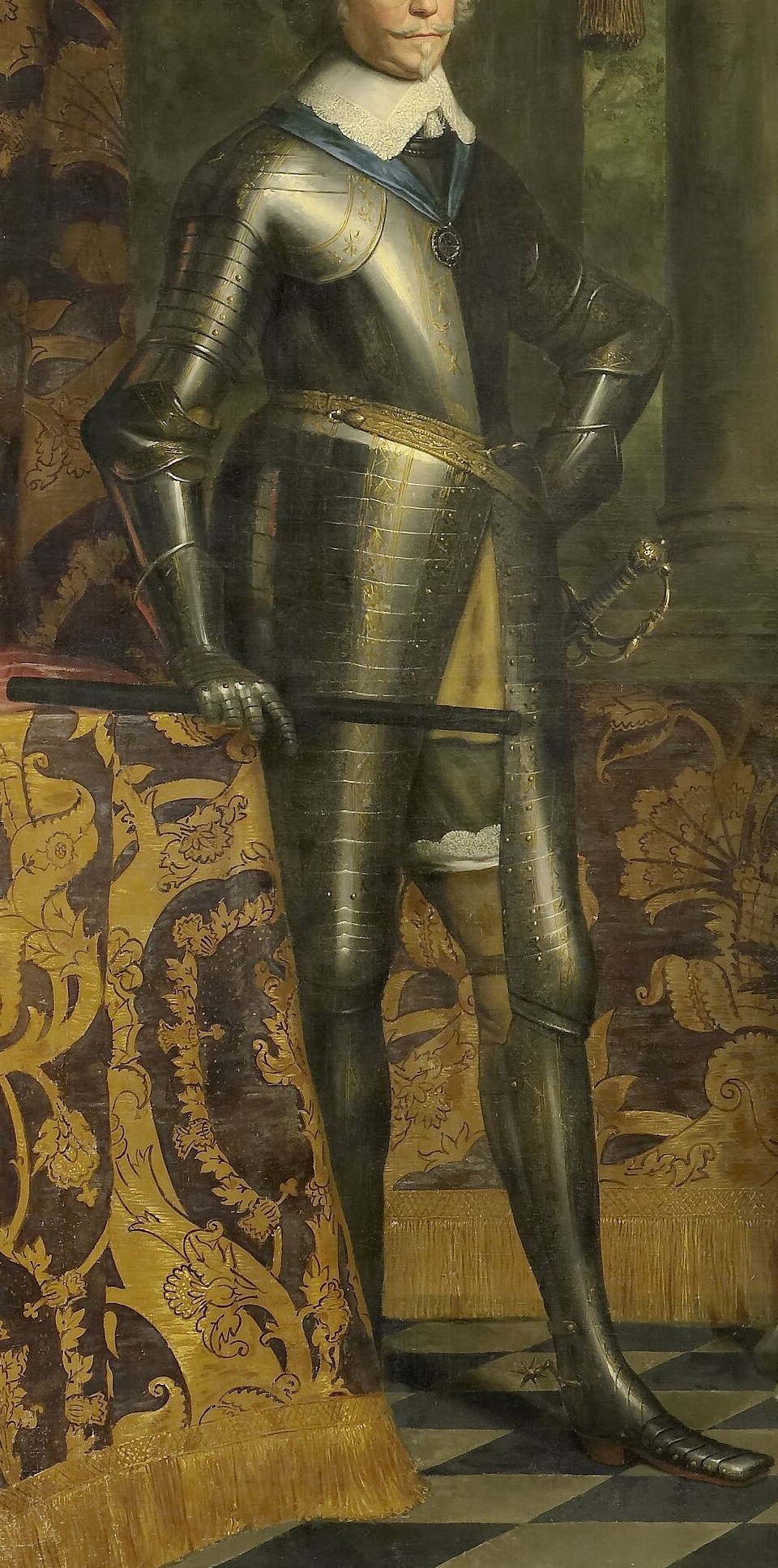
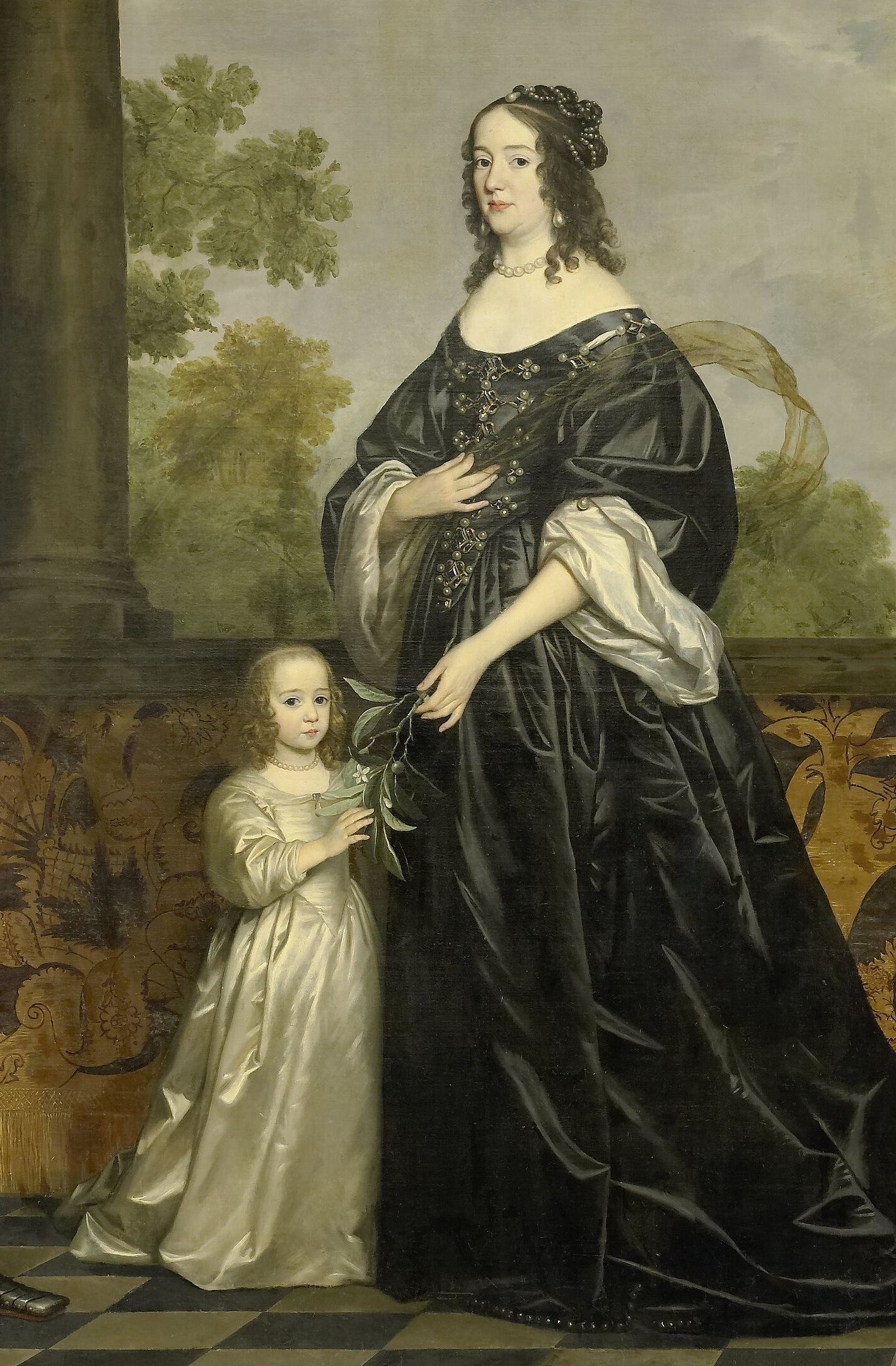
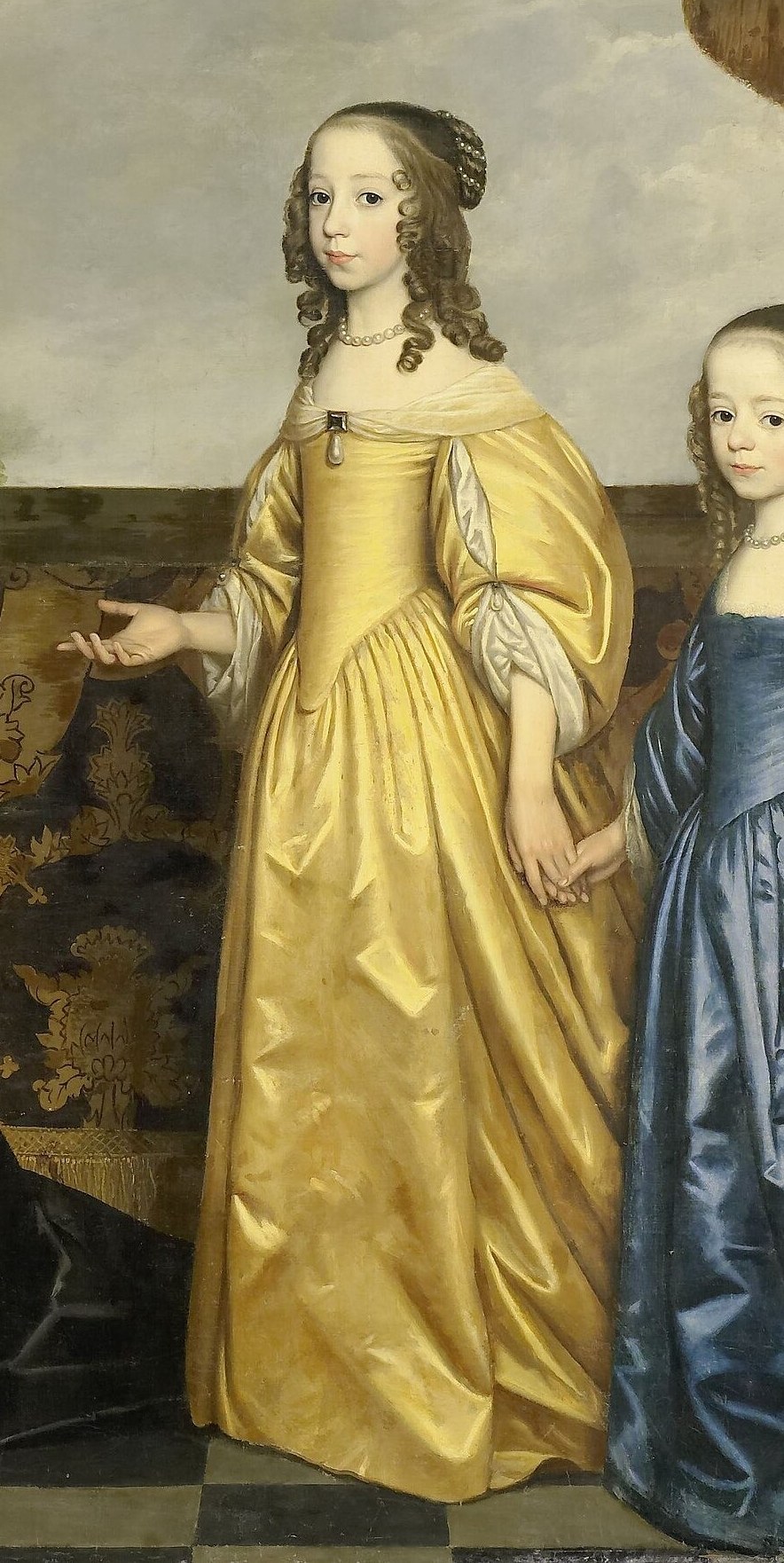
Frederik Hendrik (1584-1647), Prince of Orange, his wife Amalia van Solms (1602-75) and their three youngest daughters, Albertina Agnes (1634-96), Henrietta Catharina (1637-1708) and Maria (1642-88) by Gerard van Honthorst
Gerard van Honthorst's 1647 family portrait, "Frederik Hendrik, Amalia van Solms and Daughters," depicts a powerful moment for the Dutch House of Orange. This oil painting, held at the Rijksmuseum, captures Prince Frederik Hendrik in his full armor and his wife Amalia van Solms, surrounded by their three youngest daughters.
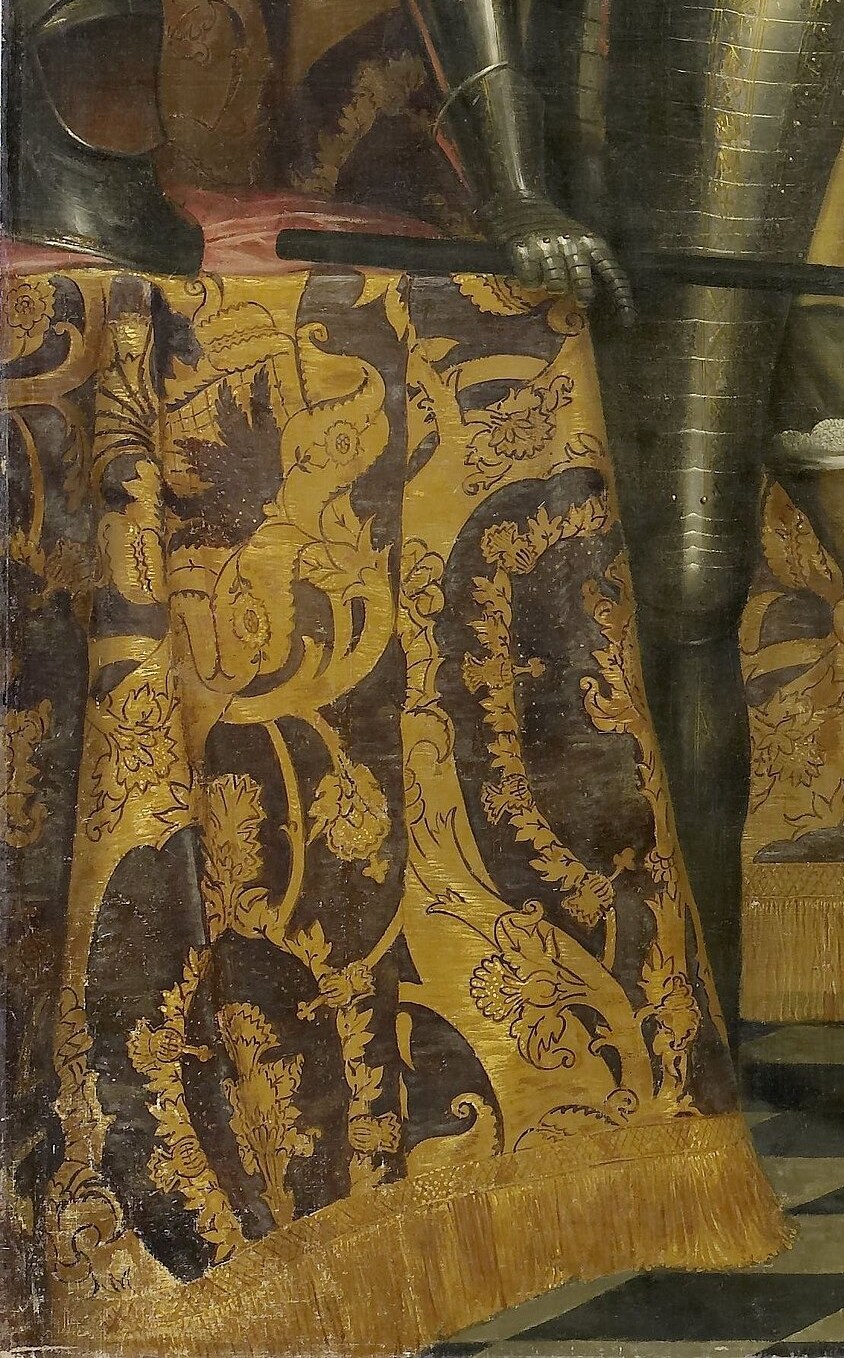
Notice the subtle yet significant details within the painting, such as the two cherubs holding laurel branches within the ornate tapestry behind the family. These figures symbolize victory and honor, subtly alluding to the family's prestige and achievements.
Completed just before the Prince's death, this work stands as a testament to his legacy and the enduring influence of the House of Orange. Van Honthorst, known for his Caravaggio-influenced use of light, masterfully rendered the dignity and dynastic importance of his subjects.
What other hidden symbols do you think might be woven into such a grand family portrait?
Details
Transcript
This princely family had vast power in 17th-century Holland. Prince Frederik Hendrik stands armored, a symbol of military might. His wife, Amalia van Solms, anchors the family. Look closely at the ornate tapestry behind her. Two cherubs hold laurel branches, symbolizing victory and honor. This painting was made just before the Prince's death in 1647. His family ensured his legacy endured for centuries.