Descent from the Cross by Girolamo da Cremona (Italian)
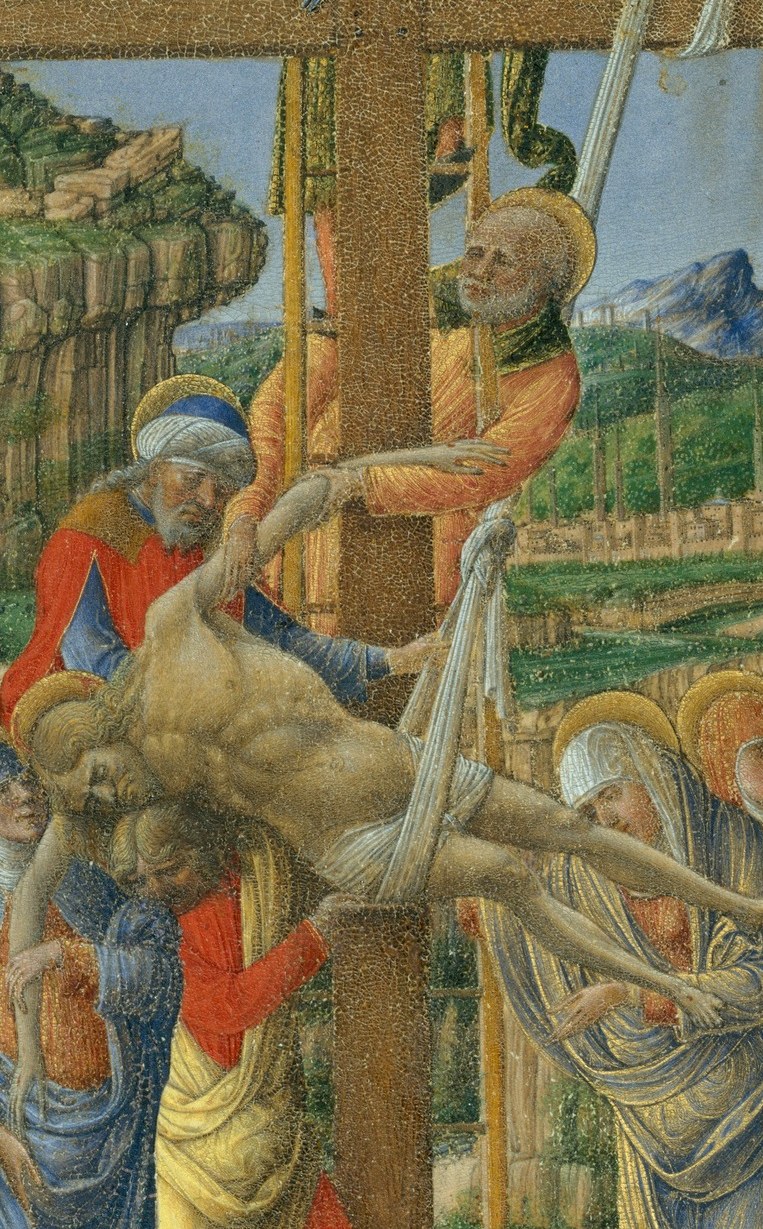
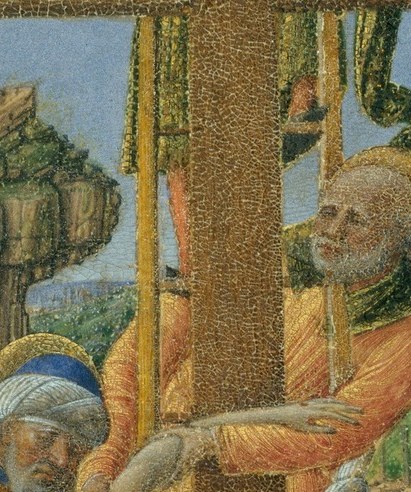
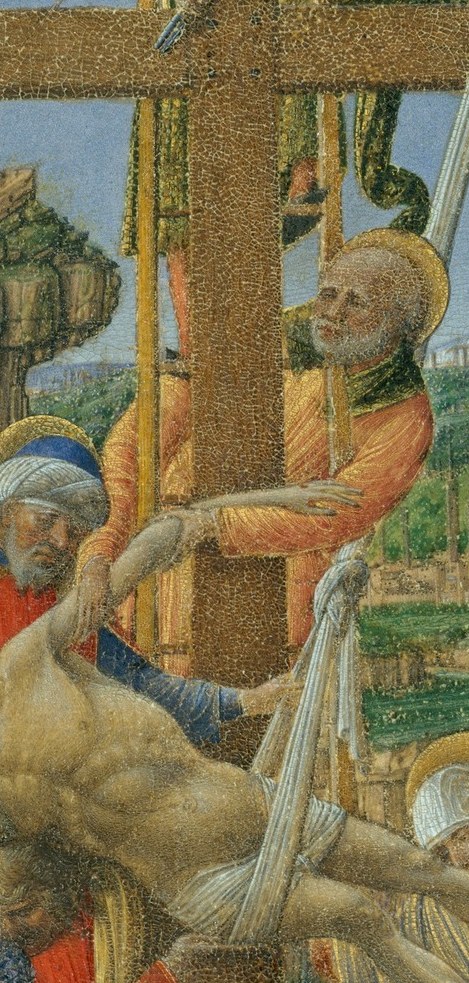
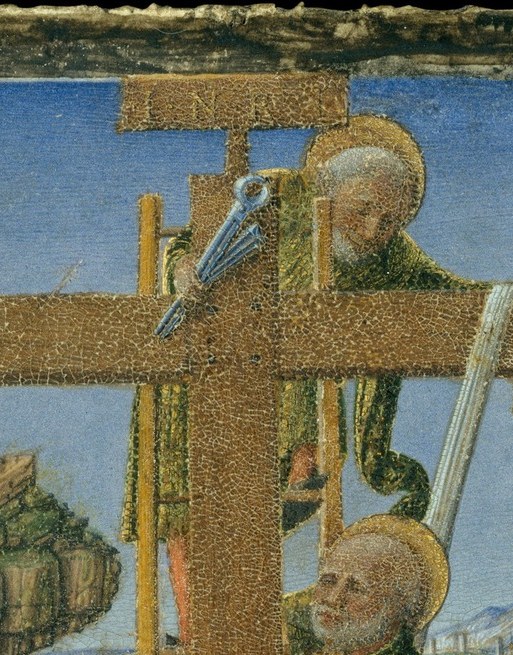
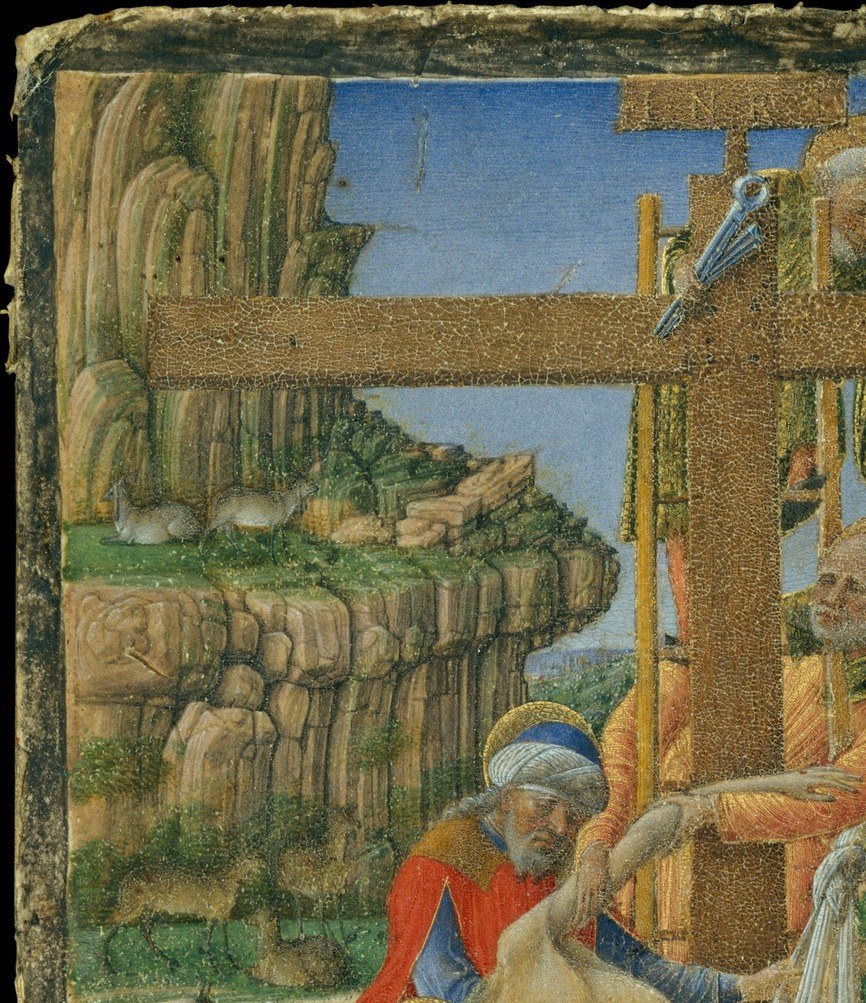
This is Girolamo da Cremona's Descent from the Cross, painted in 1475 and now in the collection of The Metropolitan Museum of Art. But for a few hours in May 1913, it became one of the most famous crime scenes in the museum's history. A young woman walked into the gallery carrying a meat cleaver hidden in her coat, and before the guards could stop her, she had slashed the canvas nine times.
Look at the body of Christ in the center of the composition. The central tear runs horizontally across his ribcage, with a second slash just below it. The face was also a target, though the cleaver glanced off the surface, leaving a shallower mark. Conservators later repaired the damage with such extraordinary skill that the painting looks seamless today. You have to know the story to see where the blade landed.
Lillian Forrester was a militant suffragette campaigning for women's right to vote in Britain. She had traveled to New York and selected this painting deliberately, targeting a Renaissance devotional image of a lifeless male body held by men. When arrested, her statement was blunt: she wanted to destroy a symbol of patriarchal degradation. The attack made national headlines and forced a conversation about security in American museums, which had none.
Da Cremona, a miniaturist and illuminator by training, could never have imagined his 15th-century altarpiece becoming a proxy in a 20th-century political war. The painting survived the knife, the movement won the vote in Britain five years later, and Forrester's name has been largely forgotten. What do you make of an act of vandalism that aimed to erase an image, but instead preserved it inside a larger story?
Details
Transcript
It hangs unguarded now, but this painting was once a crime scene. The central figure of Christ bears nine clean slashes across his body. Look closely at the tear running through his ribcage. It was inflicted by a meat cleaver in the spring of 1913. The attacker aimed for this face, but the swing went wide. Her name was Lillian Forrester. She was a suffragette. Arrested on the spot, she told the police: 'I have tried to destroy a picture of the degradation of women.' The Met's conservators stitched the canvas back so well, the wounds vanished.