The Lover's Visit by Pierre-Antoine Baudouin
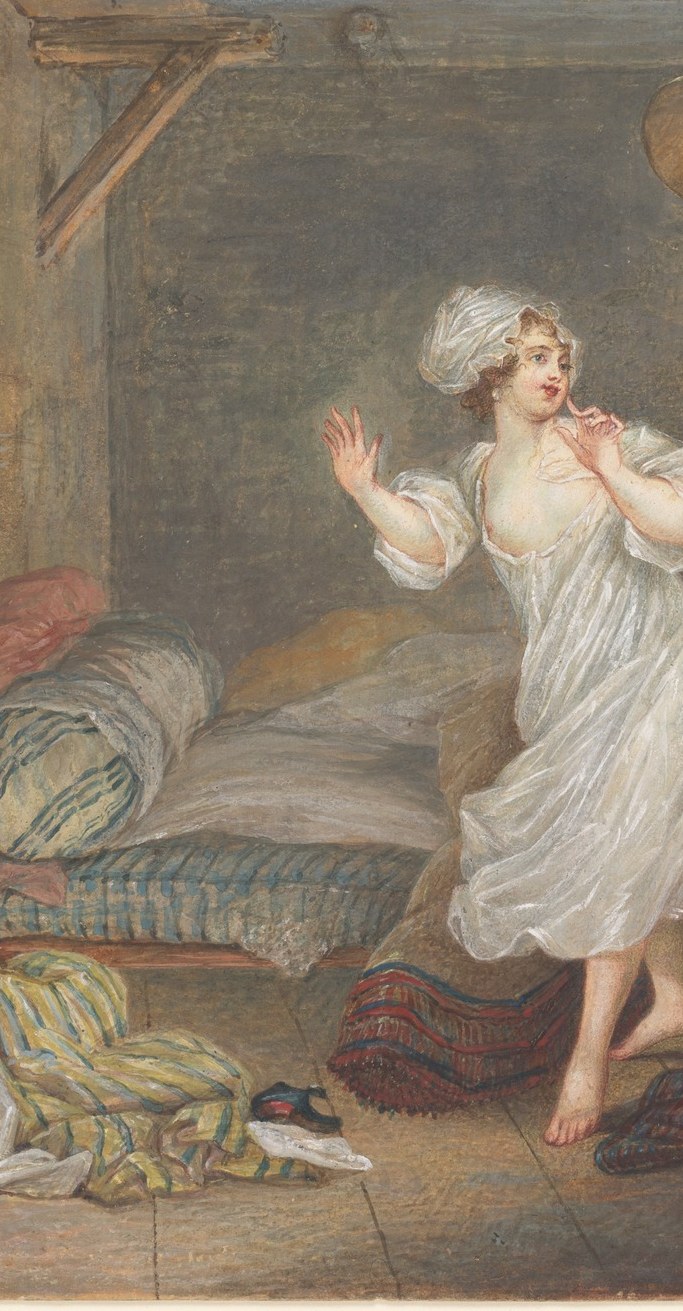
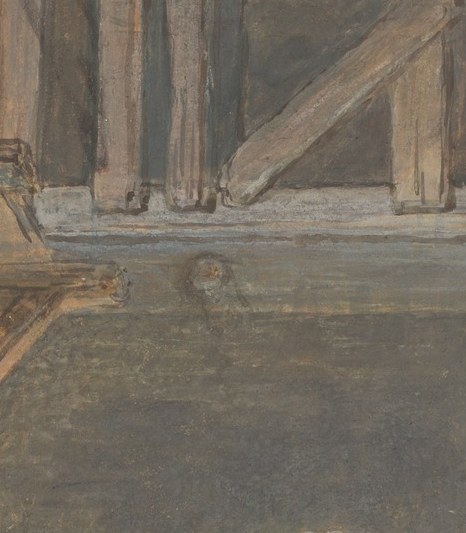
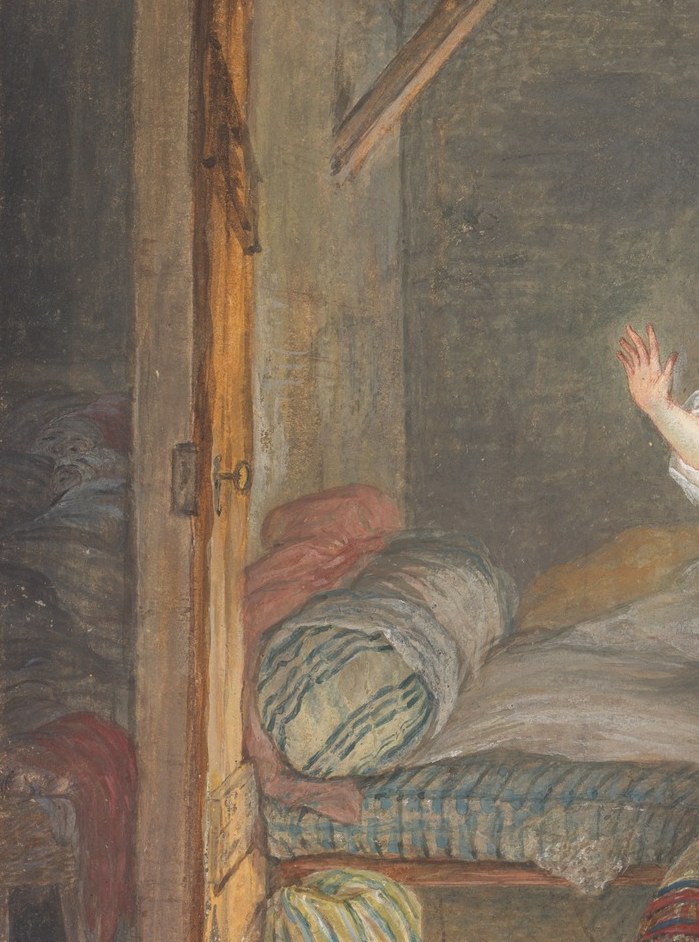
This is The Lover's Visit by Pierre-Antoine Baudouin, painted in gouache around 1765. It lives in the Louvre's collections. The real drama here is not the couple but the woman's white chemise, a technical showpiece that glows against the rough wooden walls.
Look at how the fabric catches the light. Baudouin built it with gouache, an opaque watercolor. He laid thin, dark washes for the shadows and thick, bright strokes for the highlights. The result is a luminosity that rivaled pastel and did something oil could not do as crisply: make a soft cotton chemise radiate in a dim interior.
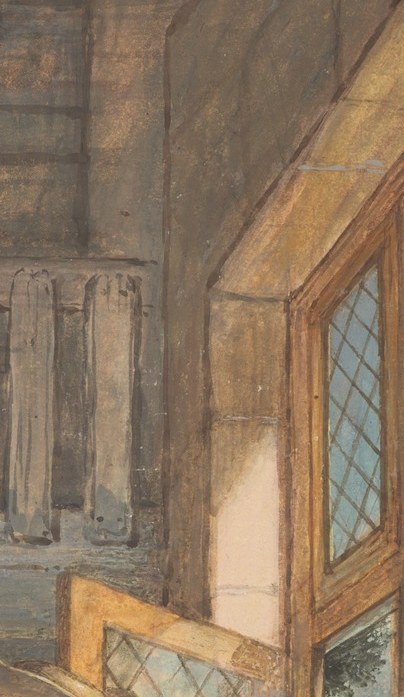
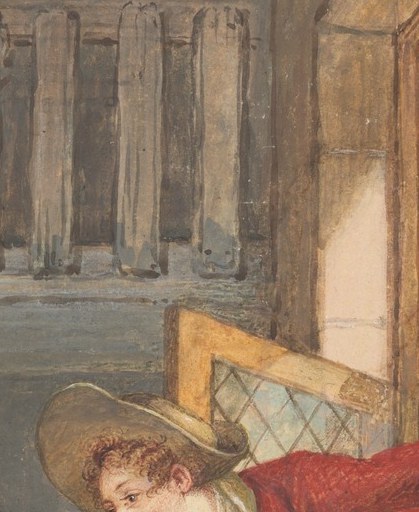
The light itself is staged. That small window with blue-green panes acts like a natural gel, throwing a cool beam directly onto the figure. Baudouin was François Boucher's son-in-law and heir to the Rococo taste for intimate domestic scenes, but his real gift was this command of gouache as a serious medium, not a sketch tool.
Next time you see a white dress in an old painting, check whether the painter made it glow from the surface of the paint itself. That is the gouache trick.
Details
Transcript
You can see every fold holding the light. This is gouache, opaque watercolor, built in layers. The paint itself is a trick: thin darks, thick lights. Now look at the window. Blue-green glass casts a cool theatrical spotlight. That light falls straight onto the chemise. Baudouin used gouache's opacity to make cotton glow.