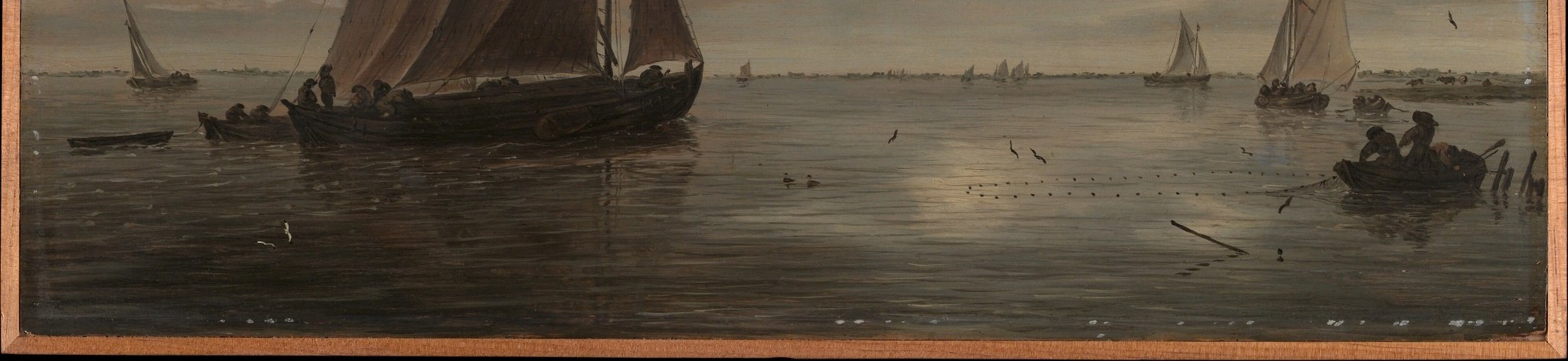
Fishing Boats on a River by Salomon van Ruysdael
Salomon van Ruysdael painted Fishing Boats on a River in 1660, and it now lives at The Metropolitan Museum of Art. He was the uncle and teacher of Jacob van Ruisdael, the towering figure of Dutch Golden Age landscape. The relationship matters: the elder Ruysdael quietly built the tonal foundations his nephew would later dramatize into stormy fame.
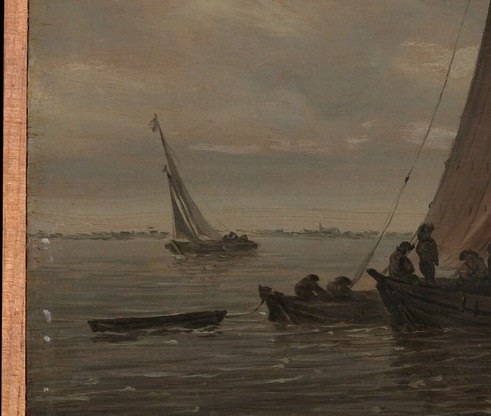
Watch the far left edge. A small sailing boat is nearly cropped out, easy to scroll past on a phone screen. Its presence is deliberate. Ruysdael included it as documentary evidence of a working river, not a picturesque invention. That marginal vessel grounds the whole scene in real 17th-century life.
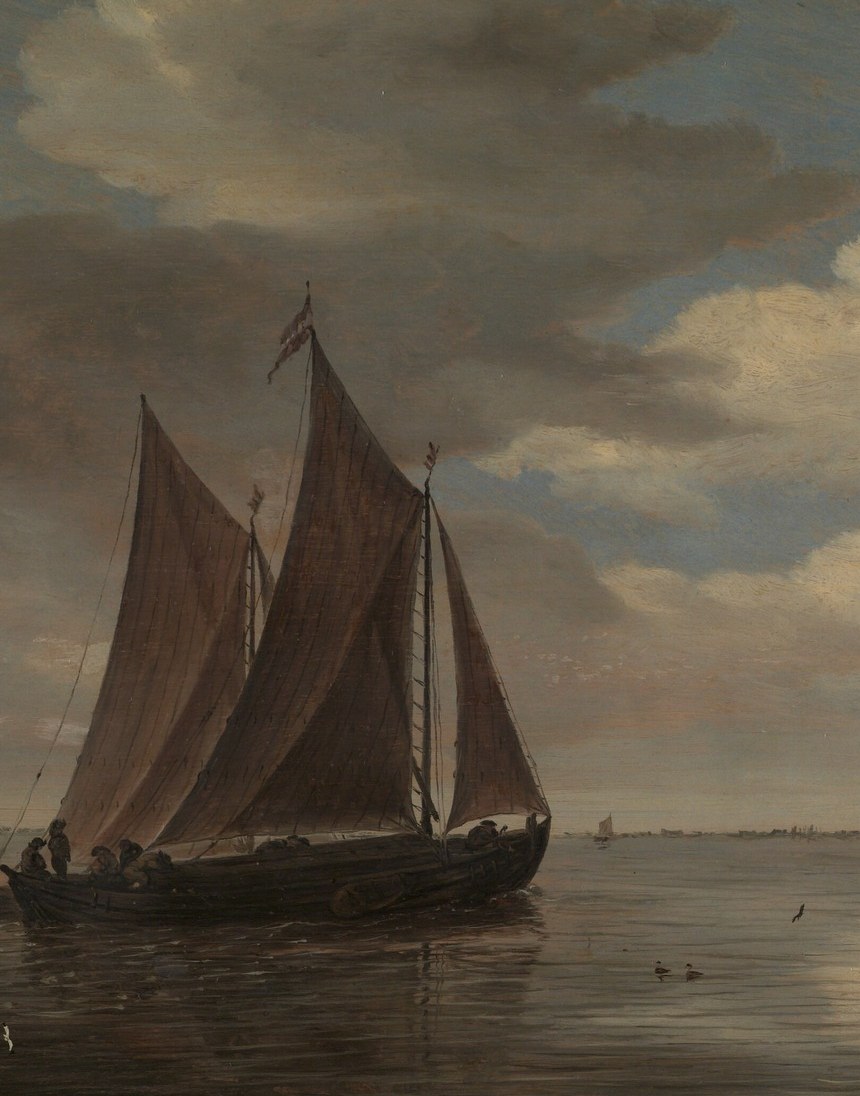
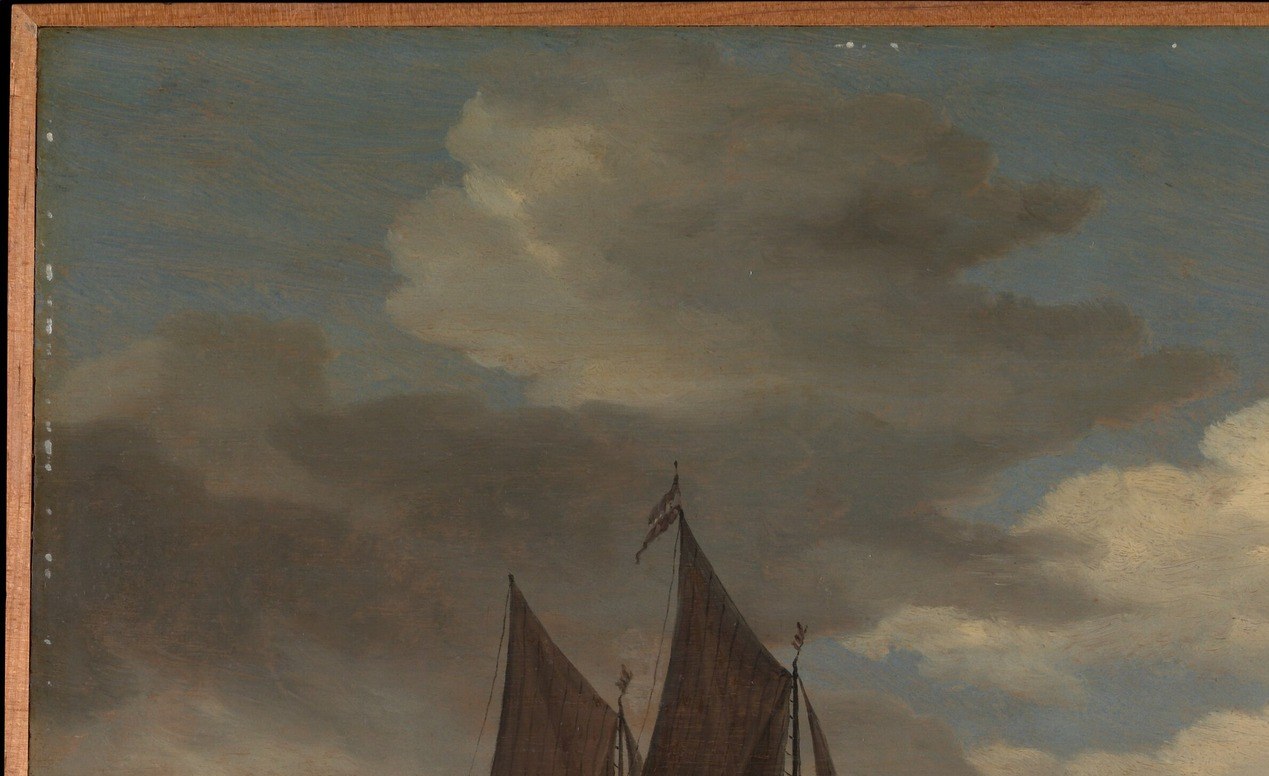
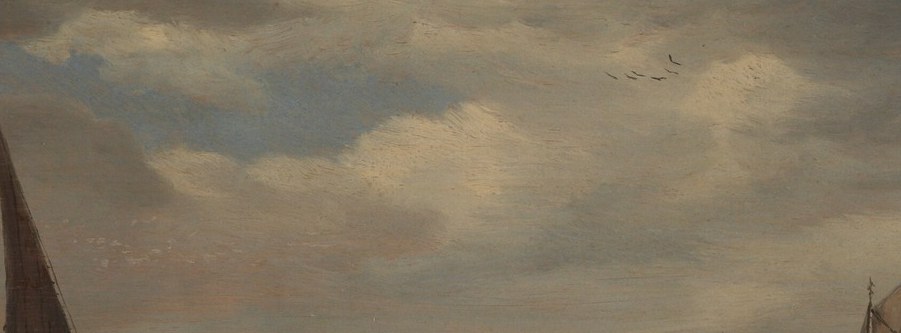
The painting is built on a light-versus-dark structure: heavy storm clouds on the left, a pocket of silver light breaking through on the right horizon. The central fishing ketch, with its warm brown sails, absorbs the weight of the sky while tiny figures at the waterline go about their labour. Ruysdael used the Dutch tonal method to tie sky, water, and hull into one silvery atmosphere, reflections flickering across the lower third of the canvas.
Salomon van Ruysdael died in Haarlem in 1670. His work stands on its own quiet merits: an eye for weather, a respect for the people who worked the rivers, and a compositional discipline that taught a generation of painters. Next time you see a dramatic Dutch sky, look to its edges, the real story is often tucked just out of frame.
Details
Transcript
You see the big boat, the dark clouds, the storm light. Now look at the far left edge. A small sailing boat, nearly off the canvas. It proves this is a working waterway, not a fantasy. This painter was the uncle of Jacob van Ruisdael. The nephew became famous. The uncle taught him how to see. Salomon van Ruysdael. 1660.