Saint Barbara by http://www.wikidata.org/.well-known/genid/72b3303b674029e6562d8b05c8156ad4
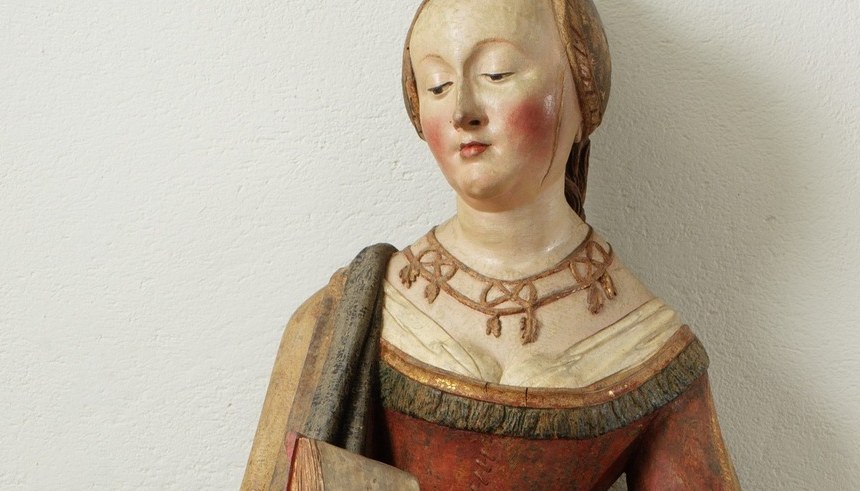
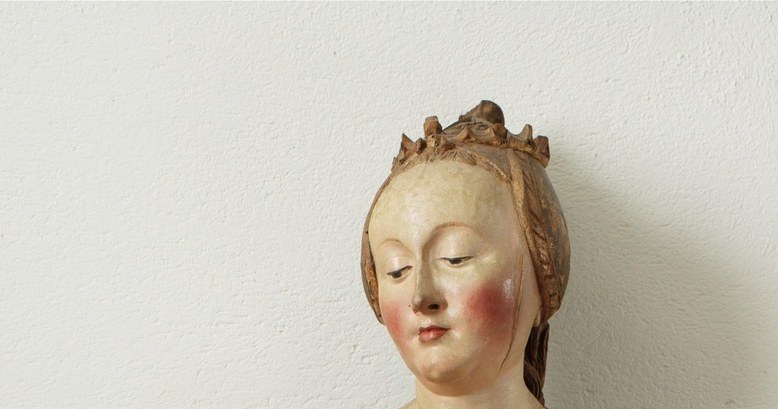
This carved limewood figure is Saint Barbara, made in Germany or Austria around 1490. She is one of the most venerated early Christian martyrs, and for centuries artists returned to her story: a young woman of extraordinary intellect and conviction, imprisoned in a tower by her own father, and killed for refusing to renounce her faith. She wears the crown of a virgin martyr and holds the book of sacred wisdom that defined her life.
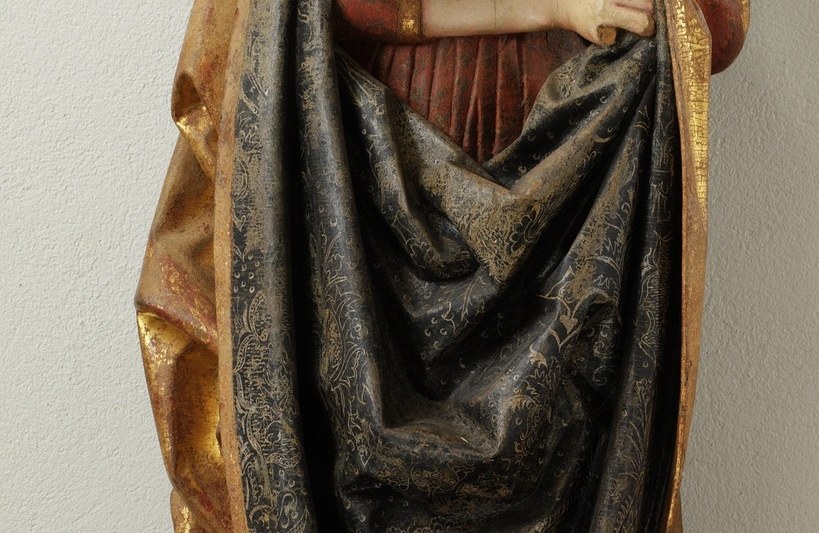
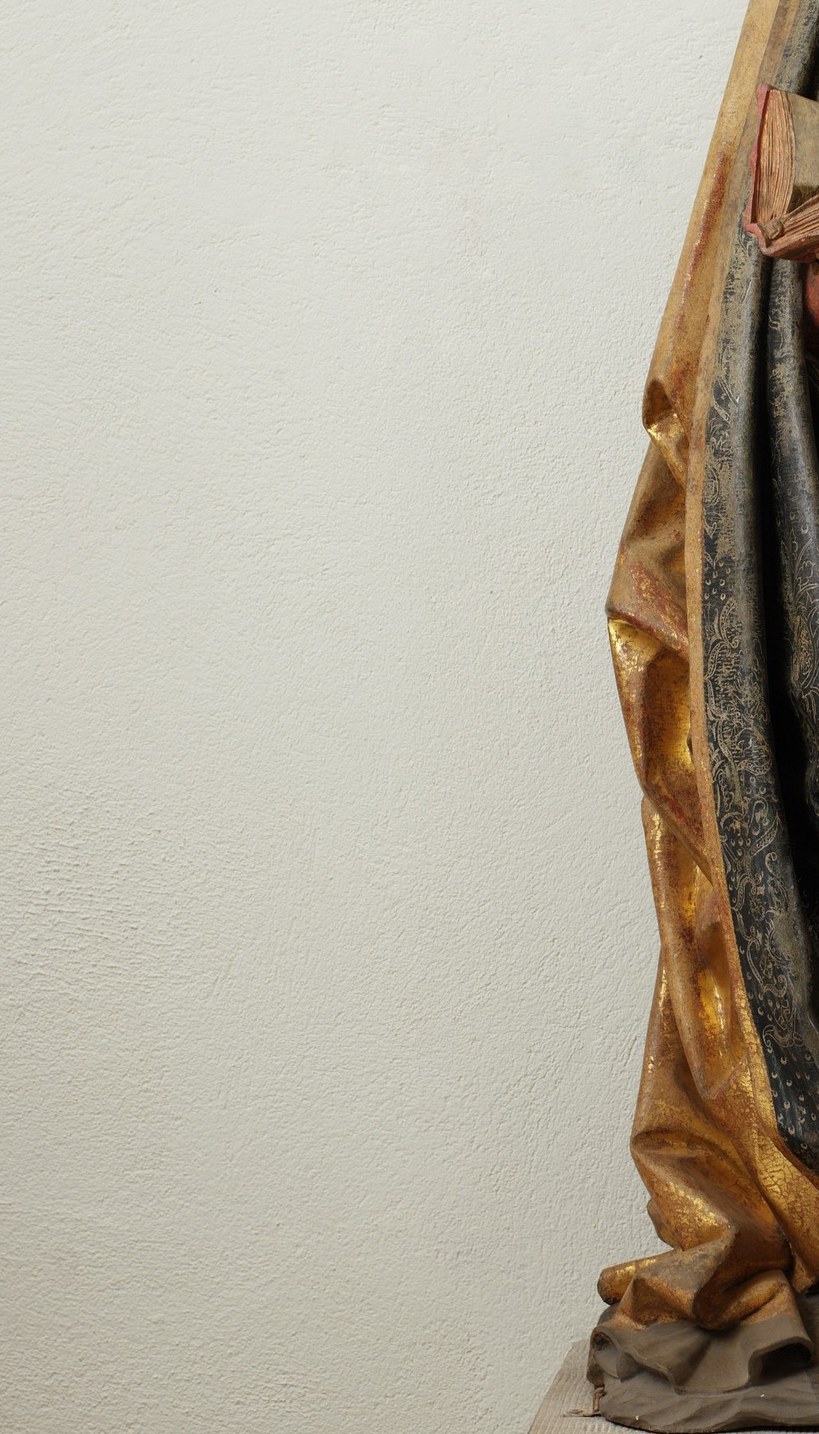
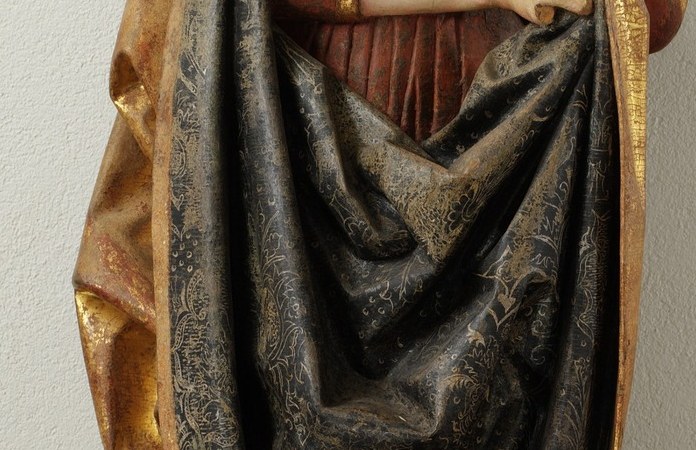
What to look at first is her face. The sculptor gave her an expression not of anguish or ecstasy but of deep quiet, eyes lowered, mouth set with a composure that reads as almost internal. Her hands clasp the small book against her chest as if it is the only solid thing left in the world. The drapery of the golden mantle cascades in heavy, naturalistic folds that were the primary technical achievement of the piece.
Traces of the original polychromy survive: deep red on the bodice (the color of both royal dignity and spilled blood), gold ochre across the cloak, and dark green in the under-robe. The cracked, flaking surface is not damage to regret but a visible record of five centuries of air, incense, candle smoke, and human attention.
We do not know the sculptor’s name. But someone, in the last years of the fifteenth century, stood in front of this block of wood and decided that Barbara’s defining feature would be stillness, not suffering. That is a theological choice, and a human one.
Details
Transcript
Before photography, a saint had to look like this. Her name is Barbara. She was a real woman. She looks down with absolute quiet. Not sadness. Her hands protect a book. It is her only earthly possession. Legend says her own father locked her in a tower and killed her for her faith. The gold behind her still holds its warmth after five hundred years. That calm is what a sculptor thought forgiveness looked like.