尾形乾山筆 定家詠十二ヶ月和歌 花鳥図 『拾遺愚草』 より六月|“Sixth Month” from Fujiwara no Teika’s “Birds and Flowers of the Twelve Months” by Ogata Kenzan
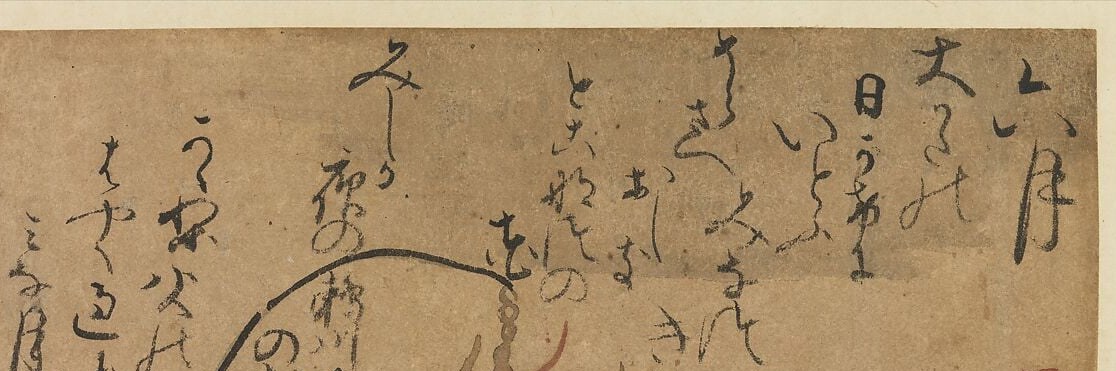
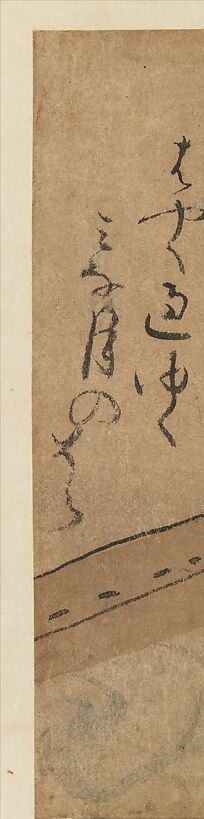
A boat drifts on stylized blue waves under a red sun. That is nearly the whole composition. This hanging scroll is Ogata Kenzan's "Sixth Month" from his 1743 series Birds and Flowers of the Twelve Months, a late-life interpretation of waka poems by Fujiwara no Teika. The painting belongs to a tradition where image and calligraphy are inseparable, the poem runs vertically down the left side of the scroll, and the picture is its direct, economical translation into ink and color on paper.
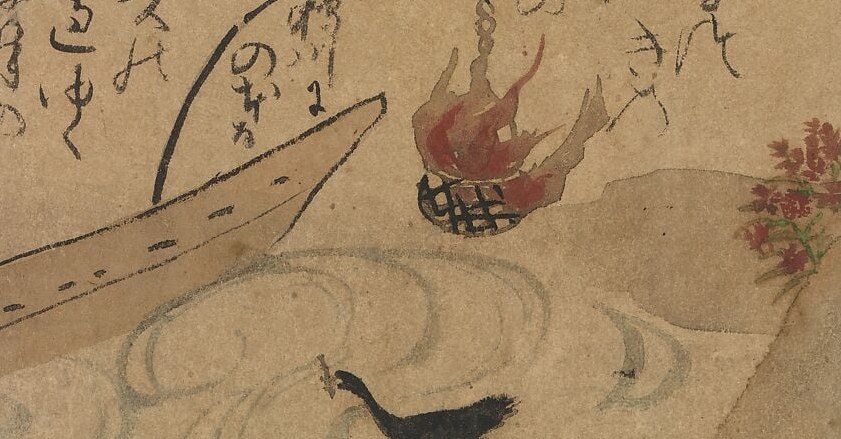
Look at what is not painted. The upper two-thirds of the scroll is bare paper, but it reads immediately as summer sky and humid air. The sea is a single flat wash of blue with only a few curling ink lines to suggest wave crests. The mast of the boat is one bold diagonal brushstroke. Kenzan's technique is reductive virtuosity: he gives you the minimum number of marks and trusts your eye to complete the world.
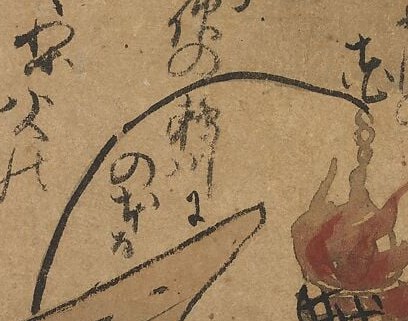
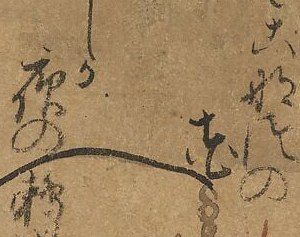
The most arresting detail is tiny: flames licking from the top of the mast. This is not a boat on fire, it is a visualization of the poem's imagery of midsummer heat and fireflies over water, a seasonal word made literal in paint. A slender dark shape in the waves, perhaps a fish or cormorant, anchors the underwater register if you look closely. Pink blossoms on the right anchor the summer season by flora.
Kenzan was eighty years old when he made this, in the final year of his life. He was the younger brother of Ogata Kōrin, and the two shared a radical approach to negative space and calligraphic economy. By this point Kenzan had spent decades refining how little paint a picture actually needs. The red seal at lower right is his authentication chop, a mark that turns the scroll into both painting and signed document. What does this single brushstroke economy make you feel that a fully rendered seascape might not?
Details
Transcript
A boat, a wave, a single red sun. That is almost the entire painting. This empty paper is not empty. It is the whole June sky. The sea is one flat wash of blue, cut by a few ink lines. The mast is a single brushstroke, pulled diagonally across a third of the scroll. Tiny flames flicker from the masthead, fire on water, the poem made visible. Kenzan painted this at eighty, in his final year. He knew exactly which marks the eye would fill in.